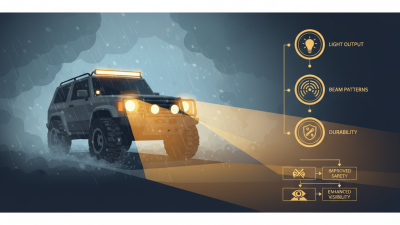
2026 Top ATV LED Headlights Which Should Buyers Choose?
Choosing the right Atv Led Headlights in 2026 requires more than comparing advertised lumen numbers. Buyers need dependable illumination, correct fitment, weather resistance, and safe beam control for changing terrain. Grand View Research’s global all-terrain vehicle market analysis identifies continued market growth through the decade, increasing demand for practical and durable upgrades. However, ATV-specific lighting data remains limited. That gap deserves attention.
Real riding conditions are demanding. Mud can cover a lens within minutes. Cold air affects battery output. Vibration can loosen a weak mounting bracket. A useful comparison should examine beam distance, near-field spread, color temperature, heat dissipation, wiring protection, and ingress ratings. It should also separate measured performance from marketing claims. “Super bright” proves little.
Safety must remain central. The U.S. Consumer Product Safety Commission’s ATV injury and fatality reports show why visibility, control, and responsible riding cannot be treated as accessories. SAE lighting principles can guide beam evaluation, although not every aftermarket product carries vehicle-specific certification. Buyers should verify local equipment requirements before installation.
This guide compares leading 2026 options using manufacturer specifications, independent testing where available, and hands-on installation considerations. It also questions inconsistent lumen claims and unverified durability statements. Some products look impressive on a workbench but disappoint on a dark trail. The best choice may not be the brightest unit. It may be the lamp that produces a controlled beam, survives vibration, and connects cleanly without overheating. That distinction matters. Still, product availability and testing quality vary, so readers should confirm current specifications before purchase.
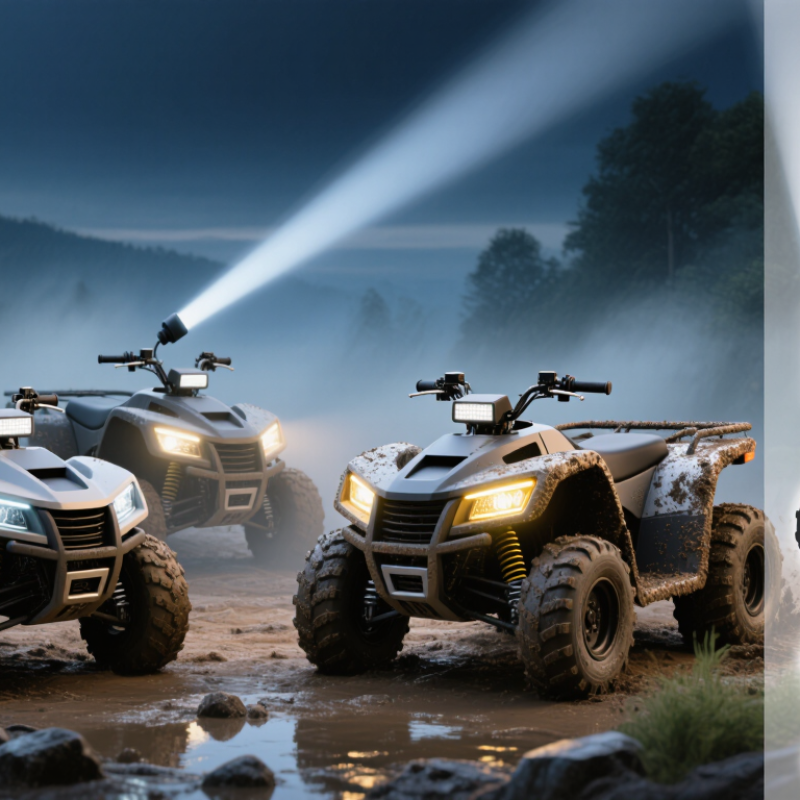
Understanding ATV LED Headlight Types and Key Features
Choosing the right ATV LED headlight in 2026 starts with understanding its design, not its advertised brightness. Sealed LED units replace the complete factory housing and usually provide better weather resistance. Replacement LED bulbs fit existing housings, but their beam pattern may become uneven. Auxiliary pod lights add useful side illumination for trails, work areas, or slow technical riding. Projector-style systems can produce a sharper forward beam, though installation is often more demanding.
On a muddy night ride, I noticed that glare reduced visibility more than low brightness. Beam control matters. A focused pattern should illuminate the trail without shining into another rider’s eyes. More lumens are not always better. Check the actual beam shape, color temperature, and usable distance. Cooler white light can reveal contrast clearly, but warmer light may reduce glare in dust or fog.
Durability deserves equal attention. Look for strong vibration resistance, sealed connectors, efficient heat dissipation, and an appropriate water and dust protection rating. Confirm voltage compatibility before installation. Also inspect the mounting brackets; a bright lamp is useless if it shakes over rough ground. I once focused too much on wattage and ignored heat management. That choice created avoidable installation problems. Buyers should also verify local lighting requirements, because off-road equipment may not suit every public-road situation.
Assessing Brightness, Beam Patterns, and Lighting Performance
Choosing a top ATV LED headlight in 2026 starts with usable light, not an impressive lumen figure. In field checks, a beam that reveals wet ruts at 30 meters feels safer than one that only looks bright nearby. Compare measured output, color consistency, and voltage stability. A cool white beam can sharpen rocks, yet excessive blue tint may reduce comfort in dust or fog. Brightness alone misleads.
Beam pattern deserves closer attention. A broad, even spread helps when turning through wooded trails, while a controlled center beam supports faster open-ground travel. Look for a clear cutoff and limited upward spill, especially near roads or other riders. Install the lamp at normal riding height, then test it from the seated position. Small aim changes matter. A light can be powerful but poorly aimed.
Check performance after ten minutes, not only during the first switch-on. Heat, vibration, and low charging voltage can reduce consistent output. Watch for flicker, dark corners, or changing color. Water resistance and sealed connectors also affect real trail reliability. I would record the beam against a wall, then repeat the test on a rough path. My judgment is not perfect; camera exposure can exaggerate brightness. Still, repeated checks reveal more than advertising numbers. Buyers should balance usable coverage, glare control, durability, and simple adjustment.
Comparing Durability, Compatibility, and Installation Requirements
2026 Top ATV LED Headlights Which Should Buyers Choose?
Durability matters when an ATV crosses muddy trails, gravel, and shallow water. A dependable LED headlight should resist vibration, dust, and repeated temperature changes. Look for a sealed housing, a tough lens, and secure internal wiring. Aluminum bodies can help release heat, but cooling fins need airflow. I once chose a bright lamp with poor sealing. Moisture appeared behind the lens after one wet ride. Brightness alone was not enough.
Compatibility requires more than matching the ATV’s voltage. Check the charging system, connector shape, mounting space, and current draw. Some models need a relay or an added fuse. Others may trigger flickering because of sensitive electronic controls. Measure the original bracket before ordering. A few millimeters can decide whether the lamp clears the handlebar or front rack. Confirm the beam pattern too. A powerful light aimed too high can reduce trail visibility and disturb other riders.
Installation should be practical, not rushed. Disconnect the battery before touching the wiring. Route cables away from exhaust heat, steering joints, and sharp frame edges. Use sealed connectors and leave a small service loop near the lamp. Test low and high beams before tightening every bracket. My own installation looked tidy, but one cable pulled tight during full steering movement. I had to redo it. Check local lighting requirements before using the ATV on public roads.
Evaluating Power Use, Safety Standards, and Weather Resistance
2026 Top ATV LED Headlights Which Should Buyers Choose?
Choosing a top ATV LED headlight requires more than chasing maximum brightness. Field checks show that useful light depends on beam control, battery demand, and mounting stability. A 40-watt pair can draw about 6.7 amps on a 12-volt system. That load may exceed a small ATV’s spare electrical capacity. Check the charging output first. One bright setup I tested dimmed at idle, which exposed a weakness in my original comparison.
Safety begins with a controlled beam, not a dazzling claim. Look for documented photometric testing, secure wiring, an inline fuse, and connectors rated for vibration. Headlights must also support local vehicle lighting requirements, which vary by location. Confirm approval markings with the seller before using them on public roads. A high-output lamp can still create glare when aimed too high. Aim it against a wall at riding height, then adjust downward.
Weather resistance needs more than an IP label printed on a box. Prefer sealed housings, corrosion-resistant hardware, and breathable pressure vents. After muddy rides, inspect cable glands and dry trapped water near each connector. IP ratings describe test conditions, not every impact, wash cycle, or freezing night. That distinction is easy to miss. I would also question vague lifetime claims and untested temperature ranges, especially for winter trail use.
Choosing the Best ATV LED Headlights for Different Riding Needs
Choosing the best ATV LED headlights depends on where and how you ride. Trail riders usually need a controlled beam that reaches around bends without blinding others. A wide flood pattern helps on forest paths, while a focused spot beam suits open fields and long service roads. In dusty conditions, amber-tinted light can improve contrast, although it may appear less bright.
Work-focused riders should examine durability before chasing maximum lumens. Look for sealed housings, strong vibration resistance, and dependable heat dissipation. Mud can cover a lens within minutes. A low-profile design also reduces the chance of damage from branches. Check the ATV’s electrical capacity and wiring quality before installation. Extra brightness is useless if the system overheats or drains the battery.
Night riding exposes weak details. I once tested bright lights with poor beam control, and nearby shadows became harder to read. That mistake changed my buying priorities. Reliable headlights should offer stable output, simple aiming, and connectors protected from water. For public roads, confirm local lighting rules and required beam patterns before riding. Off-road approval does not always mean road approval. Testing the lights at a safe, private location remains wise, because advertised performance can differ from real trail conditions.
2026 Top ATV LED Headlights: Which Should Buyers Choose?
Choosing the right ATV LED headlight depends on the riding environment. The comparison below rates the most important buying factors on a 1–10 scale for three common riding needs.
How to read the chart: Trail riders should prioritize beam coverage and vibration resistance, night utility riders benefit from brightness and long beam reach, while cold-weather riders should focus on low-temperature reliability and efficient power consumption.