2026 Top Off Road Light Bar Brands and Features to Consider?
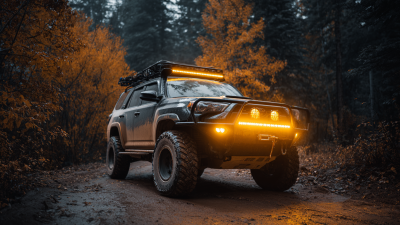
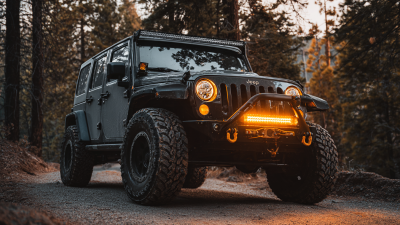
In the evolving landscape of off-road vehicles, the Off Road Light Bar plays a crucial role. Industry expert John Tanner, known for his extensive work in off-road accessories, emphasizes, "Choosing the right light bar can transform your night driving experience." This highlights the importance of selecting the right brand and features.
Off Road Light Bars vary significantly in design and functionality. Factors to consider include beam patterns, brightness, and durability. Different brands showcase diverse features. Some are built with weather-resistant materials, while others focus on energy efficiency. A well-chosen light bar not only enhances visibility but also adds a unique style to your vehicle.
However, finding the perfect Off Road Light Bar isn’t always straightforward. Many choices can lead to confusion. It’s easy to overlook critical specifications. This decision can profoundly affect both safety and performance during night adventures. Reflecting on your specific needs is essential before making a choice.
Top Off Road Light Bar Brands in 2026
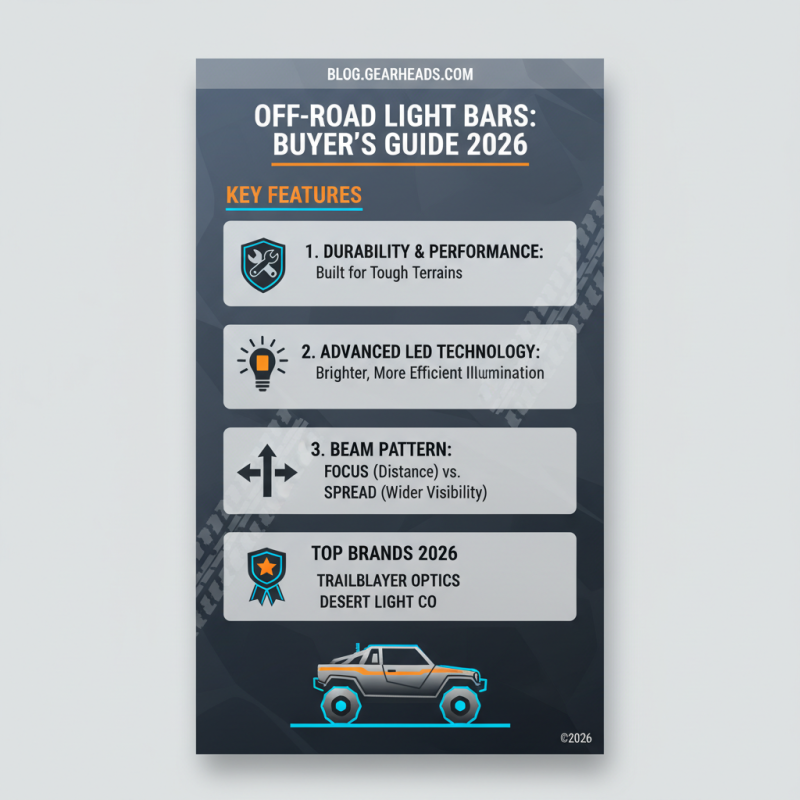
When selecting off-road light bars in 2026, several brands stand out due to their unique features. Many options focus on durability and performance. Some models offer advanced LED technology to provide brighter illumination. It's essential to check the beam pattern. A focused beam is good for distance, while a wider spread is great for visibility.
Consider the mounting options available. Certain light bars provide versatile installation choices, accommodating different vehicle types. Waterproof ratings are also crucial. If off-roading in challenging weather, it's vital to ensure the lights can withstand rain and mud. Ease of installation can save time but may vary among brands.
Additionally, customer reviews often highlight real-life experiences. Features like adjustable brightness can enhance usability in various conditions. Not every light bar excels in every aspect, leading to potential drawbacks. Performance may vary based on terrain and driving style. A reflective surface could also warrant attention, as it impacts light distribution. Remember, not every brand lives up to its claims. Careful consideration can lead to a better choice.
Key Features to Evaluate in Off Road Light Bars
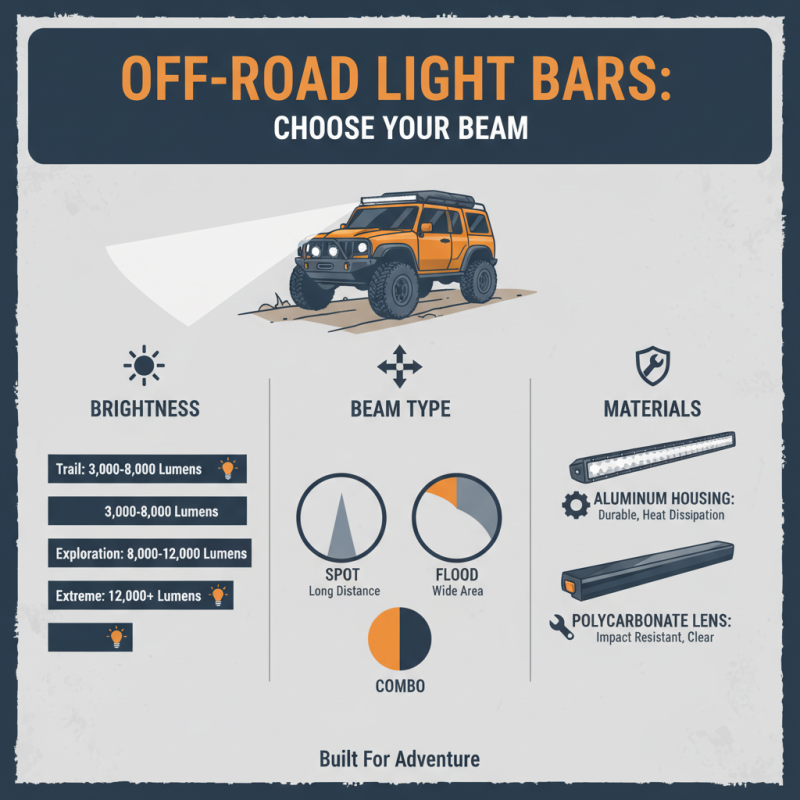
When evaluating off-road light bars, several key features stand out. Brightness is crucial. Look for lumen ratings to gauge intensity. A range of 5,000 to 15,000 lumens can work well for most off-road conditions. Consider the beam pattern too. Flood beams spread light over wide areas, while spot beams illuminate longer distances. A combination can enhance visibility drastically.
Durability is another important aspect. Off-road adventures expose equipment to harsh elements. An IP rating indicates water and dust resistance. Aim for an IP67 rating for reliable performance in wet conditions. The materials used, like aluminum housing, add to longevity but may impact weight. Weight distribution is essential for mounting as well.
Wiring and ease of installation are often overlooked. Complicated setups can lead to frustration. Look for systems that offer straightforward instructions or pre-assembled wiring harnesses. Pay attention to the warranty, too. A solid warranty reflects confidence in the product and provides peace of mind. Off-road lighting should provide both functionality and reliability, so careful evaluation is key.
2026 Top Off Road Light Bar Brands and Features to Consider
| Feature |
Description |
Importance |
| Brightness (Lumen Output) |
Measured in lumens, indicates the light output strength. |
Critical for visibility in off-road environments. |
| Beam Pattern |
The shape and distribution of the light output. |
Influences how well you can see in various terrains. |
| Durability |
Construction materials and resistance to elements. |
Ensures longevity in harsh conditions. |
| Power Consumption |
The amount of electrical power needed to operate the light. |
Important for efficient energy use especially when off grid. |
| Mounting Options |
Different brackets and configurations available for installation. |
Affects compatibility with various vehicles and units. |
| Warranty Period |
Length and coverage of product warranty offered. |
Indicates manufacturer's confidence in product quality. |
| Price Range |
The cost of the light bar in different configurations. |
Helps in budgeting for off-road lighting needs. |
Comparative Review of Popular Light Bar Models
When it comes to off-road light bars, several popular models stand out. Features play a crucial role in selecting the right one. Brightness is essential; many units range from 3,000 to 15,000 lumens. Wider beams illuminate more area, aiding visibility during night drives. Consider the materials, too. Some bars use aluminum for durability, while others might be plastic, impacting performance.
Next, the installation process can be tricky. Some models come with easy-to-follow instructions. Others require specialized tools and skills. The length of the light bar matters as well. Shorter bars fit compact vehicles, while longer options suit larger trucks. Water and dust resistance ratings also vary, affecting long-term use.
Pricing is often a reflection of features. Higher-priced models usually offer better durability and performance. But affordability is key for many off-roaders. Finding a balance between cost and quality can be challenging. Reviews from other users provide insight. Checking for shared experiences helps guide decisions.
Understanding Different Types of Off Road Light Bars
When choosing off-road light bars, understanding the different types available is essential. These light bars primarily come in LED, halogen, and HID varieties. LED lights are energy-efficient and have a longer lifespan, making them a favorite among enthusiasts. Halogen lights offer a warm glow, but they consume more power. HID lights provide intense brightness but can require more installation effort.
Consider the mounting options as well. Some light bars are designed for easy roof mounting or bumper installation. Others may come with adjustable brackets for flexible positioning. This is vital for optimizing your visibility on dark trails. The beam patterns differ too: spot beams are focused for distance, while flood beams offer wide coverage. Knowing your driving environment is key to making the right choice.
Tip: Always check the wattage. Higher wattage means brighter output but also increased power draw. Balance your needs with your vehicle’s capabilities. Make sure the wiring can handle the load.
Tip: Pay attention to the material used in the light bar’s housing.
Aluminum is lightweight but durable, while
plastic may be more affordable but less sturdy. Make a tie between aesthetics and functionality to ensure longevity. Remember, not all light bars fit all vehicles. It's critical to measure before purchasing.
Installation Tips for Off Road Light Bars in 2026
When installing off-road light bars, preparation is key. Start by choosing a suitable mount. Secure it firmly to your vehicle’s frame. A loose mount can lead to misalignment over time. It's crucial to ensure that the light bar is level. Uneven positioning can affect the light output and compromise visibility.
Pay attention to wiring. Use weatherproof connectors to prevent moisture damage. According to industry reports, 30% of failures stem from poor wiring practices. Keep wires away from moving parts to avoid abrasion. A clean installation not only looks better but also reduces maintenance issues later on.
Adjust the light bar’s angle after installation. Aim it to avoid blinding other drivers. This is often overlooked. Testing the setup before heading out is wise. Make sure the lights are functional and properly aligned. These simple steps can enhance your off-road experience significantly.
2026 Off Road Light Bar Features Comparison