What is the Best Spot Lights for Car Buying Guide?
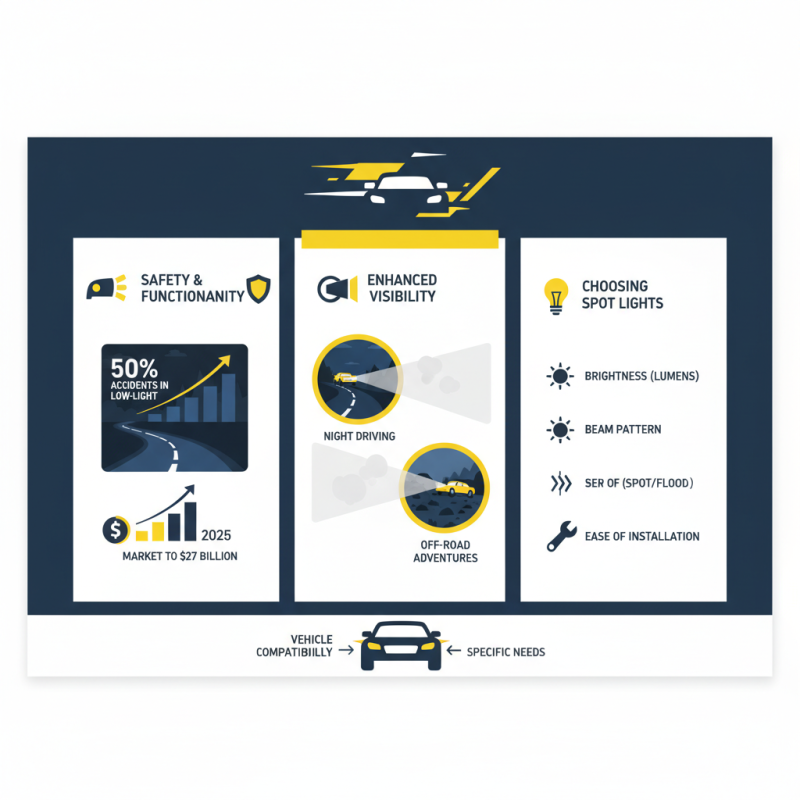
When searching for the best spot lights for car, understanding your options is essential. The automotive lighting market is projected to reach $27 billion by 2025, driven by safety and functionality demands. Spot lights for cars are crucial for enhancing visibility during nighttime driving or off-road adventures. Many drivers overlook this necessity, thinking factory-installed lights suffice.
A study by the National Highway Traffic Safety Administration (NHTSA) shows that over 50% of accidents occur in low-light conditions. This statistic highlights the importance of investing in quality lighting solutions. Spot lights can illuminate dark paths, ensuring safer travel. However, not all lights are created equal.
Choosing spot lights can be daunting. There are various types and technologies available. Factors such as brightness, beam pattern, and ease of installation matter significantly. While some options may seem appealing, potential buyers should reflect on their specific needs and vehicle compatibility. Making an informed choice will enhance driving safety and performance.
Understanding the Importance of Car Spotlighting
When driving at night or in low visibility conditions, car spotlighting plays a crucial role. Proper illumination enhances safety, helping drivers to see potential hazards. A well-placed spotlight can illuminate dark corners and roadside obstacles. This precaution can prevent accidents and ensure all occupants feel secure.
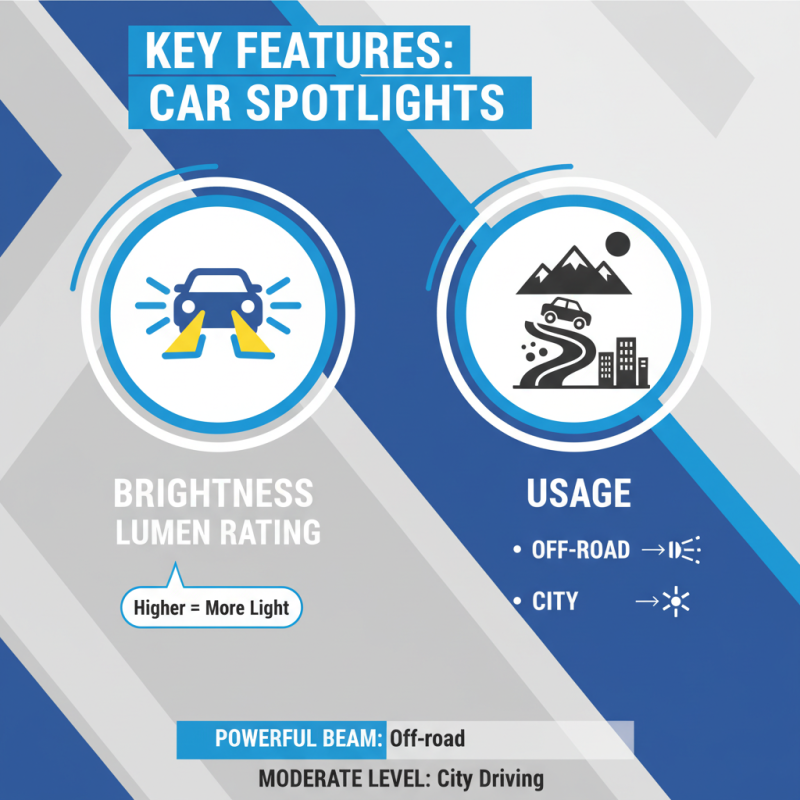
Understanding the importance of car spotlighting goes beyond just visibility. Different situations require various lighting solutions. Off-roading demands powerful beams to light up unpaved trails. Conversely, urban driving may need less intense lighting to comply with regulations. Vehicle spotlights should be versatile enough to adapt to these changes. However, selecting the right type can be overwhelming. Some drivers underestimate the significance of this choice, leading to inadequate lighting.
It's important to consider how light distribution affects driving ability. Poorly designed spotlights can create glare for oncoming traffic. This poses risks not just to the driver but also to other road users. Moreover, vehicle spotlighting choices can also influence energy consumption. Drivers should reflect on their own needs and driving environments. The right spotlight should balance illumination with compliance and efficiency.
Types of Car Spotlights: Halogen, LED, and Xenon
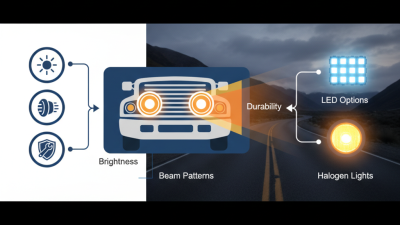
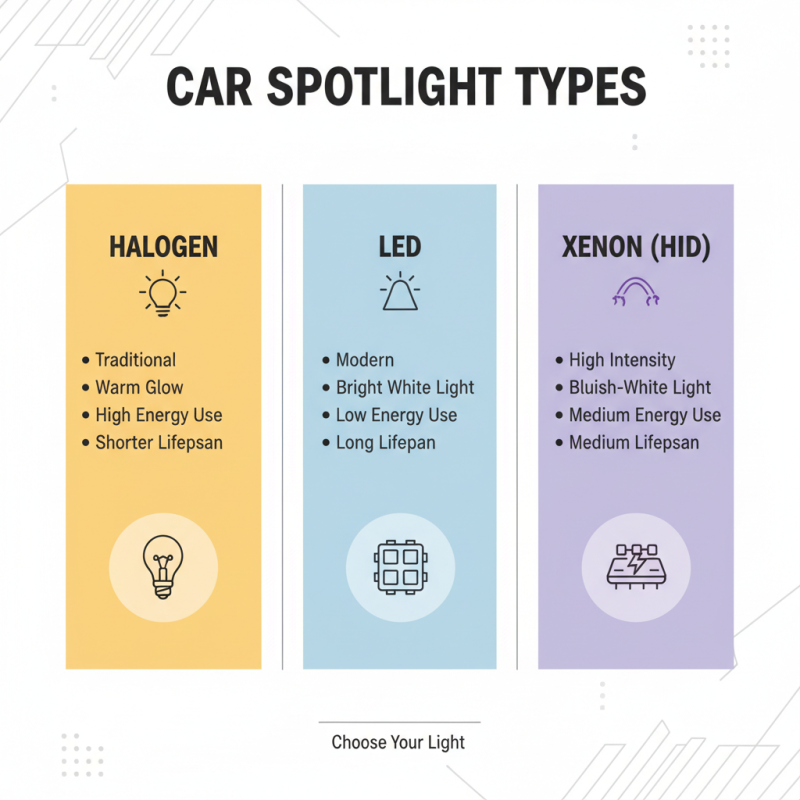
Understanding the various types of car spotlights is crucial when making a purchase. The three main types are halogen, LED, and xenon, each offering distinct advantages and drawbacks. Halogen lights are traditional and provide a warm glow. They can be found in most vehicles. However, they tend to consume more energy and have a shorter lifespan.
LED spotlights are gaining popularity due to their efficiency. They use less power and last significantly longer than halogens. Their brightness improves visibility, especially in dark conditions. Nevertheless, they can have a higher upfront cost. Choosing the right lumen output ensures optimal lighting without overwhelming other drivers.
Xenon lights produce a bright and intense light, making them ideal for night-time driving. Their bluish hue can enhance visibility on the road. However, they may require a higher initial investment and can be more difficult to install. Understanding these differences can help you navigate your options more effectively. Selecting the right spotlight depends on your specific driving needs, budget, and vehicle compatibility.
Top Brands and Models of Car Spotlights on the Market
When it comes to choosing the best car spotlights, various brands and models stand out. High-quality spotlights enhance visibility at night and in adverse weather. A solid choice often includes features like adjustable brightness and durable materials. These key aspects ensure the spotlight can withstand harsh conditions and provide optimal light.
Many top brands offer innovative designs that cater to different needs. Some models are compact and lightweight, making them easy to install. Others boast powerful beams, perfect for off-road adventures. However, not every spotlight performs equally well in diverse settings. It is essential to research and compare user reviews to understand performance better.
The market is filled with options, each with unique strengths and weaknesses. Some spotlights may overheat or have a limited lifespan, while others deliver superior performance but come at a higher price. Balancing cost with quality is crucial. Consider your specific requirements and usage frequency to make an informed decision. Selecting a reliable spotlight requires careful thought and attention to detail.
What is the Best Spot Lights for Car Buying Guide?
| Model |
Lumens |
Beam Distance |
Power Source |
Price |
| Model A |
2000 Lumens |
800 meters |
Rechargeable Battery |
$89.99 |
| Model B |
1500 Lumens |
600 meters |
Wired |
$59.99 |
| Model C |
2500 Lumens |
1000 meters |
Solar Powered |
$110.50 |
| Model D |
1800 Lumens |
700 meters |
Battery or AC |
$74.99 |
| Model E |
2200 Lumens |
900 meters |
Rechargeable Alkaline |
$99.99 |
Installation Tips and Maintenance for Car Spotlights
Installing car spotlights can be a straightforward process, but attention to detail is key. Start by selecting the right location for mounting. Ideally, spotlights should be placed in positions that provide maximum visibility without obstructing other components of the vehicle. Use sturdy brackets for secure fitting. Ensure that the wiring is neatly routed to prevent any entanglements. Pay close attention to the connections, making sure they are tightly sealed to avoid moisture damage.
Regular maintenance is essential for the longevity of spotlights. Clean the lenses often to avoid dirt accumulation that can impair brightness. Inspect the wiring periodically for any signs of wear or fraying. If a light flickers or dims, it may signal a loose connection or a failure in the bulb itself. Always refer to installation manuals and check for any specific advice related to your vehicle type. It’s a good idea to keep a toolbox handy for repairs. Reflecting on these aspects can help in creating a safer driving experience, while also enhancing vehicle aesthetics.
Best Spot Lights for Cars - Brightness Comparison