10 Best Spot Lights For Car to Illuminate Your Night Driving Experience?
In recent years, night driving has garnered attention due to an increase in road accidents. According to the National Highway Traffic Safety Administration, over 50% of fatal crashes occur at night. This alarming statistic emphasizes the importance of proper vehicle lighting. Spot Lights For Car have become essential for enhancing visibility and safety on the road.
The right spot lights can make a significant difference. They enhance your view of the road and its surroundings, allowing for better judgment and reaction time. Industry experts suggest investing in high-quality spot lights equipped with LED technology. These lights not only provide brightness but also consume less power.
However, not all spot lights are created equal. Certain models can lead to glare, affecting other drivers. Additionally, improper installation can result in less effective lighting. It's crucial to choose wisely and understand that a reliable product can greatly improve your night driving experience.
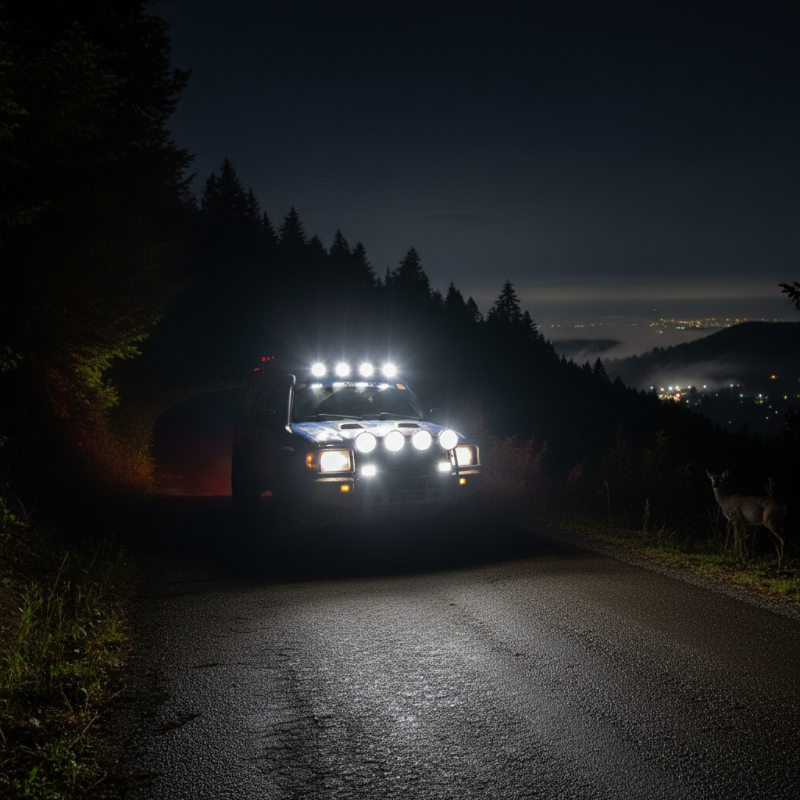
Types of Spot Lights: A Comprehensive Overview for Car Use
When it comes to enhancing your night driving experience, understanding different types of spotlights is crucial. LED spotlights are a popular choice for their brightness and energy efficiency. They produce a stark white light that can illuminate the road ahead, making it easier to spot obstacles. Meanwhile, halogen lights provide a warmer glow, although they tend to consume more energy and have a shorter lifespan.
Another option is HID (High-Intensity Discharge) lights, known for their intense brightness. They can project light further down the road, which is ideal for long stretches of driving. However, be mindful of your area’s regulations, as these lights can sometimes be too bright for oncoming traffic.
**Tips:** When selecting spotlights, consider your typical driving conditions. If you often drive in rural areas, brighter lights are beneficial. However, if you drive mainly in urban settings, a less intense light might suffice. Always aim for balance—too much illumination can be blinding. Check for compatibility with your vehicle to ensure proper installation. Poor fit can lead to inadequate performance. Think about the maintenance required, as some types can accumulate dirt and diminish their effectiveness.
Top 10 Spot Lights for Car: Brightness Comparison
Key Features to Consider When Choosing Car Spot Lights
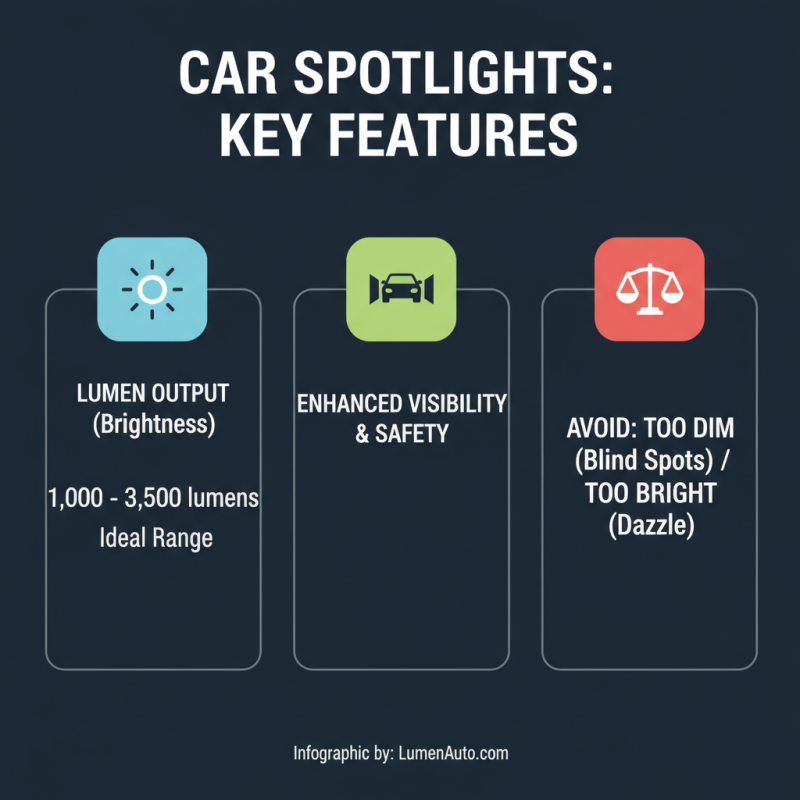
When selecting car spotlights, consider lumen output. Lumen measures brightness. Studies suggest an output range of 1,000 to 3,500 lumens is ideal for spotlights. This range enhances visibility and safety. Too little illumination may leave blind spots. Conversely, excessive brightness can dazzle oncoming drivers. Striking the right balance is crucial.
Next, focus on beam pattern. Wide beams help illuminate surroundings, but narrow beams are perfect for long-distance visibility. A 2021 report indicated that many drivers prefer a combination of both patterns. It ensures thorough coverage without sacrificing clarity. Additionally, look for durability. Spotlights should withstand various weather conditions. Research shows that reliable materials extend the lifespan of automotive lighting.
Lastly, energy efficiency plays a role. Opt for LEDs over traditional bulbs. LED lights consume less power and last longer. According to industry data, LEDs can last up to 25,000 hours compared to halogen lights, which last about 1,000 hours. However, the initial cost of LED spotlights might deter some buyers. Balancing upfront investments and long-term savings is a common dilemma.
Top 10 Spot Lights for Enhancing Night Driving Experience
Driving at night can be challenging. Statistics show that nearly 50% of traffic fatalities occur after dark. To enhance your night driving experience, investing in quality spotlights is essential. The right lighting source improves visibility. It also boosts your awareness of surroundings. Research indicates that high-quality spotlights can increase visibility by more than 70% compared to standard headlights.
Many drivers underestimate the importance of proper lighting. A common mistake is choosing a spotlight that is too bright, leading to glare. A well-balanced spotlight offers a wider and more efficient beam, illuminating the road without blinding oncoming traffic. Additionally, studies reveal that a color temperature between 5000K and 6000K provides the best visibility because it closely resembles natural daylight.
Tips: Regularly check the alignment of your spotlights. Misaligned lights can create blind spots. Also, consider investing in LED options. They are more energy-efficient and have a longer lifespan. Always keep a backup light in your vehicle. This can be invaluable in emergencies. Perfect lighting can change your night driving experience for the better, making it safer and more enjoyable.
10 Best Spot Lights For Car to Illuminate Your Night Driving Experience
| Model |
Brightness (Lumens) |
Beam Distance (Meters) |
Battery Life (Hours) |
Water Resistance Rating |
| Model A |
1200 |
300 |
10 |
IP65 |
| Model B |
1500 |
350 |
12 |
IP67 |
| Model C |
800 |
250 |
8 |
IP54 |
| Model D |
1000 |
280 |
9 |
IP66 |
| Model E |
1800 |
400 |
15 |
IP68 |
Installation Tips for Car Spot Lights: A Step-by-Step Guide
Installing spot lights in your car can greatly enhance your night driving experience. A step-by-step approach will ensure proper installation and functionality. Begin by gathering tools like a drill, wiring kit, and a socket wrench. It’s crucial to work in a well-lit area, as you’ll need to see precisely where you’re drilling. Before starting, read the installation manual carefully.
Select a mounting location for the lights. Consider positioning them on the front or roof of the vehicle. The lights should be aimed slightly downwards to avoid blinding oncoming drivers. After marking the spots, drill holes for the mounting screws. Integrating the wiring can be tricky; ensure you connect the lights to a reliable power source. If unsure, consult wiring diagrams or seek advice online.
Take your time during the installation process. Rushing can lead to mistakes, such as incorrect light angles or poor electrical connections. After installation, check the light alignment and make adjustments as necessary. Remember to test the lights in a safe area before hitting the road. It’s important to reflect on your work, ensuring each step was completed correctly for a successful installation.
Maintaining and Caring for Your Car Spot Lights for Longevity
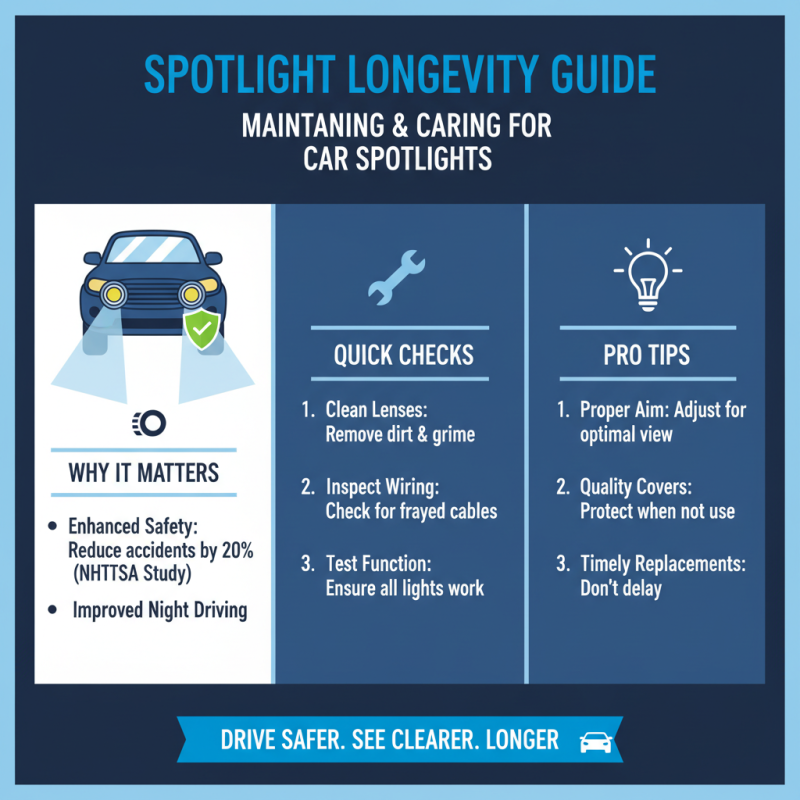
Maintaining spotlights on your car is vital for your safety and driving experience. According to a recent study by the National Highway Traffic Safety Administration, well-maintained lighting can reduce accidents by 20%. Regular checks help ensure your spotlights function effectively, especially during nighttime driving.
Tip: Inspect your spotlights monthly. Look for any dimming or flickering. These signs may indicate that the bulbs are failing. Replacing them early prevents unexpected failures. Additionally, remember that dirt and grime can obstruct light output. Cleaning the lenses regularly helps maximize brightness.
Some car owners neglect these areas, which can lead to costly replacements. Edge cases, like weather damage or corrosion, can shorten the lifespan of your spotlights. A well-documented report from the American Automobile Association emphasizes the importance of using protective covers. They can shield your lights from debris and harsh conditions.
Tip: Use a soft cloth to clean your spotlights. Avoid abrasive materials that may scratch the lenses. Ensure that any sealants are intact to keep moisture out. Neglecting these details can mean facing dim lights when you need them most. Remember, your safety on the road depends significantly on the functionality of your spotlights.