2026 How to Choose the Best LED Lights Headlights for Your Vehicle?
Choosing the best LED lights headlights for your vehicle is crucial for safety and performance. In recent years, LED technology has gained popularity due to its energy efficiency and longevity. According to a report by the Lighting Research Center, LED headlights last up to 25,000 hours, significantly outshining traditional halogen bulbs. Furthermore, they consume less energy, which can improve your vehicle’s overall fuel efficiency.
When selecting LED lights headlights, consider brightness and color temperature. A higher lumen output ensures better visibility at night. Many drivers prefer a color temperature around 6000K, which mimics daylight. However, some may find very bright lights blinding. This concern can lead to a debate on balancing safety and comfort.
In the automotive industry, advancements are continuous. The 2026 Guangdong Export Commodities Fair highlights innovations in manufacturing and materials. As vehicles evolve, so do headlight technologies. Remember to choose headlights that meet specific standards like ISO or CE certifications. Reflecting on the balance of quality and price is essential. Not every LED solution is perfect, and some may not perform as advertised. Always do thorough research before making a purchase.
Understanding the Different Types of LED Headlights Available
When choosing LED headlights for your vehicle, understanding the different types can make a big difference. There are several available options. Factors like brightness, color temperature, and beam pattern will affect your driving experience.
One common type is the projector LED headlight. These headlights focus light into a beam, ensuring better visibility. They often perform well in adverse weather conditions. Another option is the reflector LED headlight. These are easier to install but may not provide the same light quality.
Tips for selection: Check the lumens rating. Higher lumens mean brighter light, but too bright can be blinding. Also, consider the color temperature. A warmer temperature usually improves visibility. Keep an eye on compatibility with your vehicle. Not all LED headlights fit all models.
The installation process can be tricky. If you're not handy, seeking professional help might be wise. Research can help avoid mistakes. Sometimes, purchasing online can lead to surprise issues. Read reviews to ensure a good choice. Overall, take the time to understand what you need before making a final decision on your headlights.
Key Factors to Consider When Choosing LED Headlights
When choosing LED headlights for your vehicle, several key factors stand out. Lumens measure brightness. Higher lumens often mean better visibility. Studies show that 3,000 to 5,000 lumens can provide optimal illumination. However, too much light can cause glare. This is a common mistake when selecting headlights. Some users focus solely on brightness and overlook beam patterns.
Another crucial factor is color temperature. Most drivers prefer a color range of 4,000K to 6,000K. This range mimics daylight and enhances visibility. However, lights that are too blue may not be street legal in certain areas, leading to potential legal issues. It’s essential to check local regulations.
Lastly, durability cannot be ignored. Many LED headlights claim to last up to 30,000 hours. Yet, users have reported significant performance drops well before that mark. Knowing how to choose based on real user experiences is vital. Consider reading reviews and checking for certifications. This approach can help avoid wasting money on subpar products.
2026 How to Choose the Best LED Lights Headlights for Your Vehicle? - Key Factors to Consider When Choosing LED Headlights
| Factor |
Description |
Importance Level |
Recommended Value |
| Brightness (Lumens) |
Measures the output light, ensuring clear visibility at night. |
High |
3000 - 6000 lumens |
| Color Temperature (Kelvin) |
Affects the hue of light; cooler temperatures provide more daylight-like visibility. |
Medium |
5000K - 6000K |
| Beam Pattern |
The angle and shape of the light output for effective illumination on the road. |
High |
Focused beam with a good spread |
| Durability |
Resistance to shocks, vibrations, and environmental factors. |
High |
IP67 or higher |
| Lifespan |
Long-lasting performance to reduce replacement frequency. |
Medium |
25,000 - 50,000 hours |
| Heat Dissipation |
Effective heat management to prolong component life. |
High |
Cooling systems or heat sinks integrated |
Comparing LED Headlights: Brightness, Color Temperature, and Lifespan
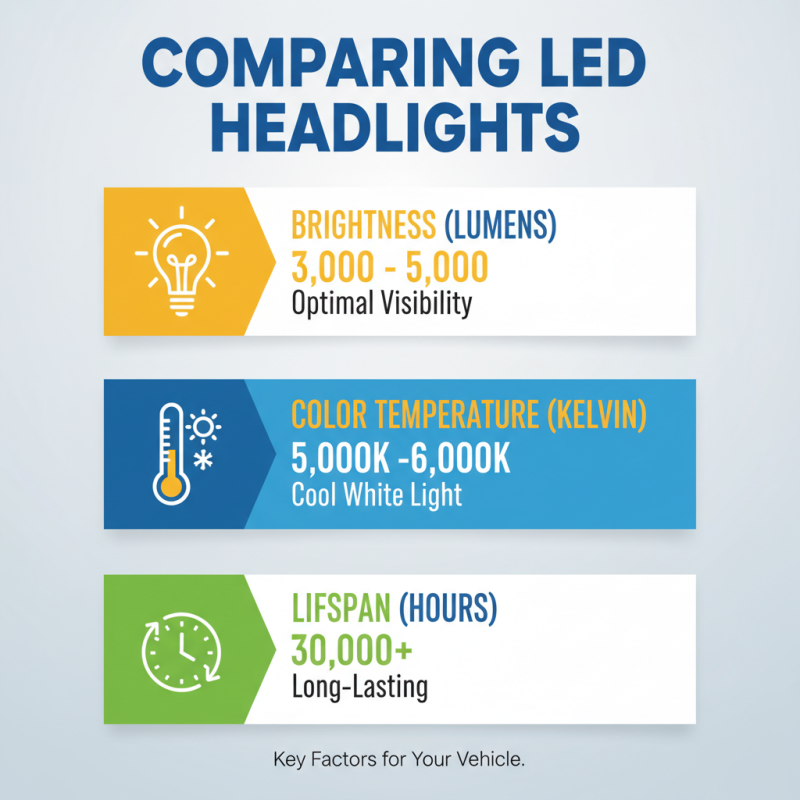
When it comes to choosing LED headlights for your vehicle, brightness, color temperature, and lifespan play crucial roles. Brightness is measured in lumens. A higher lumen count means more light output. Aim for headlights that offer around 3,000 to 5,000 lumens for optimal visibility. Such brightness is vital for night driving or in poor weather conditions.
Color temperature is another key factor. It is measured in Kelvin (K). A color temperature between 5,000K and 6,000K provides a white light that mimics daylight. This type of light enhances visibility. However, some may find it too harsh. A warmer light below 4,500K can provide comfort but might not illuminate the road as effectively.
Lifespan is equally important. Most LED headlights last between 30,000 to 50,000 hours. However, quality can vary significantly. Some cheaper options might fade over time or fail unexpectedly. Investing in a quality product can save you from frequent replacements. Remember, you may need to compromise on one feature to get the others. Choosing the right LED headlights requires careful consideration of these factors. Each choice can affect your driving experience and safety on the road.
Installation Tips for Upgrading to LED Headlights in Your Vehicle
Upgrading your vehicle with LED headlights can greatly enhance visibility. However, installation can sometimes be tricky. Begin by gathering all necessary tools. You may need a screwdriver, wire connectors, and a pair of gloves. Make sure to check your vehicle’s manual. This should provide clear guidance on accessing the headlight assembly.
When you remove the old headlights, take your time. It’s easy to miss screws or clips. If you find any resistance, do not force it. This could damage the assembly. Inspect the wiring before connecting the new LEDs. Sometimes the stock harness may not fit perfectly with new lights. A little DIY adjustment might be needed.
Once installed, power on the headlights before fully reassembling everything. Check if they function correctly. Misalignment can lead to poor performance. Also, ensure they are not too bright for oncoming traffic. If you notice flickering, revisit your connections. It’s crucial to reflect on these details to avoid common mistakes.
Comparison of LED Headlight Brightness and Lifespan
This chart illustrates the comparison between three types of LED headlights based on their brightness and lifespan. The bar dataset shows the brightness in lumens, while the line dataset indicates the lifespan in hours. Understanding these metrics can help you choose the best LED headlights for your vehicle.
Maintaining and Troubleshooting LED Headlight Performance
Maintaining and troubleshooting LED headlights is crucial for optimal performance. These lights can flicker or dim over time, which may signal a weak connection or a failing component. Regular inspections of the wiring and connectors keep everything in top shape. Ensure connections are clean and free from corrosion.
Tips: Check your headlights monthly. Look for any signs of moisture in the housing. A small leak can lead to bigger issues over time.
If your headlights experience color changes, it might indicate a problem. Different colors suggest different issues. For example, a blue tint may hint at overheating. Pay attention to these changes. Adjustments may be needed to prevent permanent damage.
Tips: Always use a multimeter to test voltage levels. If readings are low, investigate deeper. Adjustments to the power supply might be necessary for better performance.