2026 How to Choose the Best Offroad Led Lights for Your Adventure?
Choosing the right Offroad LED Lights for your adventure is crucial for safety and performance. A recent industry report states that over 70% of off-road enthusiasts prioritize lighting quality in their gear selection. Proper lighting can enhance visibility and increase confidence during night expeditions or in challenging terrains.
The market is flooded with various types of Offroad LED Lights, each boasting unique features. However, not all lights are created equal. Factors such as beam pattern, lumens output, and durability are essential to consider. For instance, according to a survey by Outdoor Gear Labs, 58% of users reported dissatisfaction with their lights due to inadequate brightness in rugged conditions.
When selecting Offroad LED Lights, think about your specific needs. Are you venturing into well-lit areas or planning to tackle uncharted trails? Reflect on your past experiences. Did your lighting let you down? Understanding the nuances of these products can lead to better decision-making. It's not just about adding a light; it's about enhancing your overall adventure.
Understanding Offroad LED Light Types and Their Features
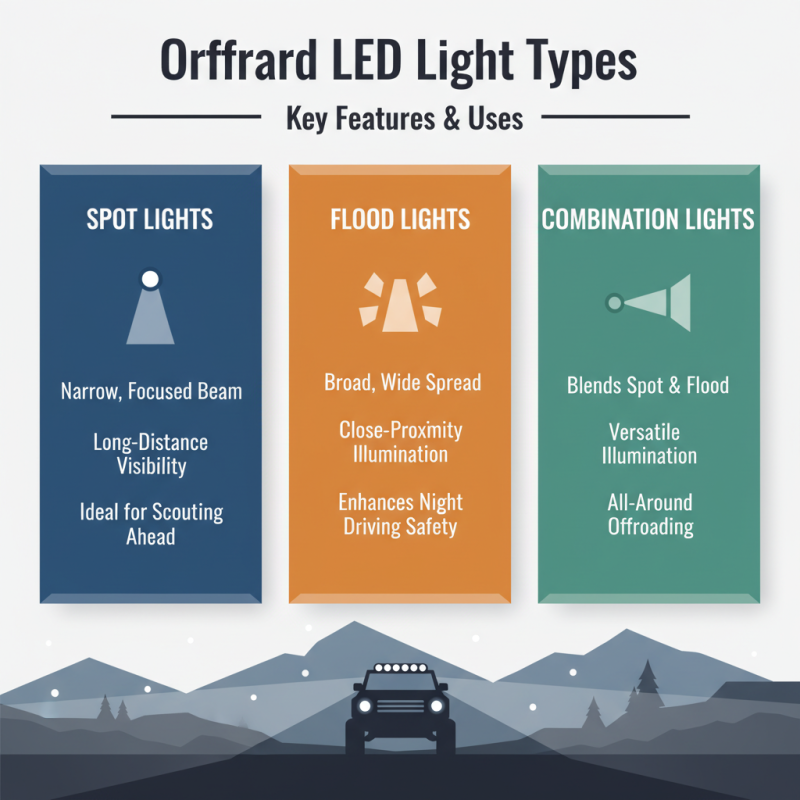
Choosing the right offroad LED lights for your adventure requires understanding their various types and features. There are several categories, including spot, flood, and combination lights. Spot lights provide a narrow beam for long-distance visibility, making them ideal for scouting roads ahead. Flood lights, on the other hand, offer a broader light spread for close-proximity visibility, enhancing safety during night driving.
Industry reports indicate that LED lights usually consume 80% less energy than traditional halogen lights, leading to longer battery life and efficiency. Many outdoor enthusiasts trust these stats, but not all LED lights deliver quality performance. Some cheaper models may underperform in rugged terrain or harsh weather conditions. Users have noted that not all brands adhere to strict manufacturing standards, leading to variability in brightness and durability.
When selecting lights, consider the lumens rating. A higher lumen count typically indicates brighter output. However, factors like beam pattern and color temperature also play crucial roles. Offroaders often overlook these details, assuming that more lumens always equal better lighting. In practice, the right balance of features is essential for a truly effective lighting solution. Evaluate your needs carefully before making a choice.
Key Factors to Consider When Choosing Offroad LED Lights
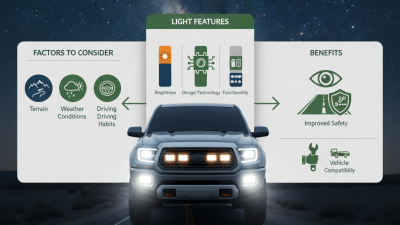
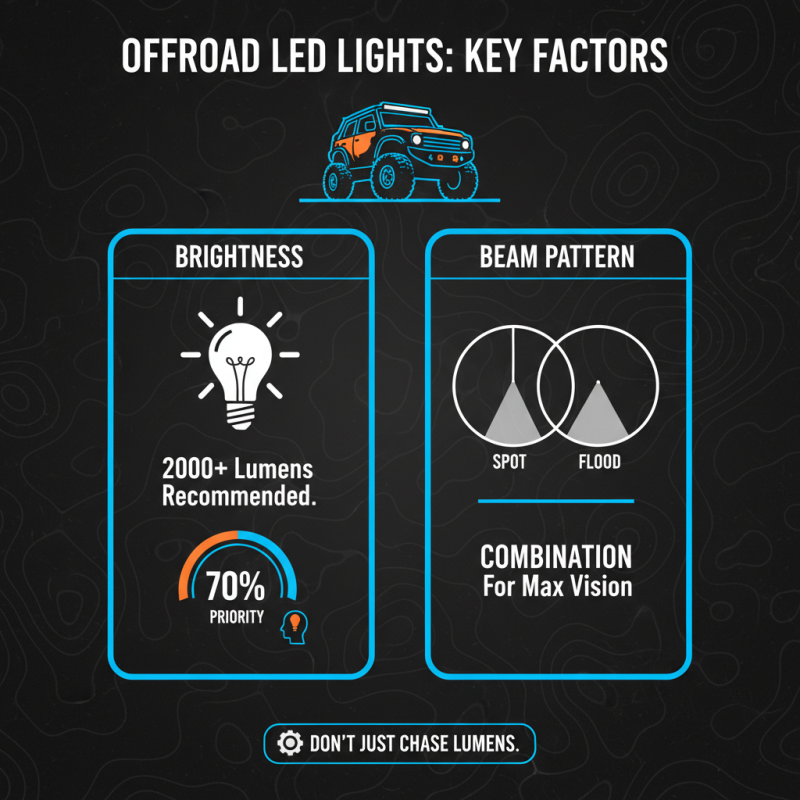
When considering offroad LED lights for your adventures, several key factors play a crucial role. Brightness is paramount. Look for lights with a lumen output of at least 2,000 lumens for optimal visibility in dark conditions. According to a 2021 industry report, over 70% of offroaders prioritize brightness above all. Remember, more lumens don't always mean better lights. Beam pattern matters too. A combination of spot and flood beams can maximize your field of vision.
Durability is another essential factor. Choose LED lights with an IP67 rating or higher. This rating indicates resistance to water and dust, critical for offroad conditions. The materials used should be robust. Aluminum housing can withstand harsh environments, making it a worthwhile investment. Don't forget about power consumption. LED lights are known for efficiency. Still, ensure your vehicle's battery can handle the additional load, especially during long trips.
Tips: Always check reviews from fellow adventurers. User experiences provide valuable insights that you won’t find in promotional content. Compare different models and avoid impulse buys. One bad decision could lead to poor visibility and increase the risk of accidents. Stay informed and choose wisely.
Comparison of Offroad LED Light Brands and Models
When selecting offroad LED lights, it’s crucial to compare various brands and models. Each offers unique features suited for different adventures. Some lights excel in brightness, while others prioritize durability and weather resistance. The best choice often comes down to how you plan to use them.
Focus on beam patterns that match your needs. Flood lights can illuminate vast areas, while spot lights provide long-distance visibility. Look at individual needs, like mounting options or power consumption. Price does not always equal quality. Some lesser-known brands may offer competitive options.
User reviews are valuable for assessing reliability. Many users share their experiences, highlighting both strengths and weaknesses. Sometimes, a popular model may fail under harsh conditions. Gather insights from multiple sources. Experimenting with different lights may lead to unexpected findings. Keep an open mind and be ready to adjust your choices.
Installation and Maintenance Tips for Offroad LED Lights
When installing offroad LED lights, precision matters. Start by selecting a sturdy mount that can handle vibrations and rough terrain. Ideally, use high-quality screws and brackets. A misaligned light can lead to poor visibility, making your adventures less safe. Measure twice before drilling any holes. A small mistake could result in permanent damage.
Cable management is another crucial aspect. Route your wiring away from moving parts and heat sources. Secure cables with zip ties to prevent them from snagging. Regularly check for wear and tear. A frayed wire might not just cause failure; it could also lead to short circuits. Use protective tubing for extra safety.
Maintenance should not be overlooked. Clean the lenses after muddy trips to maintain brightness. Inspect the lights every few weeks, especially before long trips. Look for cracks or moisture inside the housing. Small issues can quickly escalate. Staying proactive can enhance the longevity of your offroad lights and ensure a safer journey.
2026 Offroad LED Lights Performance Comparison
Maximizing the Performance of Your Offroad LED Lights during Adventures
When planning offroad adventures, the right LED lights can make all the difference. Maximizing the performance of your offroad lights begins with understanding the terrain.
Rocky trails and muddy paths require different lighting solutions. Choose lights with a broad beam and good distance. This ensures you can see potential obstacles ahead.
Installation is another critical factor. Proper mounting enhances visibility. Ensure your lights are securely attached. Vibration and bumps on offroad trails can affect performance.
Inadequate installation often leads to failures. Make adjustments if necessary, even if it seems minor.
Maintenance is vital for long-term performance. Regularly check connections and clean lenses. Dust and dirt can hinder light output. Over time, components can wear out, and this is a normal part of usage.
Be prepared to replace parts when needed. Remember, it's better to replace than risk being left in the dark during an adventure.