How to Choose the Best Car Flood Lights for Your Needs?
Choosing the right Car Flood Lights can be a daunting task. Many drivers struggle with finding the ideal lighting solution that meets their specific needs. According to John Smith, a renowned expert in automotive lighting, "The right Car Flood Lights can significantly enhance visibility and safety."
Understanding the different types of Car Flood Lights is crucial. There are various factors to consider, like lumens, beam patterns, and installation methods. Some lights might be too bright for city driving, while others may not provide sufficient coverage for off-road adventures.
It’s easy to overlook certain details while shopping for Car Flood Lights. Budget constraints often lead to compromises that affect performance and longevity. Take time to research options, compare features, and read user reviews. Balancing quality and cost can be challenging, but it’s essential for a satisfactory purchase. Remember, proper lighting can make all the difference in your driving experience.
Understanding Different Types of Car Flood Lights Available in the Market
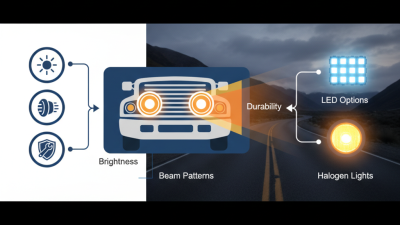
When selecting car flood lights, it's essential to understand the different types available.
LED lights are popular due to their energy efficiency and longevity.
They can illuminate vast areas while consuming less power. However, you need to ensure the wattage suits your needs.
Some may find it challenging to compare brightness levels.
Halogen lights offer a traditional option. They provide warm light and are usually cheaper.
Yet, they can consume more energy and may not last as long. Consider your usage before making a decision.
What works for one vehicle might not suit another.
Incandescent lights are an alternative, though they are becoming less common.
They produce a lot of heat, which can be an issue. While initially inexpensive, their lifespan is short.
Reflect on where and how often you drive. The right choice often depends on your specific driving conditions.
Key Factors to Consider When Choosing Car Flood Lights for Your Vehicle
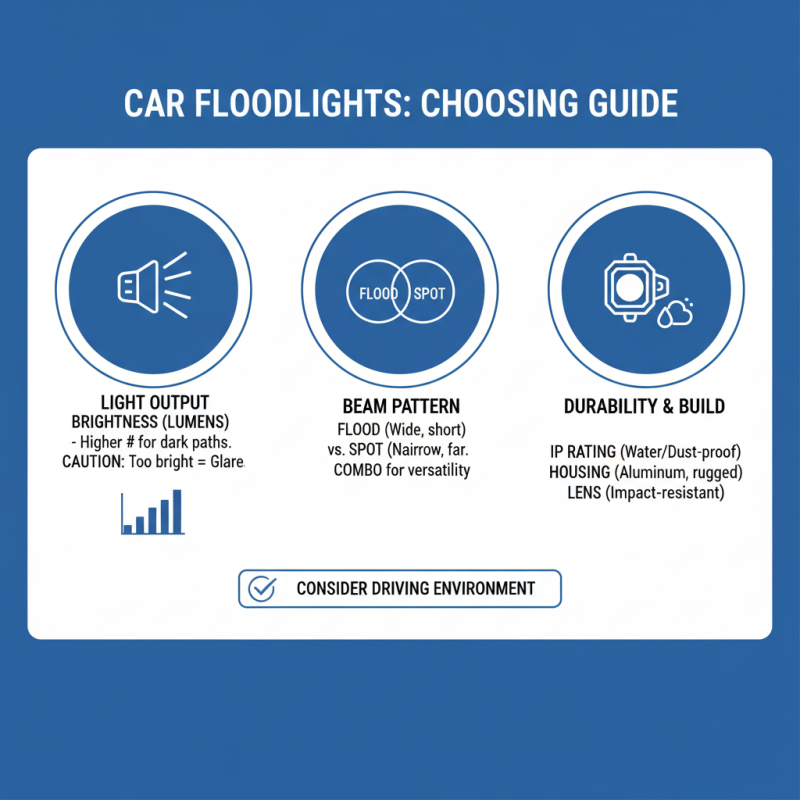
When choosing car flood lights, there are crucial factors to consider. Light output is essential. You want bright lights that illuminate dark paths effectively. Look for lumens specifications. A higher lumen count generally means more brightness. However, understand your driving environment. In some cases, too much brightness can cause glare.
Another important factor is the beam pattern. Flood lights provide a wide coverage area. But it's crucial to choose the right pattern for your needs. Some lights offer adjustable beam patterns. This flexibility allows you to adapt to different situations. Think about where you will use these lights most.
Tips: Always check installation requirements. Some lights may need more space or special mounts. These details matter. Also, consider wattage. More watts can mean brighter lights and, unfortunately, more energy consumption. Balancing intensity and efficiency is vital. Don’t overlook durability either. Ensure the lights are weather-resistant and built to last. You want a reliable partner on your adventures.
Assessing Brightness and Beam Patterns for Optimal Lighting Performance
Choosing the right brightness and beam pattern for your car flood lights is crucial. Brightness is typically measured in lumens. A higher lumen count means brighter light. However, more lumens do not always equal better performance. Some situations require softer light to avoid glaring and enhance visibility.
Beam patterns also play a significant role in lighting performance. Flood lights may provide wide or narrow beams. A wide beam covers a larger area, making it easier to see obstacles. Conversely, a narrow beam can enhance depth perception. You’ll need to assess where you mostly drive. Is it on highways or uneven terrain?
Test different types of lights in real-world conditions when possible. Sometimes what looks good on paper doesn’t work in practice. Visiting local installers can provide additional insights. Gathering feedback from users is always wise. Remember, lighting should improve your safety, not hinder it.
Evaluating Durability and Weather Resistance in Car Flood Light Selection
When choosing car flood lights, durability and weather resistance are crucial. Lights are exposed to various conditions, from rain to intense sunlight. Selecting lights with a strong housing material is essential. Look for aluminum or high-quality plastic that withstands impacts. Ensure the lens is shatterproof to guard against debris.
IP ratings offer insight into a light’s resistance to dust and water. An IP67 rating means it can handle immersion in water and keep dirt out. This is important for off-road adventures. If flood lights fail due to poor weatherproofing, it can lead to safety hazards and costly replacements.
Consider the mounting mechanism, too. A secure mount keeps lights stable during rough rides. If the mount fails, the lights can shift or break. Users should also pay attention to the warranty. A good warranty indicates confidence in durability. Investing time in research will pay off, leading to a better choice that fits your specific needs and environment.
Car Flood Lights Comparison Table
| Model |
Lumens |
Durability Rating |
Weather Resistance |
Warranty |
| Model A |
5000 |
IP68 |
Rain, Snow, Dust |
2 years |
| Model B |
6000 |
IP67 |
Rain, Dust |
1 year |
| Model C |
4500 |
IP65 |
Rain |
18 months |
| Model D |
7000 |
IP69K |
Rain, Snow, Dust, High Pressure |
3 years |