Why Choose LED Headlights for Your Vehicle?
When it comes to vehicle lighting, opting for LED lights headlights presents numerous advantages. Renowned automotive lighting expert Dr. Alice Thompson once stated, "LED headlights enhance visibility and safety on the road." This insight underscores the growing shift towards LED technology in modern vehicles.
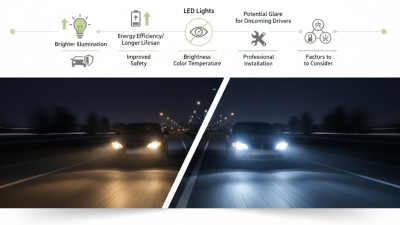
The transition from traditional halogen bulbs to LED lights headlights offers better brightness and efficiency. These lights consume less energy, extending the life of your vehicle's electrical systems. Furthermore, LED headlights provide a clearer, whiter light, improving nighttime driving conditions. However, some consumers may hesitate due to perceived costs or varying quality in the market.
Still, the reliability of LED lights headlights cannot be overstated. Many users report higher satisfaction levels with their visibility and reduced eye strain. On the flip side, the initial investment is a point of contention. It's essential to research and select reputable brands. Making an informed choice can lead to both safety and long-term savings.
Advantages of LED Headlights Over Traditional Lighting Options
LED headlights have transformed vehicle lighting. They offer distinct advantages over traditional halogen and xenon options. One major benefit is energy efficiency. LED lights consume less power, extending battery life. This is particularly beneficial for electric and hybrid vehicles.
The brightness of LED headlights is another notable feature. They emit a crisp, white light that improves visibility. This clarity helps drivers see further down the road. Additionally, the directional nature of LEDs allows for better light distribution. Drivers can navigate better in dark or foggy conditions.
Longevity is an essential consideration. LED headlights often last up to 25,000 hours, reducing replacement frequency. However, some users may find they are more expensive upfront. The long-term savings on replacements and energy costs can offset this. Making the switch to LED lights could be one of the best decisions for your vehicle.
Why Choose LED Headlights for Your Vehicle? - Advantages of LED Headlights Over Traditional Lighting Options
| Feature |
LED Headlights |
Traditional Halogen Headlights |
| Lifespan |
25,000 - 50,000 hours |
1,000 - 2,000 hours |
| Energy Efficiency |
About 80% more efficient |
Less energy efficient |
| Brightness |
Up to 1,000 lumens |
Around 700 lumens |
| Color Temperature |
5000K - 6000K (daylight) |
3000K - 4000K (warm) |
| Heat Generation |
Minimal |
High |
| Durability |
Shock and vibration resistant |
Less resistant |
| Environmental Impact |
No harmful substances |
Contains hazardous materials |
Energy Efficiency: How LED Headlights Save Power
LED headlights are gaining popularity in the automotive industry due to their energy efficiency. Studies indicate that LED lights consume up to 80% less energy than traditional halogen bulbs. This drastic reduction in power usage helps save on fuel costs, especially for electric and hybrid vehicles. The savings in energy consumption can contribute to lower emissions as well.
The lifespan of LED headlights is another factor to consider. Typical LED lights can last up to 25,000 hours, significantly overshadowing the 1,000-hour lifespan of halogen bulbs. This longevity not only means fewer replacements but also less waste. However, it is crucial to note that not all LED headlights are created equal. Some may not meet the necessary safety standards or provide the same level of illumination.
Moreover, while the initial cost of LED headlights can be higher, the long-term savings can outweigh this investment. An industry report by the U.S. Department of Energy highlighted that switching to LED lighting can result in annual savings of $2 billion in electricity costs. Still, consumers should conduct thorough research. Choosing the right headlights involves understanding both the energy efficiency and the potential for improved visibility.
Enhanced Visibility and Safety Features of LED Headlights
LED headlights have gained immense popularity in recent years. Their advanced technology significantly improves visibility for drivers. According to a report by the National Highway Traffic Safety Administration (NHTSA), over 40% of traffic accidents occur in low-light conditions. Enhanced brightness and directionality in LED headlights provide better illumination of the road ahead, which is crucial for safety. This lighting technology offers up to 200% more light on the road compared to traditional halogen bulbs.
In addition to brightness, LED headlights have a longer lifespan. They can last up to 25,000 hours, which is nearly four times longer than halogen lights. This durability can lead to fewer replacements and reduced waste. However, the initial investment may be higher, which can discourage some vehicle owners. Despite this, the long-term benefits include improved safety on the road. Research shows that better visibility decreases the likelihood of nighttime accidents significantly.
Moreover, LED headlights contribute to energy efficiency. They consume less power while offering superior performance. While this sounds ideal, it is essential to note that not all LED products are created equal. Variability in quality can affect performance and longevity. Users must consider reputable sources and reviews before making a decision. This careful approach helps ensure that the chosen lighting solution truly enhances safety and visibility on the road.
Longevity and Durability: The Lifespan of LED Bulbs
LED headlights have gained significant popularity among vehicle owners, thanks to their remarkable longevity and durability. Unlike traditional halogen bulbs, which typically last around 500 to 1,000 hours, LED bulbs can shine bright for about 30,000 to 50,000 hours. This means you could replace your LED headlights just once in the vehicle's lifetime, significantly reducing maintenance and replacement costs. Industry data suggests that the longevity of LED technology can lead to an overall reduction in energy consumption by up to 75%.
The robust construction of LED bulbs enhances their lifespan as well. They are more resistant to shocks, vibrations, and temperature variations, making them ideal for various driving conditions. A study by the Department of Energy indicates that LED headlights are less prone to failure compared to older lighting technologies. Mishaps such as bulb burnouts due to rough terrains become less of a concern. However, it is worth noting that not all LED products are created equal. Variability in manufacturing quality can lead to inconsistencies in performance.
While the upfront cost of LED headlights might be higher, their lifespan offers long-term savings. In some cases, the price disparity serves as a barrier for budgeting consumers. Evaluating the total cost of ownership can help make the investment worthwhile. Transitioning to LED headlights could be a step toward a more sustainable approach to automotive lighting, but one should consider the reliability and quality of the LED product chosen.
Installation and Compatibility Considerations for LED Headlights
When considering LED headlights for your vehicle, installation is a key factor. Most vehicles require specific connectors for LED lights. Not all cars are built the same. Some may need additional adapters to ensure a proper fit. This can lead to unexpected challenges during installation. Familiarity with your vehicle's headlight assembly is essential.
Compatibility also plays a critical role. Not every LED bulb fits every socket. Checking your vehicle's manual can help identify compatible options. Using incompatible bulbs can lead to problems, such as flickering or excessive heat. Additionally, while many LED lights last longer, their effectiveness can depend on the vehicle’s wiring and power supply.
Relying on professional installation can mitigate risks. Technicians have the experience to ensure a perfect fit. However, if you choose a DIY approach, research is your friend. Online forums and videos can provide valuable insights. Installing LED headlights can enhance visibility. Yet it’s crucial to consider both the challenges and benefits before making a decision.