How to Choose the Best Auto Led Lights for Your Vehicle?
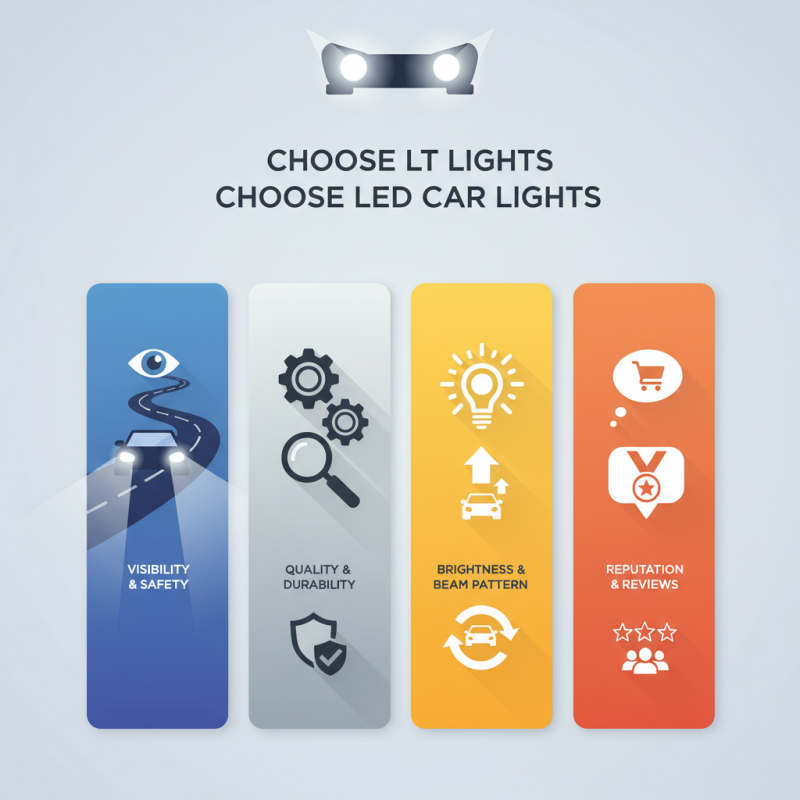
Choosing the best Auto Led Lights for your vehicle can be overwhelming. Many options exist, each promising excellence. It’s crucial to consider quality, brightness, and durability. The right Auto Led Lights enhance visibility, making nighttime driving safer. They also add a modern appeal to any vehicle.
Look for reputable brands known for their expertise in lighting. Check customer reviews to understand real-world performance. Not all Auto Led Lights fit every vehicle type. Compatibility matters, so ensure the lights match your car’s specifications.
Quality is paramount. Cheap lights may fail quickly, causing frustration. It's wise to invest in reliable products. Brightness is not just about lumens; it’s about the right beam pattern. The right choice will illuminate the road without blinding other drivers.
Factors to Consider When Choosing Auto LED Lights
When selecting auto LED lights for your vehicle, several factors will impact your decision. The brightness, measured in lumens, directly affects visibility. According to a 2022 report by the Lighting Research Center, higher lumens result in better road illumination. Aim for at least 1,000 lumens for optimal performance. Additionally, the color temperature, measured in Kelvin, influences the light's appearance. A range of 5000K to 6000K is often recommended for clarity during nighttime driving.
Durability is another critical factor. Look for lights rated with an IP67 or higher waterproof rating. This signifies strong resistance to dust and moisture, ensuring longevity. A survey by the Automotive Lighting Association revealed that 70% of LED failures come from poor quality materials. Selecting lights from reputable sources matters.
Tip: Consider your local weather conditions. In regions with heavy rain or snow, waterproof features become essential. Proper installation is vital too. Improperly mounted lights may lead to glare or inadequate illumination. Double-check ease of installation and alignment.
Maintenance can often be overlooked. Regular cleaning of the LED lenses improves light output. Even high-quality LEDs can dim over time due to dirt or fogging. Remember to balance cost with quality. Cheaper options may not provide the longevity of premium lights. Reflect on how you use your vehicle, as this can ultimately guide your choice in LED lights.
How to Choose the Best Auto LED Lights for Your Vehicle? - Factors to Consider When Choosing Auto LED Lights
| Feature |
Description |
Importance Level |
| Brightness (Lumens) |
Measured in lumens, indicates the light output of the LED. Higher lumens mean brighter lights. |
High |
| Color Temperature (Kelvin) |
Refers to the color of the light emitted, ranging from warm yellow to cool white or blue. |
Medium |
| Lifespan |
LEDs generally have a longer lifespan compared to traditional bulbs, lasting thousands of hours. |
High |
| Installation |
Some LED lights are easier to install than others, which can affect compatibility with your vehicle. |
Medium |
| Heat Management |
Good heat dissipation is crucial to ensure longevity and performance of LED lights. |
High |
| Beam Pattern |
The spread of light is important for visibility on the road; choose a beam pattern suitable for your driving needs. |
Medium |
| Water Resistance |
Look for an IP rating to ensure lights can withstand moisture and other environmental factors. |
High |
| Warranty |
A good warranty protects your investment, indicating the manufacturer's confidence in the product. |
Medium |
Types of Auto LED Lights Available for Vehicles
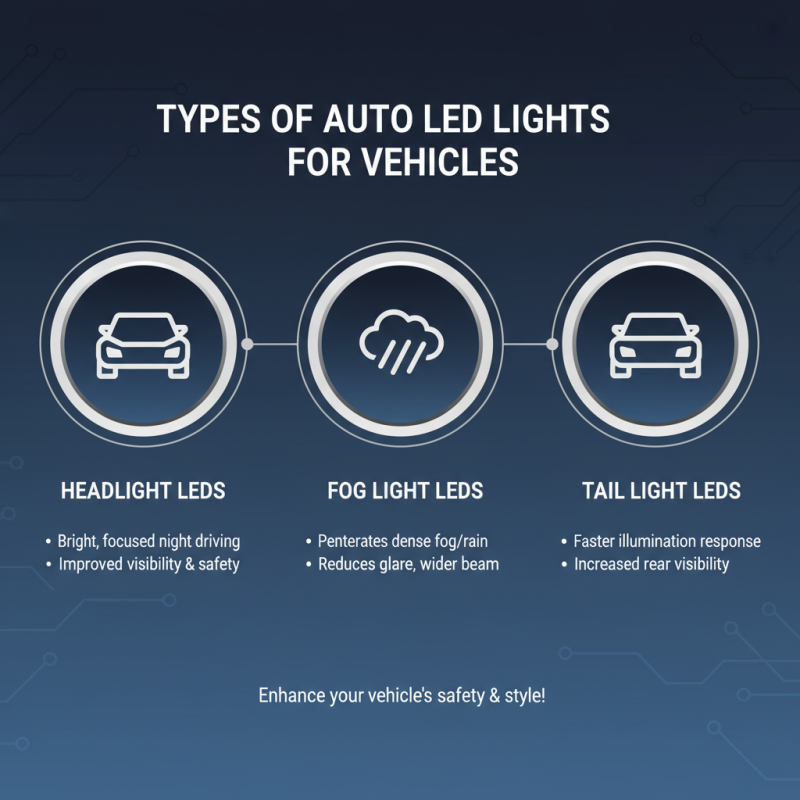
When selecting auto LED lights for your vehicle, understanding the different types available is crucial. There are several categories to consider, each offering unique benefits and uses. Headlight LEDs are among the most popular. They provide bright, focused illumination for night driving and improve visibility in adverse weather. Many drivers appreciate how they enhance safety on dark roads.
Another significant type is fog light LEDs. These lights help penetrate fog, rain, and snow, reducing glare. They can be particularly useful in areas with frequent inclement weather. Signal and brake lights are also available in LED form. These lights light up faster than traditional bulbs, giving others more time to react. This can be a game changer for overall road safety.
It's essential to consider the wattage and brightness while selecting LED lights. Higher brightness might not always mean better performance; it can cause glare for oncoming traffic. Some vehicles may require specific types or sizes to fit properly. Researching your vehicle's needs and compatibility can save time and money. Don't rush the decision; it's better to choose wisely than regret a hasty choice later.
Understanding Brightness and Color Temperature in LED Lights
When choosing the best auto LED lights, understanding brightness and color temperature is crucial. Brightness is measured in lumens. Higher lumens mean more light output. For headlights, 1,200 to 3,000 lumens are typical. This range ensures visibility during night driving, but it’s not just about strength. Too bright can blind other drivers. Balance is key.
Color temperature affects visibility and comfort. Measured in Kelvin (K), lower temperatures appear warmer, around 3,000K. This produces a yellow light, which is softer on the eyes. As you increase to 5,000K, the light becomes whiter and closer to daylight. This can enhance visibility but may cause eye strain for some. Always consider personal sensitivity to light.
Different environments can also impact your choice. In foggy areas, a lower temperature may be more effective. Reflecting surfaces can alter how light disperses. Test various options to find what works best for your situation. Remember, it’s a personal choice influenced by driving habits and preferences. Don't rush the decision; a thoughtful selection can enhance your driving experience.
Installation Tips for Auto LED Lighting Systems
Installing auto LED lights can significantly enhance your vehicle's appearance and visibility. When tackling this project, planning is key. Begin by gathering all the necessary tools and materials. Having everything at hand reduces delays and mistakes during installation.
Tips: Always ensure the vehicle is off before starting. This prevents accidental shorts. Selecting the appropriate LED lights is essential. Check the current draw to avoid electrical issues. Additionally, reviewing your vehicle’s manual helps in understanding which areas can be illuminated safely.
While the installation process may seem simple, errors can occur. Pay attention to wire connections; loose wires can lead to flickering lights. Test everything after installation. This step ensures everything works as expected. "Don't rush;" take your time to double-check all connections. If unsure, consulting with a professional can save time and headaches.
Maintenance and Care for Your Vehicle's LED Lights
Maintaining your vehicle's LED lights is essential for optimal performance and longevity. These lights can enhance visibility and safety. However, they require regular care. Dust and debris can accumulate over time. This buildup may diminish brightness and create uneven lighting. Clean headlights and tail lights with a soft cloth and a gentle cleaner to avoid scratches.
Tips: Check your LED lights frequently. Look for flickering or dimming. These could indicate a problem. Address any issues promptly to prevent complete failure.
Avoid using harsh chemicals, as they can damage the light covers. During winter months, ice and snow can obstruct light output. Make it a habit to clear away snow and ice after heavy storms. This simple step enhances visibility and safety on the road.
Consider the alignment of your lights too. Misaligned lights can blind oncoming drivers, posing a safety risk. Park your vehicle on level ground and check the angles. Adjust if necessary to ensure proper illumination. Regular reflection on these small details can significantly improve the durability and performance of your LED lights.
How to Choose the Best Auto LED Lights for Your Vehicle
This chart illustrates key features to consider when choosing the best auto LED lights for your vehicle, including brightness, energy consumption, lifespan, color temperature, and cost.