10 Essential Tips for Choosing Driving Lights For Trucks
Choosing the right driving lights for trucks can be challenging. There are many options available, and making the right decision is crucial for safety and visibility. Proper driving lights enhance nighttime driving and harsh weather conditions. They illuminate the road ahead and help avoid obstacles.
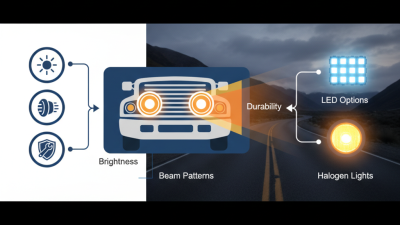
When selecting driving lights for trucks, consider the brightness, beam pattern, and durability. Some lights may promise high performance but lack essential features. It’s important to assess your specific needs. Whether you drive in rural areas or urban environments, the right lights will change your driving experience.
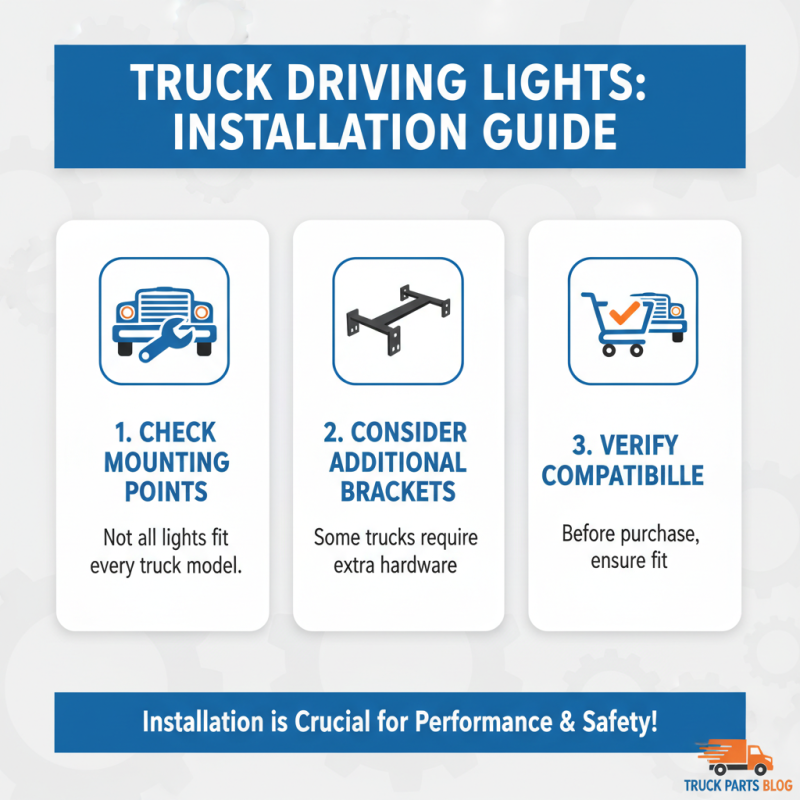
Many truck owners overlook compatibility with their vehicle's electrical system. This can lead to frustration and wasted time. Ensure that the lights you choose fit your truck and meet your expectations. Ultimately, choosing driving lights for trucks is not just about aesthetics. It’s about safety, visibility, and confidence on the road.
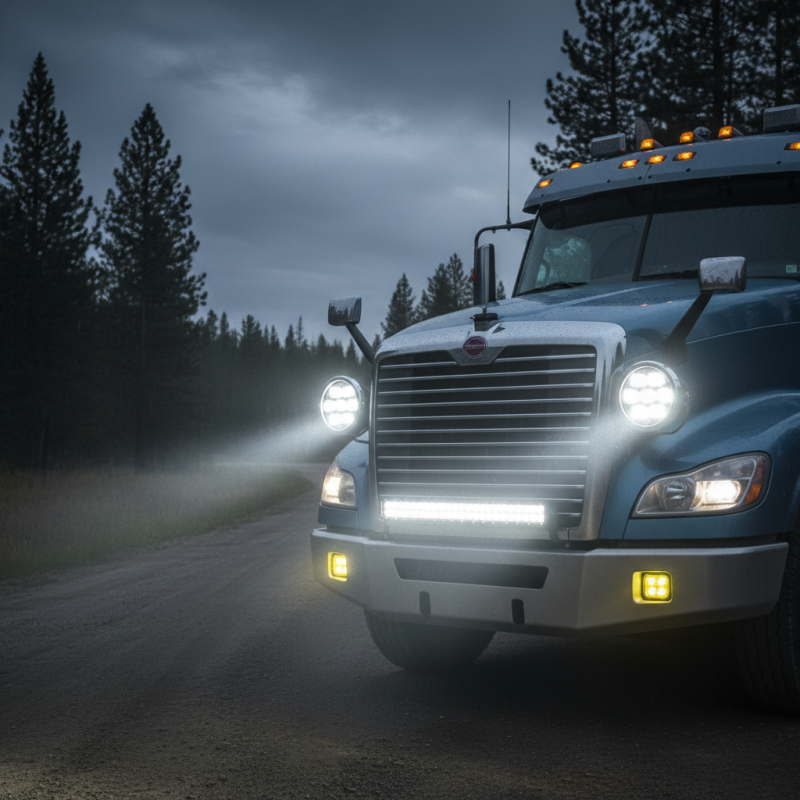
Understanding the Different Types of Driving Lights Available for Trucks
When selecting driving lights for trucks, it's crucial to understand the various types available. LED driving lights are popular due to their energy efficiency and longevity. They produce bright, clear illumination, enhancing visibility during night drives. Halogen lights offer a warm glow but may consume more power. They’re often more affordable but have a shorter lifespan.
Another option is HID lights. These provide an intense light output and are brighter than halogen. However, they can be harsh on the eyes if not properly aimed. Drivers should consider where they’ll be using these lights. Off-road settings require different lighting solutions than urban driving. The need for durability is also essential, especially for those frequently on rough terrain.
Additionally, reflectors and beam patterns play a vital role. A wider beam may illuminate more area but can cause glare for oncoming traffic. Finding the right balance is essential for safety and functionality. Test different lights, and evaluate performance in real-world conditions. It's essential to acknowledge that not all lights will meet all needs perfectly. Reflection on personal driving habits can guide this choice.
10 Essential Tips for Choosing Driving Lights For Trucks
| Type of Driving Lights |
Beam Pattern |
Wattage |
Light Output (Lumens) |
Durability Rating |
Ideal Use |
| Halogen Lights |
Spread Beam |
55 W |
1,000 Lumens |
IP65 |
Street Driving |
| LED Lights |
Spot Beam |
30 W |
3,000 Lumens |
IP67 |
Off-Roading |
| HID Lights |
Long Range Beam |
35 W |
3,200 Lumens |
IP68 |
Highway Driving |
| Fog Lights |
Wide Beam |
55 W |
1,200 Lumens |
IP65 |
Bad Weather Conditions |
Key Factors to Consider When Selecting Driving Lights for Truck Requirements
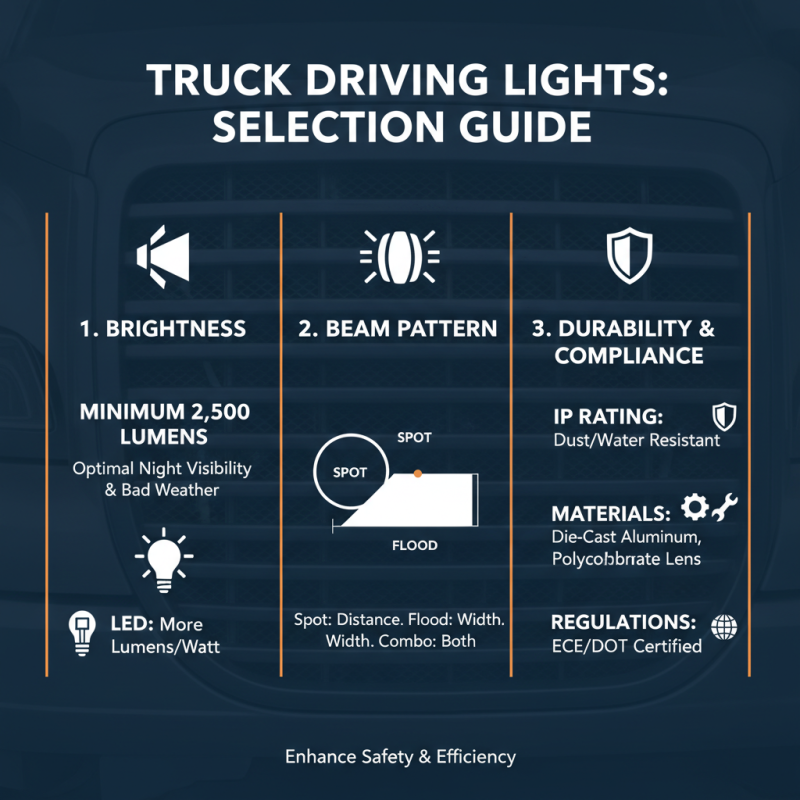
When selecting driving lights for trucks, several key factors come into play. Brightness is crucial. Most trucking regulations recommend a minimum output of 2,500 lumens for optimal visibility. This ensures clear sight during night drives or adverse weather conditions. Choosing LED lights can provide better lumens per watt, thus increasing efficiency. However, the brightness alone does not guarantee safety.
The beam pattern is another vital consideration. A good beam pattern offers a well-defined area of illumination. Reports suggest that driving lights with a combination of spot and flood beams are most effective. They light up the road ahead and the peripheral areas too. Yet, buyers often overlook this aspect, leading to potential hazards.
Lastly, durability matters in rugged environments. The lights should withstand vibrations and impacts typical in truck driving. Research indicates that lights with an IP rating of 67 or higher resist water and dust. This durability can extend the lifespan significantly. Balancing these factors might be challenging, but thorough evaluation is essential for making an informed choice.
Evaluating Brightness and Beam Patterns for Optimal Performance
When choosing driving lights for trucks, evaluating brightness and beam patterns is crucial. Brightness is often measured in lumens. A higher lumen count typically means a brighter light. However, too much brightness can cause glare for others on the road. It's essential to find a balance that ensures safety while maximizing visibility. Keep in mind that the legal limits for brightness might vary by region.
Beam patterns greatly influence how effectively the light illuminates the road ahead. A wider beam can light up more area but may lack depth. On the other hand, a focused beam reaches far but has a narrower width. Consider your driving conditions. Will you be on dark country roads or well-lit urban areas? Understanding your typical environment can guide your choice. Reflecting on personal experiences and needs is vital. What worked last time? Was the light too harsh or not bright enough? Evaluating these aspects will help in making an informed decision.
Assessing Durability and Weather Resistance in Driving Lights
When selecting driving lights for trucks, assessing durability and weather resistance is crucial. Research indicates that more than 30% of light failures result from exposure to harsh weather conditions. Choosing lights made from robust materials can mitigate this risk. Look for lights that are rated for high impact resistance and have a proper IP (Ingress Protection) rating, which indicates their ability to withstand dust and moisture.
Moreover, consider the environmental factors in your region. For example, heavy rains can lead to water ingress if lights are not well-sealed. In a study, 45% of drivers reported issues related to fog or heavy rain affecting their visibility. Choosing lights designed with enhanced moisture seals can significantly improve reliability. Pay attention to the warranty offered; a longer warranty often reflects confidence in weather resistance.
Lastly, not all lights perform equally across different climates. Some might appear durable but degrade under specific conditions. Regular maintenance can also help extend the life of your lights. Among truckers, approximately 25% neglect this maintenance, leading to reduced performance over time. Balancing the choice of lights with regular checks can enhance safety on the road.