
A Bar With Led Lights combines functional furniture with programmable illumination. Its structure usually includes a counter, storage space, LED strips, a power supply, and a control system. The LEDs may sit beneath the countertop, inside shelves, or along the bar’s front panel. These positions create different effects. Under-counter lighting adds a soft floor glow. Shelf lighting highlights bottles and glassware.
Lighting designer Jason Livingston has said, “Good lighting supports the experience without becoming the experience.” That principle explains why a successful Bar With Led Lights needs more than bright colors. The lighting should guide attention, improve visibility, and match the room’s atmosphere. Warm white light can make wood and amber drinks appear richer. Cooler tones may create a sharper, modern appearance. Programmable RGB systems offer color changes, dimming, and timed scenes through remotes, wall controls, or mobile applications.
The system works when electrical current reaches LED diodes through a compatible driver. The driver regulates power and helps prevent overheating. Quality aluminum channels can also spread light and protect the strips. Poor installation creates dark gaps, exposed wiring, or distracting glare. That part is easy to underestimate.
A practical design also considers cleaning, ventilation, moisture, and access to replacement parts. Not every colorful bar is comfortable to use. Excessive brightness can strain the eyes and reduce the warmth of the space. I have found that subtle lighting often feels more professional, although personal taste still matters. The best design balances appearance, safety, serviceability, and the honest needs of the room.
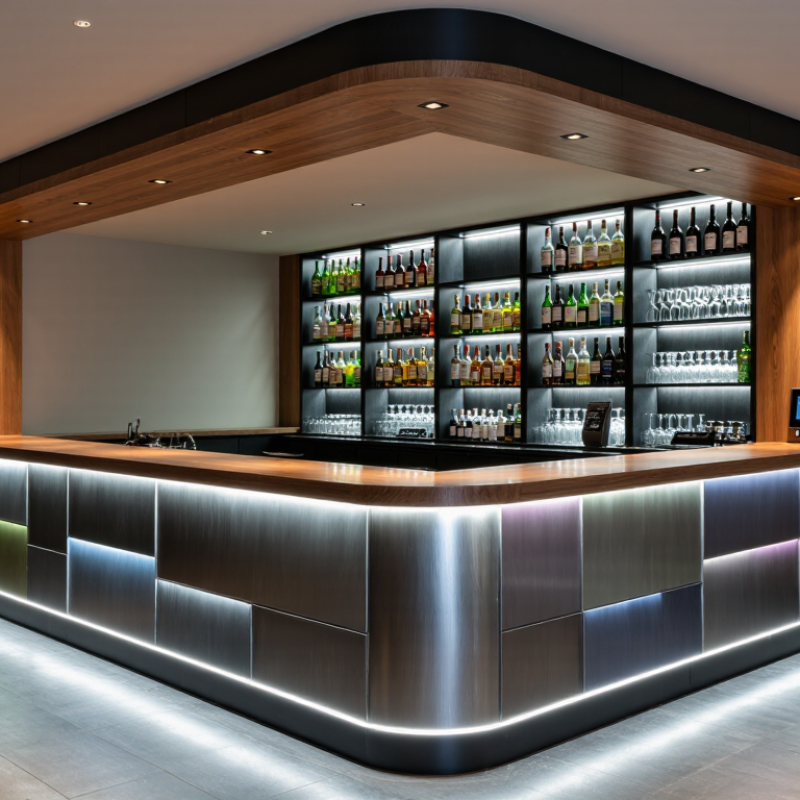
An LED-lit bar is a serving counter or furniture unit with integrated light sources. LEDs usually sit beneath the top, along the front panel, or inside translucent sections. They create a soft glow without producing much heat. A typical system includes LED strips, a power adapter, wiring, and a controller. Some models offer adjustable brightness or color settings. The frame may use wood, metal, acrylic, or weather-resistant composite materials. These choices affect stability, cleaning, and long-term performance.
Tips: Check the power rating before installation. Keep cables away from wet areas. Choose sealed lighting for outdoor use. A dimmer setting often makes conversations more comfortable and reduces energy use. Test the controls before placing glassware on the counter.
In practical use, even lighting matters more than dramatic color changes. A bright strip can create glare on polished surfaces, while weak diffusion may show visible dots. I have found that frosted panels produce a calmer, more professional appearance. Heat remains limited, but ventilation around the power supply is still sensible. Inspect connectors occasionally, especially after moving the bar. The design is not perfect; exposed controls can collect dust, and wireless features may respond slowly. Reliable construction depends on protected wiring, firm joints, and a stable base. These details often determine whether the bar feels refined or merely decorative.
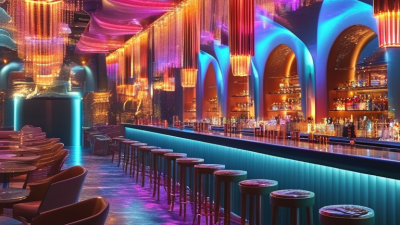
An LED bar is a slim lighting unit built around several connected light-emitting diodes. Its performance depends on more than the visible LEDs. The main components include an LED circuit board, an electronic driver, a heat sink, an optical cover, a housing, and electrical connectors. The circuit board carries current to each diode. The driver converts incoming electricity into stable, usable power. Without proper regulation, brightness may flicker, and diode life can shorten. Small differences matter.
The housing protects internal parts from dust, moisture, and accidental impact. Aluminum is often selected because it transfers heat away from the circuit board. A diffuser softens harsh points of light, while lenses direct the beam toward a wall, counter, or work surface.
The U.S. Department of Energy’s 2023 Solid-State Lighting R&D Opportunities report discusses commercial efficacies near 150 lumens per watt and identifies 255 lumens per watt as a long-term target. Higher efficacy does not automatically mean better lighting.
Control components may include dimming circuits, sensors, or wireless receivers. They determine how the bar responds to switches and changing conditions. The International Energy Agency reports that efficient LED lighting can use roughly 75% less electricity than incandescent lighting. Still, real savings depend on operating hours, driver quality, and heat management. In practical inspections, poorly ventilated housings remain a common weakness. A bright bar can still be inefficient. The specification sheet may not tell the whole story.
A bar with LED lights uses semiconductor diodes to create controlled illumination beneath counters, shelves, and work surfaces. Inside the bar, alternating current enters a driver, which converts it into stable direct current. The driver also limits electrical fluctuations. Without that control, LEDs may flicker, overheat, or fail early.
Each diode emits light when electrical current passes through its semiconductor material. Red, green, and blue diodes can combine into thousands of visible colors. A digital controller adjusts brightness, color temperature, and timing through low-voltage circuits. Some systems respond to music or occupancy sensors, but automation is not always necessary. Good programming keeps the light comfortable for staff and guests.
Heat still matters. Small aluminum channels or heat sinks pull thermal energy away from the diode board. The U.S. Department of Energy reports that LED lighting uses at least 75% less energy and lasts up to 25 times longer than incandescent lighting. The International Energy Agency identifies lighting as roughly 15% of global electricity consumption, showing why efficient operation matters. In practice, poor ventilation can shorten those expected lifespans. I would not trust the rated lifetime blindly. Dust, moisture, cheap drivers, and excessive brightness change real performance. A well-designed bar therefore separates power supplies from wet areas and leaves access for inspection. The wiring is less glamorous, but it often decides whether the lighting feels refined or unreliable.
An LED bar uses semiconductor diodes to convert electrical energy into light. In this example, a 24 V LED strip rated at 9.6 W per meter is installed inside the bar. The chart shows how total electrical power increases with strip length.
Each LED module receives low-voltage direct current from a power supply. A controller can adjust brightness or color, while an aluminum channel or heat sink helps transfer heat away from the LEDs.
An LED bar is a linear lighting fixture that uses multiple light-emitting diodes. It can create a narrow beam, a soft wash, or both. Inside, a circuit board distributes low-voltage power across the LEDs. A heat sink then moves heat away from the diodes. This detail matters because excessive heat can reduce brightness and shorten service life. In a real installation, airflow is often less generous than expected.
Common LED bars include single-color, tunable-white, RGB, and RGBW models. Single-color bars suit shelves, counters, and work areas. Tunable-white versions shift between warm and cool tones for different moods. RGB bars mix red, green, and blue light for colorful effects. RGBW units add a dedicated white diode, producing more natural white light. However, color quality can vary between models. A product label alone does not tell the whole story.
Control methods range from a simple wall switch to wireless applications and wired lighting protocols. A dimmer adjusts output when the power supply supports dimming. Remote controls offer quick changes, while sensors can activate light when movement is detected. Professional systems may coordinate brightness, color, and timing across several bars. Confirm voltage, maximum load, connector type, and controller compatibility before installation. A common mistake is matching the bar but ignoring the power supply. That small oversight can cause flickering, uneven color, or unexpected shutdowns. Testing one section first is slower, but usually wiser.
| LED Bar Type | How It Works | Typical Voltage | Typical Color Options | Common Control Method | Typical Applications | Main Advantages | Important Considerations |
|---|---|---|---|---|---|---|---|
| Rigid Linear LED Bar | LED chips are mounted on a straight rigid circuit board and powered through a low-voltage driver. | 12 V DC or 24 V DC | Single-color, RGB, RGBW, or tunable white | On/off switch, dimmer, PWM controller, or DMX controller | Display cabinets, shelves, counters, architectural coves, and task lighting | Straight installation, good heat dissipation, and consistent light output | Requires accurate mounting and adequate ventilation around the aluminum housing |
| Flexible LED Bar or Strip | LEDs and resistors are mounted on a flexible circuit board that can follow curved surfaces. | Usually 5 V, 12 V, or 24 V DC | White, color-changing RGB, RGBW, or tunable white | Inline dimmer, remote controller, mobile controller, or smart-home gateway | Furniture, signs, vehicles, decorative lighting, and concealed accent lighting | Lightweight, cuttable at marked points, and suitable for curved layouts | Needs a suitable mounting channel or heat path for longer or brighter installations |
| Addressable or Pixel LED Bar | Integrated control circuitry allows individual LEDs or pixel groups to receive separate digital instructions. | Commonly 5 V or 12 V DC | RGB or RGBW with individually controlled effects | Digital pixel controller, DMX, SPI, or programmed lighting controller | Stage effects, media installations, decorative animations, and interactive displays | Animated patterns, running effects, color zoning, and precise pixel control | Requires compatible data wiring, controller configuration, and power injection on long runs |
| RGB LED Bar | Red, green, and blue LED channels are mixed at different intensities to create multiple colors. | 12 V or 24 V DC is common | Color-changing output; white is produced by mixing RGB channels | RGB controller, wireless remote, DMX, or PWM controller | Entertainment spaces, decorative features, signage, and accent lighting | Dynamic colors, scene presets, fades, flashes, and brightness adjustment | Mixed RGB white may have lower color quality than a dedicated white LED channel |
| RGBW LED Bar | Red, green, blue, and a separate white LED channel provide both color effects and dedicated white light. | 12 V or 24 V DC is common | RGB colors plus warm white, neutral white, or cool white | Four-channel PWM controller, DMX, or smart lighting controller | Hospitality areas, retail displays, events, and spaces requiring both mood and functional lighting | Better white-light performance and more flexible color mixing than standard RGB | Needs a compatible four-channel controller and correctly sized power supply |
| Tunable White LED Bar | Warm-white and cool-white LED channels are adjusted independently to change color temperature. | 12 V or 24 V DC is common | Adjustable white, often approximately 2,700–6,500 K depending on the product | Two-channel PWM controller, wall dimmer, wireless control, or building automation system | Work areas, galleries, retail interiors, residential spaces, and circadian-style lighting schemes | Adjustable visual atmosphere and more natural white-light control | Requires a controller that supports separate warm-white and cool-white channels |
| Water-Resistant LED Bar | LED components are protected by a sealed cover, coating, or enclosure to reduce exposure to moisture and dust. | 12 V or 24 V DC is common | Single-color, RGB, RGBW, or tunable white | The same controller types used by the corresponding LED color configuration | Bathrooms, outdoor signage, boats, patios, kitchens, and damp locations | Improved protection against moisture and environmental contamination | The enclosure can reduce flexibility and light output; the IP rating must match the installation location |
| Control Method | Signal or Operating Principle | Functions | Best Suited For | Key Limitation |
|---|---|---|---|---|
| On/Off Switching | Interrupts or supplies power to the LED driver or bar. | Basic power control | Single-color installations with no dimming requirement | Cannot normally adjust brightness, color, or effects |
| PWM Dimming | Rapidly switches the LED current on and off; perceived brightness changes with the duty cycle. | Brightness adjustment and separate channel mixing | Single-color, RGB, RGBW, and tunable-white LED bars | The controller must match the bar voltage, channel count, and electrical load |
| DMX Control | A digital lighting-control protocol sends channel values from a controller to compatible receivers. | Dimming, color mixing, scenes, synchronized effects, and zoning | Stages, events, architectural lighting, and multi-fixture systems | Requires compatible DMX hardware, addressing, and appropriate signal cabling |
| Wireless Remote or App | Radio, Bluetooth, or Wi-Fi commands are sent to a receiver or connected controller. | Brightness, color, schedules, scenes, and grouped control | Homes, retail displays, hospitality areas, and small decorative systems | Wireless range, network availability, and controller compatibility can affect reliability |
| Addressable Digital Data | A digital data stream assigns brightness and color information to individual pixels or pixel groups. | Pixel-level color changes, animations, patterns, and synchronized effects | Interactive displays, media effects, entertainment, and decorative installations | Data direction, signal integrity, power distribution, and software setup must be managed correctly |
A bar with LED lights is a counter fitted with light-emitting diode strips or panels. LEDs create light when electrical current passes through semiconductor material. A driver controls the power, while a controller adjusts brightness or color. Some bars use soft white light for dining areas. Others use changing colors for lounges, receptions, or display counters.
In practical use, LED bars can define a serving area without adding bulky fixtures. They also improve visibility around edges, shelves, and work surfaces. Their low energy demand can reduce operating costs during long business hours. They produce less heat than many traditional lamps. This matters near drinks, decorations, and enclosed cabinetry. In my experience, diffused covers create a cleaner glow than exposed points. Bare LEDs can look harsh.
Maintenance still requires attention. Dust can collect inside grooves and reduce brightness. Wipe the surface with a dry or slightly damp microfiber cloth. Disconnect power before checking cables, connectors, or the driver. Moisture-rated components are important near sinks or outdoor counters. However, a water-resistant label does not make every connection safe. Inspect seals regularly. Flickering may indicate a loose connection, an overloaded driver, or failing components. Professional inspection is wise when faults continue. Color changes can also become uneven over time. I have learned that easy installation does not always mean easy repair. Leave ventilation space around the driver, and avoid covering it with insulation or stored materials.