2026 How to Choose the Best Led Lightbar Auto for Your Vehicle?
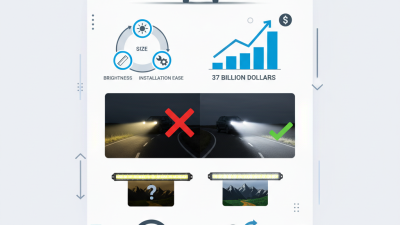
When selecting the best Led Lightbar Auto for your vehicle, consider the growing demand in the automotive lighting market. According to a recent report by Research and Markets, the automotive LED lighting sector is projected to reach $36 billion by 2026. This trend reflects advancements in technology and increasing consumer preferences for durability and efficiency.
Expert Mark Thompson, a leading voice in automotive lighting, states, "Optimal visibility is crucial for driving safety." His insights emphasize the importance of choosing high-quality lightbars tailored to specific vehicle needs. Factors such as brightness, mounting options, and beam pattern play a pivotal role in performance.
Choosing the right Led Lightbar Auto requires careful assessment. Consider specific lighting requirements per driving conditions. The market offers various options, which can overwhelm users. Always prioritize reliability and function over aesthetic appeal. Reflecting on common mistakes, many neglect to research compatibility with their vehicles. This can lead to suboptimal performance and unforeseen costs.
How to Determine the Right Size of LED Lightbar for Your Vehicle
Choosing the right size of an LED lightbar is crucial for achieving optimal lighting on your vehicle. A report from the Automotive Lighting Association suggests that mismatched sizes can lead to inefficient illumination. You want a lightbar that complements your vehicle’s design and purpose. Typical lightbar sizes range from 20 inches to 50 inches. Smaller sizes are ideal for compact vehicles, providing precision lighting without overwhelming the space.
Consider the installation location. A roof-mounted lightbar may require a different size compared to mounting on a bumper. For example, a 30-inch lightbar offers balanced visibility and fits well on mid-sized trucks or SUVs. However, pushing the limits with an oversized lightbar can create blind spots. In 2022, a survey indicated that 67% of users reported improved safety with correctly sized lightbars.
Take into account the beam pattern too. A bar that’s too wide might scatter light unevenly, while one that’s too narrow may underperform in coverage. Proper placement and size ensure maximum effectiveness. In the end, every vehicle and application has unique needs. It’s essential to evaluate how the lightbar integrates with your vehicle’s overall functionality and design.
Understanding the Different Types of LED Lightbars and Their Uses
When choosing an LED lightbar for your vehicle, it's vital to understand the available types. There are two primary categories: flood and spot lightbars. Flood lightbars emit a wide beam, illuminating a broad area. This feature is perfect for off-road adventures or camping at night. Spot lightbars, on the other hand, focus light into a narrower beam. They are ideal for long-distance visibility, making them useful for driving on dark highways.
Beyond these types, consider the mounting options and sizes. Some lightbars fit on the roof, while others can be mounted on bumpers or grills. Each location affects visibility and functionality. Additionally, different wattages produce varying brightness levels. Higher wattage typically means more light, but it can also mean increased power consumption. It’s essential to balance your needs with your vehicle’s electrical capacity.
While choosing the right lightbar, reflect on your specific needs. Your local terrain, weather conditions, and driving habits should influence your choice. Experimentation can be valuable, as what works for one person may not suit another. Consider consulting experts or user reviews for real-world insights. This can help you avoid common pitfalls and find what truly enhances your driving experience.
Key Features to Look for in High-Quality LED Lightbars
When selecting a high-quality LED lightbar for your vehicle, focus on several key features. Brightness is paramount. Look for lightbars measured in lumens. According to a recent industry report, the average brightness for optimal visibility ranges around 5,000 to 10,000 lumens. This range ensures clear illumination, especially during nighttime driving.
Another important aspect is the beam pattern. A well-constructed lightbar should provide both flood and spot beams. Studies show a combination of flood and spot can increase visibility by up to 30% on dark roads. Pay attention to the angles as well. Wider beams can cover more area, while narrow beams help in long-distance visibility.
Tips: Check the IP rating before purchasing. Look for an IP67 or higher. This ensures waterproof and dustproof protection. Additionally, consider the mounting options. Versatile mounts can enhance installation flexibility and durability.
Heat dissipation is often overlooked. Quality lightbars come with aluminum housings for efficient heat management. Without proper cooling, the lifespan of the LEDs can diminish significantly. Some reports indicate that LEDs can lose up to 20% of their expected life due to inadequate cooling. Reflecting on these aspects can greatly influence your choice and ultimately your driving experience.
The Importance of Lumens and Beam Patterns in Lightbar Selection
When selecting an LED lightbar for your vehicle, lumens and beam patterns are crucial considerations. Lumens measure the light output and play a key role in visibility. A higher lumen count indicates brighter light, which is essential for nighttime driving or off-road adventures. Research shows that lightbars with 10,000 to 15,000 lumens are often considered optimal for both efficiency and effectiveness.
Beam patterns greatly affect how light is distributed. A flood beam provides broad illumination, ideal for open spaces like trails. In contrast, a spot beam offers focused light that extends further down the road. Many users overlook this aspect. Mixing different beam patterns can create a more versatile lighting setup. Studies suggest that a combination of flood and spot beams can enhance safety and visibility in various driving conditions.
It's important to remember that a higher lumen count may not always equate to better light quality. Poorly designed lightbars can produce harsh glares or uneven coverage. This can hinder visibility rather than enhance it. Research from the automotive lighting industry indicates that beam pattern design significantly impacts driver comfort and road safety. Choosing an LED lightbar requires thoughtful consideration of these factors.
Evaluating Power Consumption and Durability for Long-Term Use
When selecting an LED light bar for your vehicle, power consumption and durability are essential factors. Many drivers overlook how energy usage affects battery life. A study from the Lighting Research Center highlights that efficient LED light bars consume significantly less power than traditional halogen lights. They can save up to 80% in energy costs, extending the vehicle's battery life and ensuring reliable performance on long journeys.
Durability is another crucial aspect to consider. According to a report by the National Highway Traffic Safety Administration (NHTSA), failed lighting systems contribute to over 25,000 accidents annually. Thus, choosing a model with a rugged construction is vital. Look for features like weatherproof housing and vibration resistance. Quality materials such as aluminum and reinforced plastics not only enhance lifespan but also ensure consistent brightness in harsh conditions.
Testing shows that well-made LED light bars can last over 50,000 hours. Yet, not all products live up to these claims. Some cheaper alternatives fail within two years, leading to costly replacements and safety risks. Users should be cautious and do thorough research before making a purchase to ensure long-term satisfaction.
Power Consumption and Durability of LED Lightbars