What is Led Driving Lights and How Do They Enhance Your Night Driving?
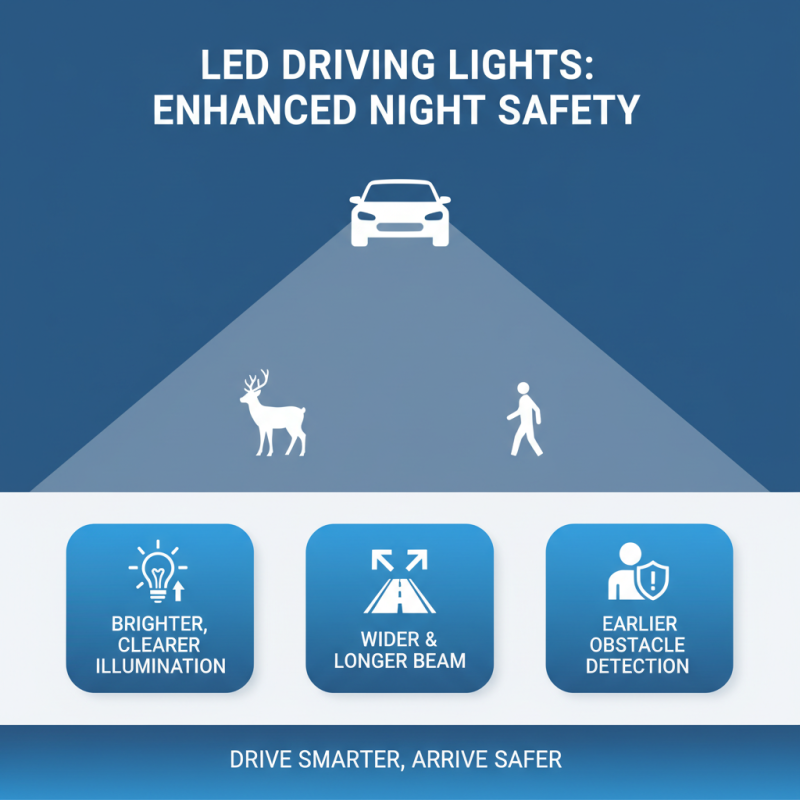
Driving at night can be challenging. Reduced visibility can lead to accidents. This is where LED driving lights come into play. These lights enhance your nighttime vision significantly. They provide a clearer and brighter view of the road ahead.
LED driving lights are designed to outperform traditional headlights. Their brightness illuminates dark areas, making obstacles easier to see. Many drivers report higher confidence levels when using them. However, the installation process may confound some. Improper setup can lead to glare for other drivers, creating safety issues.
Understanding how LED driving lights improve visibility is crucial. They can enhance contrast, allowing you to detect hazards more quickly. As technology evolves, these lights are becoming more prevalent. It’s imperative to research and choose quality products. Not all LED lights offer the same level of performance. You deserve reliable lighting for safer night driving experiences.
Understanding LED Driving Lights: A Comprehensive Overview
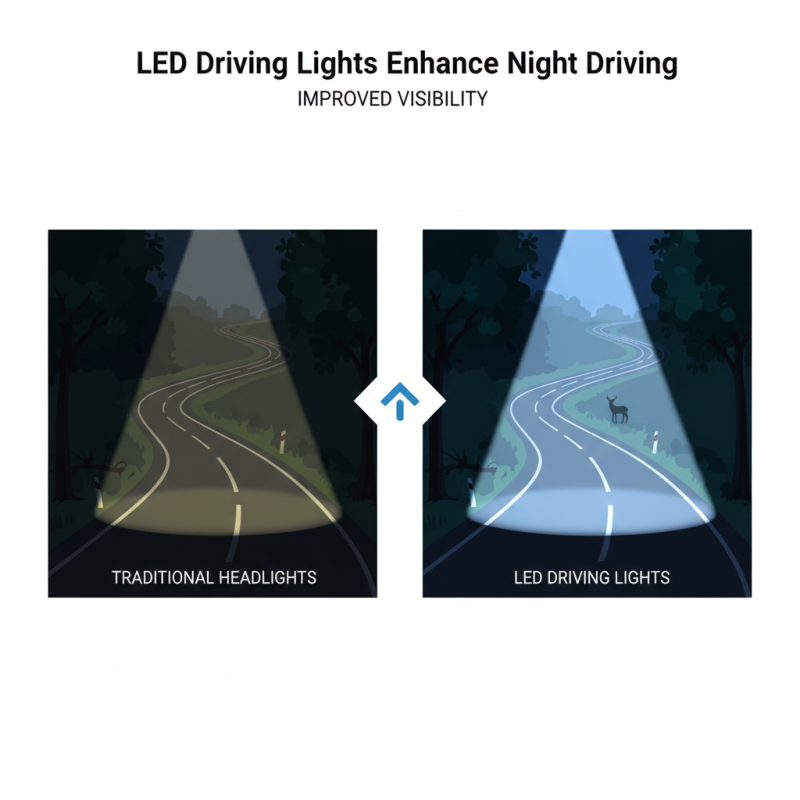
LED driving lights are transforming night-time driving. These lights provide brighter and more focused illumination compared to traditional headlights. This clarity enhances visibility, allowing drivers to see further and react quicker to obstacles and road conditions.
TIP: Adjust your LED lights properly. Misalignment can cause glare for oncoming drivers. Regularly check that your lights illuminate the road effectively without blinding others.
The energy efficiency of LED lights means they last longer and consume less power. This longevity reduces the need for frequent replacements. However, some users might notice a stark white or bluish hue, which could be distracting. It’s essential to find a color temperature that suits your comfort level while driving at night.
TIP: Choose LED lights with a color temperature between 4000K and 5000K for a balanced view. A softer light may reduce eye strain. Always be mindful of your surroundings and use your lights responsibly to ensure safety for all road users.
Components of LED Driving Lights and Their Functions
LED driving lights have become essential for enhancing visibility during night drives. The crucial components of these lights play a significant role in improving safety. Typically, LED lights consist of a housing, lenses, diodes, and heat sinks. Each part serves a unique purpose. For instance, the housing is designed to withstand harsh environments while protecting internal components. The lenses are engineered to focus and diffuse light effectively, providing a clearer view of the road ahead.
High-quality diodes emit a bright and consistent light output. According to a report from the National Highway Traffic Safety Administration (NHTSA), well-illuminated roads can reduce the risk of collisions by up to 40%. These diodes use less energy than traditional halogen bulbs, translating into longer lifespans and lower replacement costs.
Heat sinks are equally vital, as they dissipate heat generated by the diodes, ensuring longevity and performance.
While these components have advanced significantly, challenges remain. For instance, the installation needs careful consideration to maximize benefits. Misalignment can lead to poor light distribution, creating glare for oncoming drivers. Moreover, regulatory standards vary globally, complicating compliance for manufacturers. Proper knowledge about these components can provide drivers with a safer, more enjoyable experience on the road.
How LED Technology Improves Nighttime Visibility
LED technology has transformed nighttime visibility for drivers. One of its major benefits is the high luminosity it offers. The light emitted by LEDs is bright and focused. This allows drivers to see further down the road. Better visibility means more time to react to obstacles. Accidents are less likely due to increased brightness.
Another aspect of LED lights is their color temperature. Unlike traditional halogen lights, LEDs emit a whiter light. This enhances contrast, allowing drivers to distinguish between objects more effectively. Roads, signs, and pedestrians become more visible. This additional clarity can make a significant difference in low-light conditions.
Tips for using LED driving lights effectively: Position your lights correctly to avoid blinding oncoming traffic. Regularly check the alignment of your lights to maintain optimal visibility. Finally, keep your headlights clean; dirt can reduce their efficiency. Making small adjustments can significantly improve your night driving experience.
Benefits of Installing LED Driving Lights for Safety
Installing LED driving lights can significantly enhance your safety while driving at night. These lights provide a bright and clear illumination, allowing for better visibility of the road ahead. When you drive in dark conditions, standard headlights may not be sufficient. LED lights shine farther and wider, illuminating obstacles and pedestrians early enough for you to react.
Another key benefit is energy efficiency. LED lights consume less power than traditional halogen lights. This helps to reduce strain on your vehicle's battery. The longer lifespan of LED lights also means fewer replacements and maintenance. However, some drivers may overlook proper positioning. Misaligned lights can cause glare, affecting your vision and others on the road.
Night driving can be daunting, especially in poor weather conditions. LED lights cut through fog and rain more effectively than standard bulbs. Still, it's essential to remain mindful of your speed and awareness of surroundings. Investing in LED driving lights is a practical choice for many, but ensuring they are correctly installed and adjusted is crucial for maximizing their benefits.
Comparing LED Driving Lights with Traditional Lighting Options
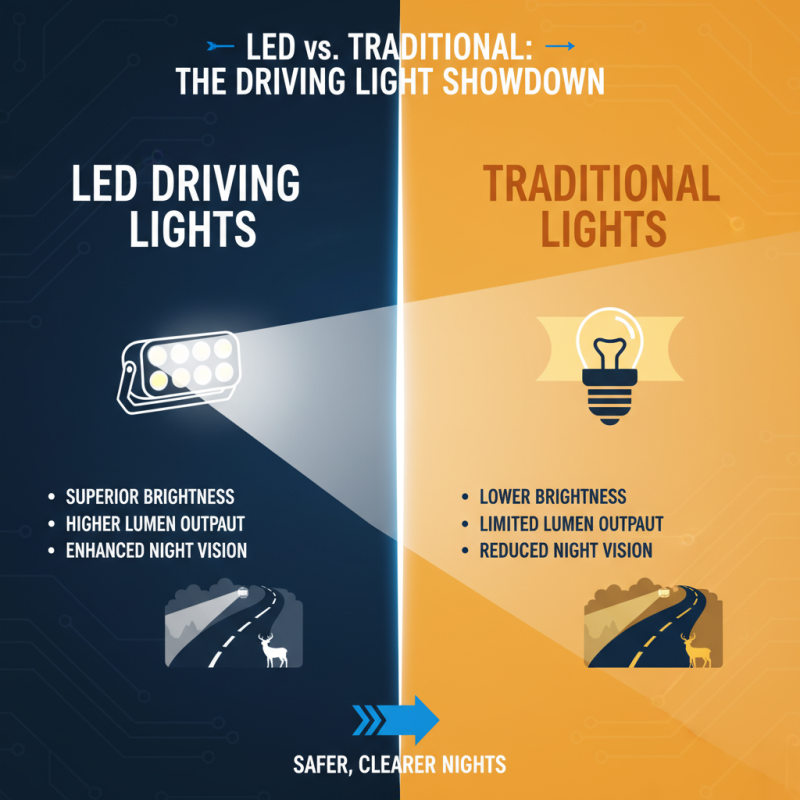
LED driving lights offer significant advantages over traditional lighting options. One of their primary benefits is brightness. LED lights emit a higher lumen output compared to halogen or incandescent bulbs. They illuminate the road more effectively, making it easier for drivers to spot obstacles. This can be particularly important during night driving when visibility is limited.
Furthermore, LED lights consume less energy, which can be a game changer for many vehicles. Traditional lights often waste power as heat. In contrast, LEDs are more efficient, reducing the load on the vehicle's electrical system. However, some drivers may find that LED lights can create harsh glare for oncoming traffic if not adjusted properly. This is a crucial point to consider before installation.
Durability is another key factor. LEDs are generally more robust than their traditional counterparts. They are less susceptible to vibrations and shocks, making them ideal for off-road adventures. But, it’s worth noting that not all LED options are of the same quality. Poorly constructed units can fail prematurely. This reveals the importance of researching specifications and user reviews before making a purchase.