Top Tips for Choosing Automotive LED Lights for Your Vehicle?
When considering upgrades for your vehicle, Automotive LED Lights stand out as a popular choice. Research from the US Department of Energy indicates that LED lights consume up to 75% less energy than traditional incandescent bulbs. This not only enhances vehicle efficiency but also extends the lifespan of the lighting system.
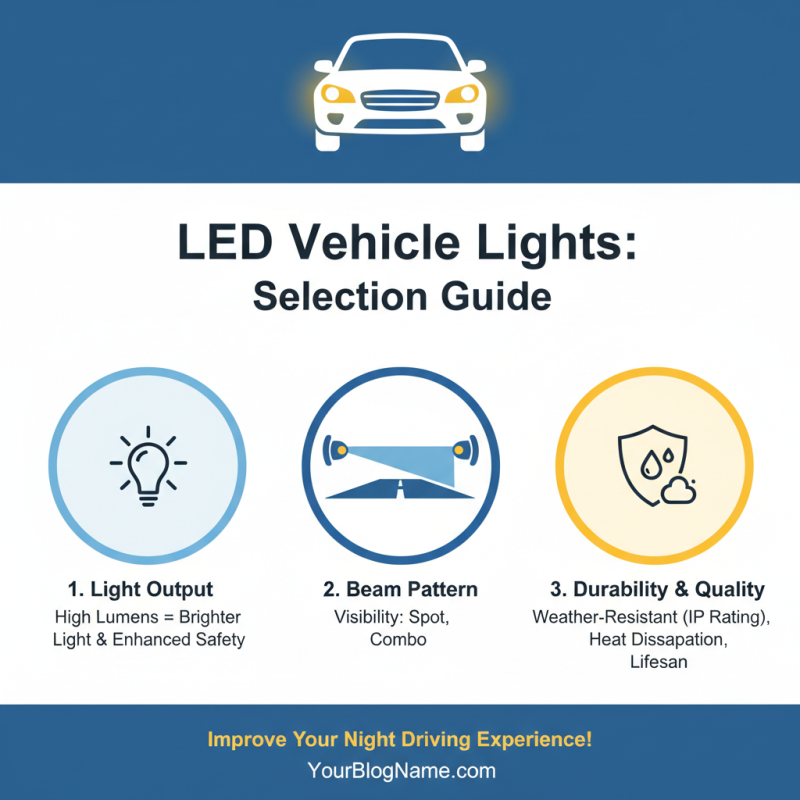
However, with a multitude of options available, selecting the right Automotive LED Lights can be challenging. Many products on the market vary in quality, brightness, and color temperature. A recent industry report shows that 67% of consumers experienced difficulty in identifying the best LED options for their needs. It is essential to be informed about lumens, wattage, and beam patterns to make an educated decision and avoid common pitfalls.
Additionally, while brighter lights can enhance visibility, they may also cause glare for other drivers. It's crucial to find a balance that improves safety without compromising it. As you explore the options, keep in mind the importance of reliable brands and warranty offers, which can serve as indicators of quality in the automotive lighting market.
Understanding the Different Types of Automotive LED Lights Available
When it comes to automotive LED lights, understanding the various types can significantly improve your vehicle’s
visibility and style. There are different categories of LED lights available,
such as headlights, taillights, and
fog lights. Each type serves a unique purpose and varies in brightness, color
temperature, and design. For example, some headlights are designed for enhanced visibility in dark environments, while fog lights
are engineered to cut through mist and rain.
Choosing the right type can feel overwhelming. Consider the specific conditions you regularly encounter.
Bright white lights provide clarity at night, while warmer lights can offer comfort during the day.
Always think about your driving habits. If you frequently drive in adverse weather, fog lights
might be beneficial. Ensure you’re aware of local regulations, as light output levels can be restricted in some regions.
Not all LED products are equal. Quality can vary widely, impacting durability and performance. Look for options with good heat
dissipation to prevent flickering or burnout. Yet, don’t hesitate to experiment with colors. Some colors may not be street-legal
but can enhance aesthetics. Reflect on your priorities: safety,
style, or both? Each choice carries its own weight and consequences that are
worth contemplating.
Evaluating Brightness and Color Temperature in LED Lighting
When choosing automotive LED lights, brightness and color temperature are essential factors. Brightness is usually measured in lumens. Higher lumens mean more light output. However, this does not automatically equate to better visibility. It’s vital to consider where you plan to use the lights. For city driving, a moderate brightness may suffice. In contrast, off-road environments often require higher lumens to enhance visibility. Overly bright lights can lead to glare, hindering safety for both you and oncoming drivers.
Color temperature plays a significant role in how well you perceive light. Measured in kelvins, lower temperatures (around 3000K) emit a warm yellowish light, good for foggy conditions. In contrast, higher temperatures (above 5000K) provide a cooler, bluish light, improving visibility on clear nights. However, some drivers find these higher temperatures can feel harsh. Evaluating your environment and driving conditions will help in choosing the right color temperature. It’s essential to balance personal preferences with functionality. Consider testing different options to see what works best in real-world situations.
Top Tips for Choosing Automotive LED Lights for Your Vehicle
| Feature |
Description |
Recommended Range |
| Brightness (Lumens) |
The amount of light produced by the LED lights. |
1000 - 4000 Lumens for headlights |
| Color Temperature (Kelvin) |
The color of the light emitted, affecting visibility and comfort. |
4000K - 6000K for optimal visibility |
| Beam Pattern |
The shape and direction of the light beam produced by the LEDs. |
Focused beam for headlights; wide beam for fog lights |
| Lifespan |
The duration that the LED lights are expected to last. |
More than 30,000 hours |
| Energy Efficiency |
How much light is produced for the amount of power consumed. |
At least 80% energy saving compared to halogen bulbs |
Tips for Maintaining and Upgrading Your Automotive LED Lights
When it comes to maintaining and upgrading your automotive LED lights, proactive care is essential. Reports from the U.S. Department of Transportation indicate that properly maintained lighting systems can improve visibility by up to 80%. This heightened visibility can significantly reduce accident rates, making it crucial to keep your LED lights in top condition.
Regular inspections should become a routine part of vehicle maintenance. Look for signs of wear, such as flickering lights or discoloration. Even a small issue can lead to reduced effectiveness. Cleaning the lens of your LED lights is also important. Dust and grime can dim their brightness significantly. Using non-abrasive cleaners is a good practice to avoid damage to the light.
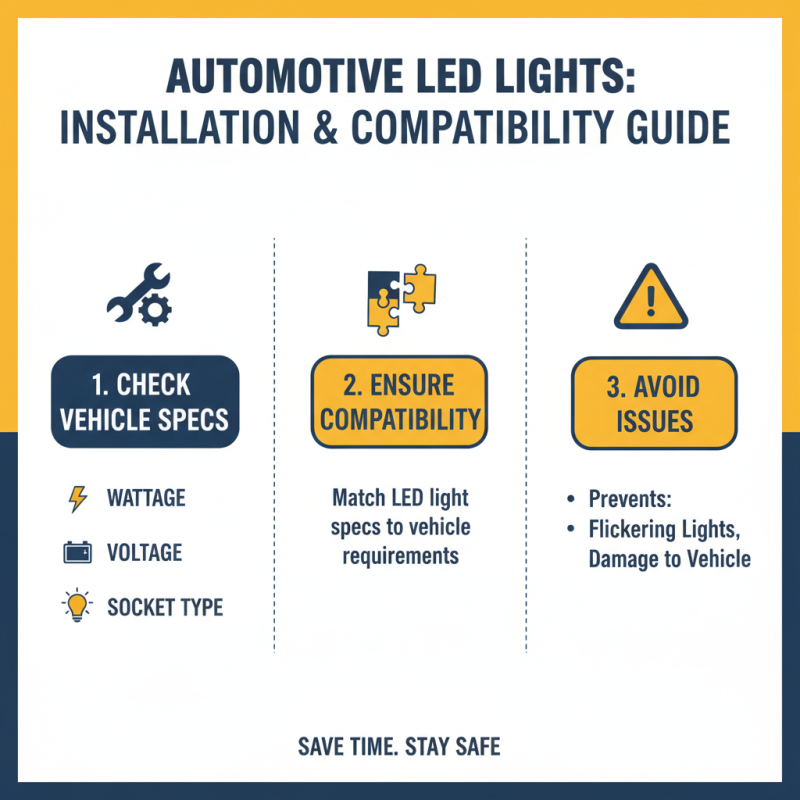
Upgrading to more advanced LED options is another way to enhance your vehicle's lighting. Research indicates that high-quality LEDs can last up to 50,000 hours, far surpassing traditional bulbs. However, it's important to consider compatibility with your vehicle. Mismatched components can lead to performance issues. Always consult professional guides or forums for advice tailored to your specific model.
Top Tips for Choosing Automotive LED Lights for Your Vehicle
This chart illustrates the key factors to consider when selecting automotive LED lights for your vehicle, based on user preferences and common maintenance tips.