Top Car Flood Lights for Ultimate Visibility and Safety on the Road?
When driving in low-light situations, visibility is crucial for safety. Car flood lights provide an effective solution to enhance illumination. John Smith, a leading expert in automotive lighting, states, "High-quality car flood lights can transform your driving experience and ensure you see what's ahead."
These lights offer a broad beam, illuminating a wide area. This is essential on dark roads or during inclement weather. Many drivers underestimate the importance of visibility. Investing in quality car flood lights is often overlooked. Yet, they can significantly improve reaction times and reduce accidents.
While numerous options exist, choosing the right car flood lights can be challenging. Not all brands deliver the promised performance. Some may fail in real-world conditions, leading to frustration. Evaluating features, brightness, and durability is critical. This knowledge empowers drivers to make informed decisions for safer travels.

Features to Consider When Choosing Car Flood Lights
When choosing car flood lights, several features are crucial for optimal performance and safety. Brightness is paramount. As per industry standards, the ideal lumens for flood lights range from 2000 to 6000. Higher lumens provide better visibility, especially during adverse weather conditions. However, over-bright lights can cause glare, making driving hazardous.
Beam angle is another significant factor. A
wider beam angle, typically between
90° and 120°, delivers expansive coverage. This is essential for off-road driving, where obstacles can appear unexpectedly. Yet, too wide a beam may reduce focus on critical road areas. Consider adjusting the placement of these lights to balance illumination and driver visibility.
Durability should not be overlooked. Car flood lights face various environmental conditions. Reports indicate that the average lifespan of quality LED flood lights is around
30,000 hours. However, factors like
water resistance and
vibration impact long-term reliability. Opting for lights with an
IP67 rating helps ensure they withstand harsh elements. Inadequate durability could lead to frequent replacements, which is both costly and inconvenient.
Types of Car Flood Lights: LED vs. Halogen vs. Xenon
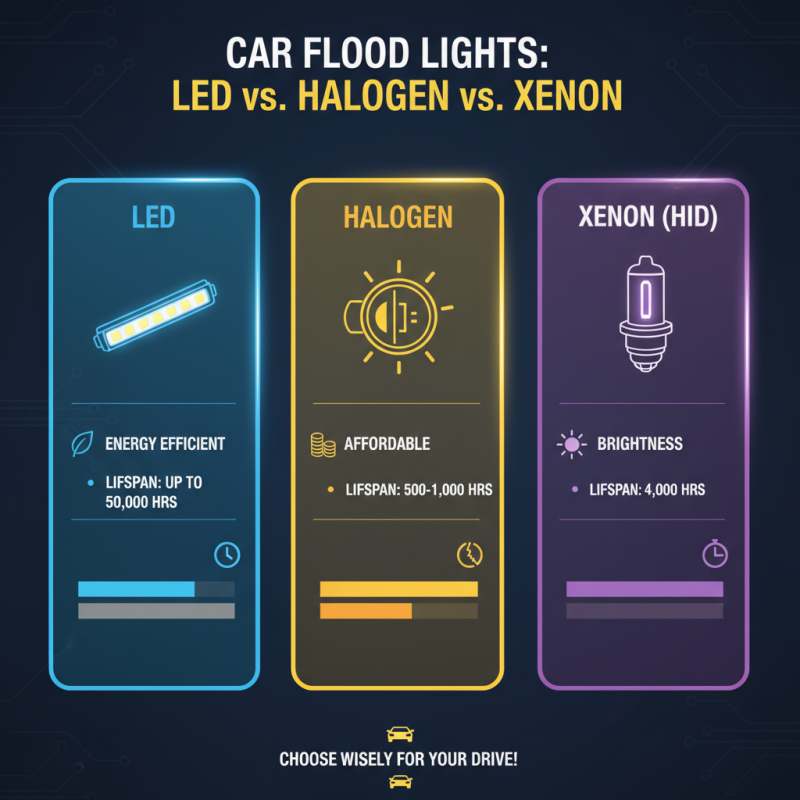
When choosing car flood lights, understanding the differences between LED, halogen, and xenon types is crucial. LED lights are gaining popularity due to their energy efficiency and longevity. Data indicates that LEDs can last up to 50,000 hours, significantly reducing replacement frequency. They provide bright illumination with a lower power draw. This makes them ideal for extended off-road adventures or late-night drives.
Halogen lights, while traditional, offer a warm light output. They usually last around 1,000 hours, which can be disappointing for some users. Their brightness is decent, but they consume more energy compared to LEDs. Furthermore, halogen lights generate substantial heat, which can be a concern in certain situations. For users prioritizing budget, halogens remain a cost-effective choice.
Xenon lights offer a different experience with a high-intensity discharge. They provide excellent brightness and a wider range of visibility. However, their lifespan averages about 2,000 hours, making them less durable than LEDs. Some drivers find the light too intense, leading to discomfort for oncoming vehicles. Despite this, xenon lights enhance road safety in foggy or dark environments. Each type has distinct advantages and drawbacks, emphasizing the importance of selecting the right option for your needs.
Top Brands for High-Quality Car Flood Lights
When it comes to car flood lights, quality matters. These lights improve visibility during night driving and harsh weather. Choosing a high-quality brand can make a significant difference. Renowned brands often use durable materials for longevity. They also invest in advanced technology to enhance performance.
Proper installation is crucial for effective flood lights. Drivers sometimes overlook this step, which can lead to improper lighting. Adjusting the angle and positioning helps maximize visibility. Many users report improved safety after using reliable flood lights. This shows the importance of researching and selecting trusted brands.
Not all lights are created equal. Some might fail to perform under challenging conditions. Customers occasionally share experiences of poor durability. It's vital to read reviews and gather insights. Consider the experiences of others before making a choice. Proper research can lead to a better investment in safety.
Top Car Flood Lights for Ultimate Visibility and Safety on the Road
| Model |
Lumens |
Wattage |
Beam Angle |
Waterproof Rating |
Price ($) |
| LED Flood Light A |
3000 |
30 |
120 degrees |
IP68 |
79.99 |
| Halogen Flood Light B |
2000 |
25 |
90 degrees |
IP65 |
49.99 |
| Hybrid Light C |
2500 |
27 |
110 degrees |
IP67 |
64.99 |
| Xenon Flood Light D |
1800 |
20 |
80 degrees |
IP54 |
39.99 |
Installation Tips for Optimal Performance of Flood Lights
When it comes to achieving optimal performance with flood lights, proper installation is key. Start by assessing the mounting location. Make sure the surface is sturdy and free from obstructions. The lights should be positioned at an angle that maximizes their reach without blinding other drivers.
Consider the wiring carefully. Use high-quality connectors and ensure they are weatherproof. This will prevent short-circuits and extend the lifespan of your flood lights. Take the time to secure all wires neatly to avoid any loose connections over time.
Lastly, test the lights after installation. Aim for an even spread of illumination. Adjust the angles if necessary. Regular maintenance checks can help identify any issues early on. Pay attention to how often the lights are used. Over time, they might need cleaning or replacement. Maintaining your flood lights contributes significantly to safety on the road.
Safety Benefits of Using Car Flood Lights on the Road
Car flood lights provide crucial safety benefits on the road. They enhance visibility, especially in dark or poorly lit areas. Improved visibility reduces the chance of accidents. With strong beams, these lights illuminate wider sections of the road. This makes it easier to spot pedestrians, animals, or obstacles ahead.
Tips for choosing the right flood lights include:
- Checking brightness ratings. Look for lights with high lumens for better light output.
- Ensuring they are adjustable for optimal angles.
- Considering their durability against harsh weather. Waterproof features can prevent damage during heavy rain or storms.
Using car flood lights may invite some reflection. While they improve safety, drivers must also remember not to blind others. Adjusting the height and angling of lights is crucial. Over time, maintaining these lights is essential to prevent dimming. Regular inspections can help ensure they perform effectively when needed.