Top Off Road Light Bar Tips for Best Performance and Value?
When it comes to off-road adventures, an Off Road Light Bar is essential. It enhances visibility during nighttime or low-light conditions. Choosing the right light bar can greatly improve both safety and enjoyment while navigating rugged terrains. However, many enthusiasts often overlook critical factors. They might select based solely on price, which could compromise performance.
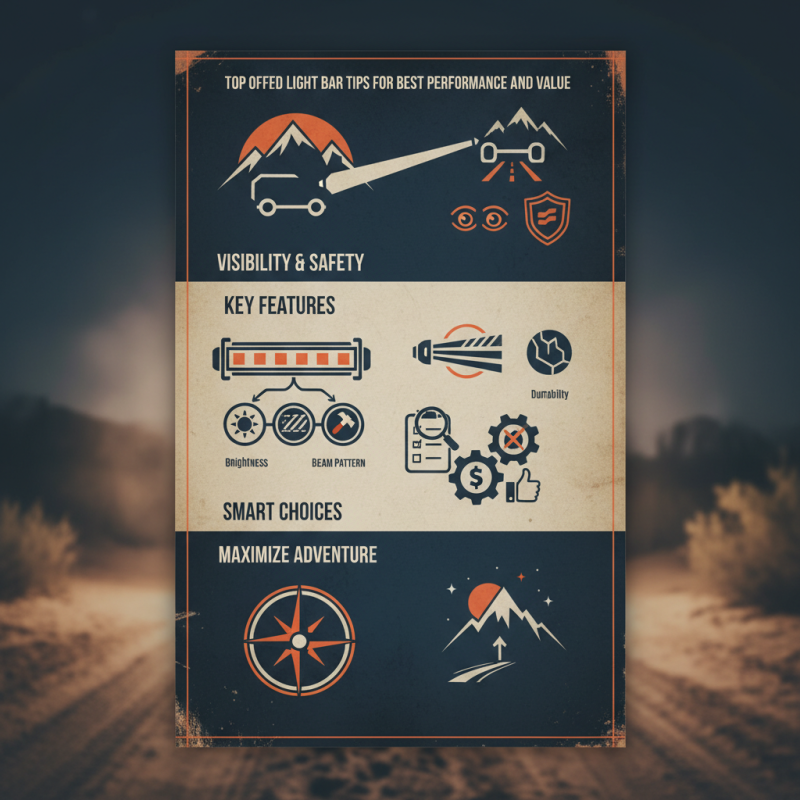
Understanding the key features of an Off Road Light Bar is crucial. Factors like brightness, beam pattern, and durability play a significant role in its function. Quality varies significantly from one product to another, and not all options deliver what they promise. Researching brands and user experiences adds valuable insights.
In this guide, we aim to share essential tips for maximizing the performance and value of your Off Road Light Bar. Our insights derive from industry experiences and user feedback. The goal is to empower users to make informed decisions that will enhance their off-road experience. Embrace these tips to ensure that you are well-prepared for your next adventure.
Understanding Off-Road Light Bar Types: LED, HID, and Halogen
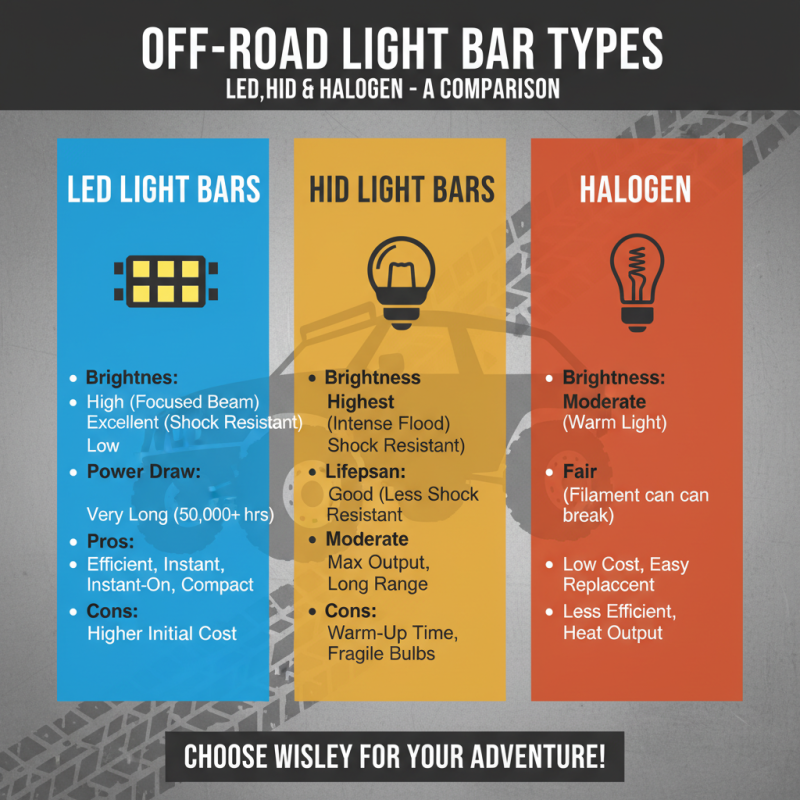
When it comes to off-road adventures, choosing the right light bar can dramatically impact your visibility and safety. Off-road light bars come in various types, with LED, HID, and halogen being the most common. Each type has its advantages and drawbacks, making it essential to understand their differences before making a decision.
LED light bars are popular due to their energy efficiency and longevity. They emit a bright light with a lower power draw and last much longer than traditional bulbs. However, they can be more expensive upfront, which some might find off-putting. On the other hand, HID light bars offer powerful illumination, making them ideal for extreme off-road conditions. They produce a white light that closely resembles daylight, but they may require extra components for proper installation. Halogen light bars are the least efficient and have the shortest lifespan. Still, they are often cheaper and easier to replace, appealing to budget-conscious owners.
Still, choosing the right type requires careful thought. The environment matters. If you frequently drive in poorly lit or rugged areas, LED or HID may be more beneficial. However, for occasional users, halogen could suffice. Assess your needs and think critically about how often you will use the lights. Reflecting on all options ensures you invest wisely and enhances your off-road experience.
Evaluating Brightness: Importance of Lumens and Beam Patterns
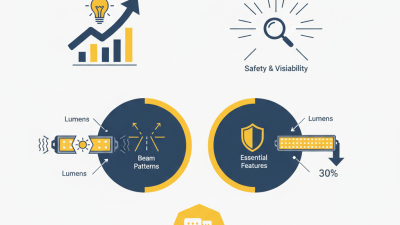
When selecting off-road light bars, understanding brightness is essential. Lumens measure the total light output. Higher lumens typically mean brighter lights. Yet, brightness alone isn’t everything. The beam pattern defines how the light spreads. A well-distributed beam pattern enhances visibility, crucial for off-road driving.
Consider the type of terrain you'll be navigating. For open fields, a wide beam pattern is beneficial. For tight trails, a focused beam can help illuminate distant obstacles. Another factor is efficiency. Some lights may have high lumen counts but lack good beam patterns. This discrepancy can lead to wasted energy and poor visibility.
When shopping for light bars, prioritize efficiency. Not all expensive lights guarantee optimal performance. Compare lumens with beam patterns before making a decision. Checking user reviews can also offer insights. Look for real-world usage experiences. This can reveal potential flaws or advantages not mentioned in product specs. Ultimately, informed choices yield the best value and performance on your adventures.
Mounting Techniques: Ensuring Stability and Optimal Light Distribution
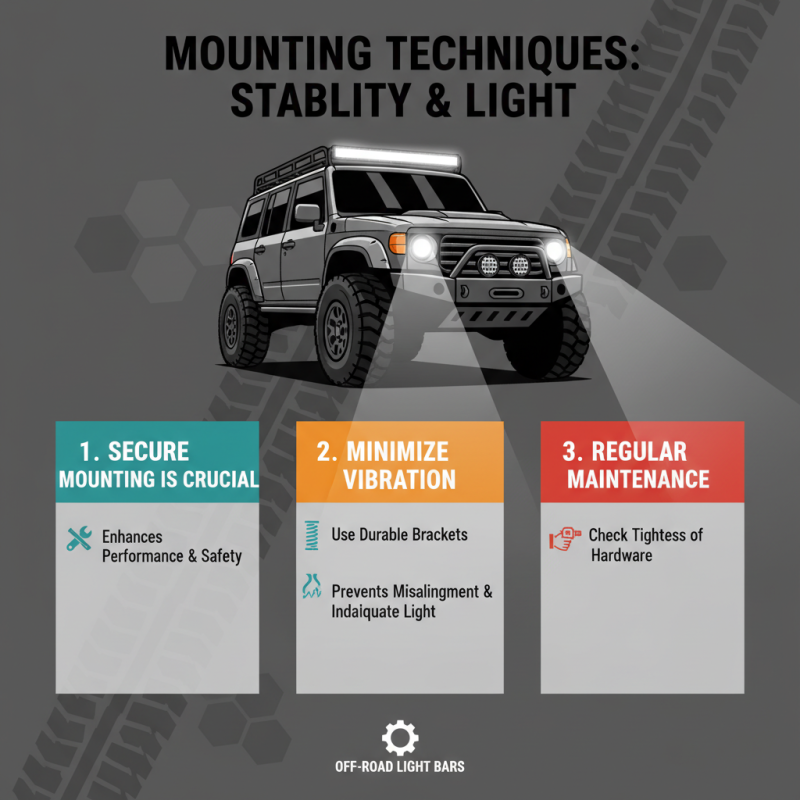
When mounting off-road light bars, stability is crucial. A well-secured light bar not only enhances performance but also ensures safety on rough terrains. Using durable brackets can minimize vibration and movement. Vibration can cause misalignment, leading to inadequate lighting. Checking the tightness of your mounting hardware regularly can prevent potential issues.
Optimal light distribution relies on the correct angle during installation. Aim for a height that maximizes visibility without blinding oncoming traffic. If the angle is too steep, you might lose crucial lighting ahead. Conversely, a lower angle might not provide enough reach. It's essential to experiment with the positioning and make adjustments based on your specific needs.
Consider your vehicle’s design when planning the mounting location. Some vehicles have unique curves or surfaces that challenge standard brackets. Custom solutions may be necessary. A poorly executed installation can be frustrating, especially when you rely on light bars in critical situations. Each setback offers a chance to learn and improve your setup.
Power Consumption and Efficiency: Balancing Brightness with Battery Life
When choosing off-road light bars, power consumption and efficiency are crucial. Brightness is essential for visibility in dark environments, yet excessive power drain can quickly deplete your vehicle's battery. It is important to find a balance. High lumen output can boost visibility, but if you're continuously recharging the battery, it defeats the purpose.
LED light bars are often favored for their efficiency. They provide high brightness while consuming less power compared to traditional halogen lights. A well-optimized light bar can illuminate trails effectively without putting undue strain on the battery. However, it’s worth noting that even efficient designs can still suffer from overheating issues if not properly managed.
Consider the durability of the light bar as well. Good construction ensures longevity under tough conditions. Unfortunately, not all manufacturers prioritize material quality, which can be a gamble. Choose light bars that guarantee sturdy performance while maintaining a reasonable power draw. Reflecting on these components helps you enhance your off-road adventures without compromising battery life.
Selecting the Right Length and Configuration for Your Vehicle Needs
When selecting off-road light bars, length and configuration play crucial roles in performance. Studies show that light bars typically range from 20 to 50 inches. A fitting length ensures optimal light coverage for various terrains. For compact SUVs, a shorter light bar might be sufficient. In contrast, larger vehicles like trucks may benefit from extended lengths.
Consider the mounting position as well. A roof-mounted bar offers a broader spread, illuminating off to the sides. Meanwhile, a front-mounted configuration directs light straight ahead, ideal for high-speed driving. Research indicates that light bars with a combination of flood and spot lights provide versatile lighting. This setup allows drivers to adapt to changing conditions.
Installation can be a challenge. Improperly mounted light bars can lead to vibrations and misalignment. It's vital to ensure that the mounts can withstand rough terrain. Choosing a light bar that fits your vehicle's specifications is essential. Even minor miscalculations can result in subpar performance.
Top Off Road Light Bar Performance Comparison