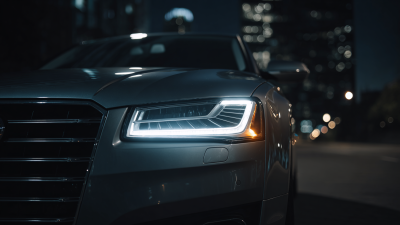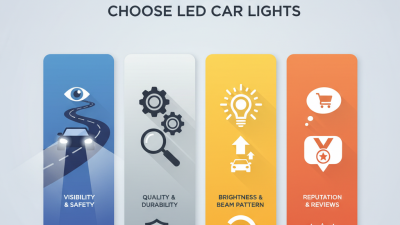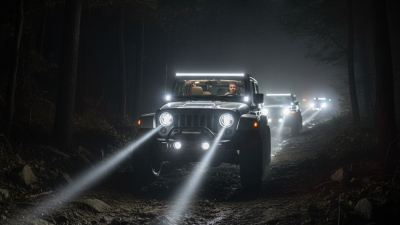
What Are the Top Types of LED Car Lights in 2026? This question now reaches beyond simple brightness. Led Lights Car Lights include LED headlamps, daytime running lights, fog lamps, tail lamps, brake lights, and adaptive matrix systems. Each type serves a different safety purpose. A sharp white beam may reveal road signs sooner, while a well-designed fog lamp should limit reflected glare near wet asphalt.
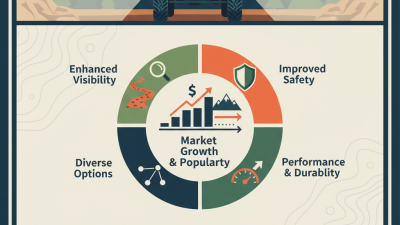
Industry data shows why this topic deserves careful attention. Grand View Research valued the global automotive lighting market at approximately USD 34.63 billion in 2023. Its report forecasts continued growth through 2030, supported by LED adoption, vehicle electrification, and advanced driver-assistance systems. MarketsandMarkets also identifies adaptive lighting and intelligent headlamp control as important development areas. These figures describe market direction, not guaranteed product quality. That difference matters.
Dr. John Bullough, a respected researcher at the Lighting Research Center, has emphasized, “More light is not automatically better light.” This principle should guide every 2026 comparison. A premium matrix headlamp can shape light around traffic, but calibration, lens clarity, and legal beam patterns remain critical. A compact LED fog lamp may look impressive in a showroom, yet perform poorly in heavy rain. I have seen buyers focus on color temperature while ignoring beam alignment. That is an understandable mistake. It is still a mistake. This guide examines the leading Led Lights Car Lights types, their real-world strengths, installation concerns, and the compromises manufacturers sometimes leave unexplained.
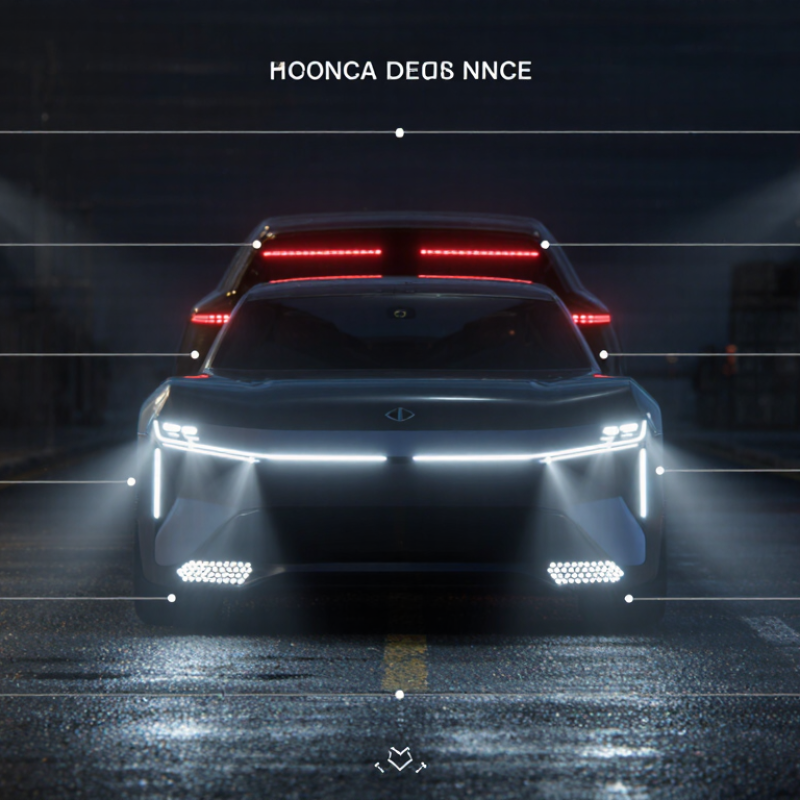
What Are the Top Types of LED Car Lights in 2026?
Classify LED Car Lights by Function Under FMVSS No. 108
LED car lights are best understood by their job, not by the diode inside. Under U.S. FMVSS No. 108, lighting functions include headlamps for seeing and being seen, turn signals for indicating direction, and stop lamps for signaling braking. Tail lamps, backup lamps, side markers, and license-plate lamps serve other visibility or identification functions. Some vehicles also use daytime running lamps. Function matters.
The standard sets requirements for lighting equipment and its use on vehicles. An LED source does not automatically make a lamp compliant; the complete lamp and its installation matter. For example, a bright replacement bulb may fit a headlamp housing but create a poor beam pattern. That can reduce visibility or glare other drivers. Check the vehicle’s specifications and the lamp’s applicable compliance information before replacing parts. Details can vary by vehicle and lamp type, so I would not judge suitability by brightness alone.
Tips: Identify the lamp’s function before shopping. Check its markings and fit, then test signals, brake lights, and reverse lights after installation. A quick walk-around helps. I still recheck alignment at night, because a beam can look fine in daylight and seem off on a dark road.
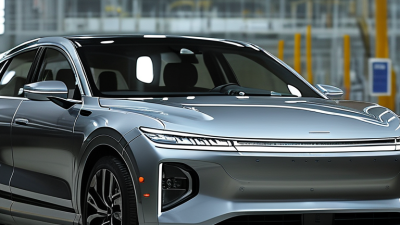
LED systems can serve multiple regulated functions. Forward-lighting functions include headlamps and daytime running lamps; signaling functions include turn signals and stop lamps; presence and marking functions include tail lamps, parking lamps, side-marker lamps, and reflex reflectors; rear-utility functions include backup and license-plate lamps. Under FMVSS No. 108, some functions are required for applicable passenger vehicles, while others are conditional or optional depending on vehicle configuration.
LED headlamps now include reflector, projector, and adaptive driving beam designs. Their real value depends on controlled light distribution, not brightness alone. UNECE Regulation No. 149 sets technical requirements for road illumination devices, including passing beams, driving beams, LED modules, and adaptive systems.
Type approval checks photometric performance, visibility, and glare control at defined test points. A lamp can look powerful yet fail to illuminate the road evenly.
The IEA Global EV Outlook 2024 reported more than 14 million electric car sales worldwide in 2023. This growth increases demand for efficient, durable lighting systems. The U.S. Department of Energy states that LEDs use at least 75% less energy and can last up to 25 times longer than incandescent lighting.
These figures do not guarantee better headlamp performance. UNECE R149 remains the stronger reference for beam quality. In practice, wet roads, dirty lenses, and incorrect alignment still reduce visibility.
Laboratory compliance cannot reproduce every road condition. That limitation deserves more attention.
Tips
Check the UNECE approval marking and installation compatibility. Compare the beam pattern, not the advertised lumen number. Ask for documented R149 test results. Keep the lens clean, and inspect alignment after suspension repairs. A brighter beam is not automatically safer.
In 2026, LED signal lamps remain among the most practical car-lighting upgrades. Common types include direction indicators, stop lamps, rear position lamps, reversing lamps, and rear fog lamps. Their compact diodes switch quickly, produce clear light, and usually consume less power than older bulbs. However, brightness alone does not prove compliance.
UNECE Regulation No. 148 covers light-signalling devices, including their color, photometric performance, visibility, and approval requirements. A compliant lamp should show the correct amber, red, or white output for its function. Its beam must remain visible from required angles, even when viewed from the side. Check the approval marking and technical documents before installation. Installation rules may also involve UNECE Regulation No. 48, so replacing a lamp without checking vehicle positioning can create problems. I have seen universal LED units fit physically but fail optical testing. That detail is easy to miss.
Tips: Match the lamp category to its intended function. Verify voltage, connector layout, sealing, and thermal control. Test the indicator from several viewing angles, not only directly behind the car. Watch for rapid flashing, uneven brightness, or dashboard warnings. These signs may indicate a poor load match or wiring issue. A careful installer should also measure light output after fitting, although many owners skip this step. That shortcut can be regrettable.
What Are the Top Types of LED Car Lights in 2026?
LED fog lights, daytime running lights, and interior lamps serve different driving needs. MarketsandMarkets’ Automotive Lighting Market report projects growth from about USD 34.5 billion in 2024 to USD 47.1 billion by 2029. LED adoption supports this expansion, but application still matters more than brightness alone.
Fog lights should produce a wide, low beam near the road surface. In rain or mist, excessive glare can reduce contrast and tire-edge visibility. A practical test is simple: check the beam against a wall at night. The light should remain controlled, not scatter above the main beam. UNECE lighting regulations emphasize photometric limits, showing why optical design matters. Brighter is not automatically safer.
DRLs improve daytime conspicuity, especially at intersections and shaded roads. The Insurance Institute for Highway Safety has reported lower crash involvement for vehicles with daytime running lights in several analyses, although results vary by traffic condition. DRLs should be clearly visible without becoming distracting. Not perfect. Their benefit weakens in heavy rain, tunnels, or poorly maintained systems.
Interior LEDs are useful for map pockets, footwells, and cargo areas. They consume less power and offer sharper illumination than older filament bulbs. Research and Markets’ Automotive Interior Lighting report identifies ambient and functional lighting as expanding segments through the decade. Yet excessive blue-white light can cause reflections on glass and displays. I prefer soft, focused illumination. Color temperature alone does not prove quality.
LED car lights now include headlight bulbs, fog lights, signal bulbs, brake lamps, and interior strips. Their brightness varies, but fitment matters more than appearance. A powerful bulb is useless if it cannot lock into the housing. Inspect the socket shape, retaining clips, dust cover, and space behind the lamp. A bulb that looks identical online may use a different base or connector.
Read the vehicle manual and the code printed on the original bulb. Confirm whether it serves the low beam, high beam, or both functions. Check voltage carefully. Most passenger vehicles use a 12-volt system, while some commercial vehicles use 24 volts. Never assume a “12V” label proves compatibility. Charging voltage may rise when the engine runs, so proper testing equipment is useful.
Compatibility also includes electrical behavior. Some vehicles monitor bulb resistance and may show a warning after an LED installation. Flickering, rapid signaling, or delayed startup can indicate an unsuitable decoder or weak connection. Online fitment charts help, but they are not perfect. Model years can overlap, and factory options may change the socket. Recheck the connector before ordering. It takes minutes. Returning the wrong bulb takes longer.
| Light Type / Function | Common Bulb Bases or Examples | Typical Vehicle Voltage | Fitment and Compatibility Notes | What to Check Before Buying |
|---|---|---|---|---|
| Low-beam headlights | H11, H7, 9006, or vehicle-specific LED module | Usually 12 V in passenger vehicles; some commercial vehicles use 24 V | The correct base depends on the headlamp assembly and vehicle trim. A matching connector alone does not ensure correct beam focus or legal use. | Confirm the owner’s manual or fitment catalog, bulb orientation, rear-cover clearance, beam pattern, and local road-use rules. |
| High-beam headlights | 9005, H1, H7, or a separate integrated LED unit | Usually 12 V in passenger vehicles; 24 V systems are used in some larger vehicles | Some vehicles use a dual-filament bulb for high and low beams; others use separate bulbs or sealed LED assemblies. | Check whether the vehicle uses a separate high-beam bulb, a dual-function bulb, or a non-replaceable assembly. |
| Fog lights | H11, H8, H16, or a vehicle-specific assembly | Usually 12 V in passenger vehicles | Fog-lamp housings vary in shape and depth. Some vehicles have integrated LED fog lamps that are replaced as complete units. | Verify the exact bulb base, housing space, connector, and whether the lamp is serviceable with a replaceable bulb. |
| Turn signals and hazard lights | 3157, 7440, 7443, or PY21W-type fitments, depending on the vehicle | Usually 12 V in passenger vehicles | LED replacements may cause rapid flashing or dashboard warnings in some vehicles because they draw less current than incandescent bulbs. | Check socket type, front or rear application, amber-light requirements, polarity, and whether a compatible flasher or load correction is needed. |
| Brake and tail lights | 1157, 3157, 7443, or integrated LED unit | Usually 12 V in passenger vehicles | Some sockets combine tail and brake functions; others use separate bulbs. LED replacements must provide distinct, visible brightness for each function. | Confirm single- or dual-function fitment, socket configuration, lens color, and compatibility with the vehicle’s monitoring system. |
| Reverse lights | 921, 912, 7440, or vehicle-specific fitment | Usually 12 V in passenger vehicles | The bulb must fit the reverse-lamp housing and provide suitable white light without interfering with other rear-light functions. | Check the bulb number, socket, available space, polarity, and applicable lighting regulations. |
| Daytime running lights (DRLs) | Vehicle-specific bulb or integrated LED module | Typically part of a 12 V passenger-vehicle electrical system | Many newer vehicles use DRLs built into the headlamp or bumper assembly, rather than a separately replaceable bulb. | Identify whether the DRL is a replaceable bulb or a complete module; check the vehicle’s wiring and control-system requirements. |
| Interior and license-plate lights | Festoon sizes, T10/W5W, or other vehicle-specific bases | Usually supplied by the vehicle’s 12 V system | Fitment varies by lamp location, and some vehicles monitor interior or exterior bulbs for faults. | Measure festoon length where applicable, confirm the base type, and check for polarity sensitivity or bulb-out warnings. |
Fitment note: These are common examples, not a universal compatibility list. Always confirm the bulb specification against the vehicle’s owner’s manual or a reliable vehicle-specific fitment reference. A vehicle’s nominal 12 V or 24 V system does not by itself confirm bulb compatibility; some vehicles require specific electronics or complete LED assemblies. Road-use approval for LED replacement bulbs varies by location and lamp type.