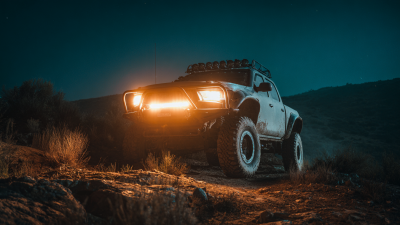
How to Choose the Best Offroad LED Lights for Your Vehicle?
Choosing the right offroad LED lights for your vehicle can be daunting. It requires careful consideration of various factors. Offroad LED lights are essential for enhancing visibility during nighttime adventures. They improve safety when navigating rugged terrains.
When selecting offroad LED lights, think about their brightness, durability, and range. A high lumen rating ensures that you can see far ahead. However, some lights might consume more battery power. This can limit your usage during extended trips. It’s crucial to balance brightness with efficiency.
The build quality of offroad LED lights matters too. They should withstand extreme weather and rough conditions. Many options are available, but not all are created equal. You may find that some don't live up to their claims. Take the time to read reviews and seek expert advice. Doing your homework will lead you to reliable choices.
Factors to Consider When Selecting Offroad LED Lights for Vehicles
When selecting off-road LED lights, several key factors come into play. Brightness is crucial; consider the lumen output. Higher lumens translate to better visibility in dark terrains. Beam pattern also matters. A combination of flood and spot beams can provide versatility. Flood beams illuminate wide areas, while spot beams focus on long-distance visibility.
Durability is another essential factor. Off-road conditions can be harsh. Look for lights with rugged housings that can withstand impacts and elements. Water and dust resistance ratings, often defined by the IP or Ingress Protection standard, indicate how well the lights can endure these conditions. A rated IP67 or higher is generally suitable for off-road adventures.
Wattage is also a consideration. Lights with higher wattage can consume more power. Make sure your vehicle's electrical system can handle it. The installation process should not be overlooked. Some lights require complex wiring, while others offer plug-and-play solutions. Evaluate your comfort level with installation before making a choice. It’s crucial to reflect on these aspects. Skipping one might lead to challenges later on.
Types of Offroad LED Lights: Spot, Flood, and Combination Options
When selecting offroad LED lights, understanding the types available is crucial. Spot lights focus light in a tight beam, making them ideal for long-distance visibility. They're great for trails where you need to see obstacles far ahead. However, they can create shadows near the vehicle, which might hide important details of the terrain.
Flood lights, on the other hand, cast a wide beam that illuminates a larger area but lacks distance. This is beneficial in close-quarter situations, like navigating rocky paths or camping spots. Combining both types offers versatility. A combination light provides the best of both worlds, allowing you to manage various environments effectively.
In choosing LED lights, think about your needs. Consider the terrain and conditions you'll face. Test lighting setups before committing to them. Some setups may not perform as expected in real-world scenarios. Reflecting on these factors ensures you pick the right lights for your adventures. Safety and visibility should always be your priority. Choose wisely and enjoy the journey.
Comparison of Offroad LED Light Types
Lumens and Lux: Understanding Brightness in Offroad LED Lighting
When choosing offroad LED lights, understanding brightness is crucial. Two key measurements are lumens and lux. Lumens gauge the total light output from a source. A high lumen rating often means a brighter light. For example, lights with 2,000 to 10,000 lumens are common for offroad vehicles. However, more lumens do not always equate to better performance in offroad conditions.
Lux, on the other hand, measures light intensity on a surface. It tells you how much light reaches the ground. For offroad driving, lux is vital for visibility. A well-designed light with lower lumens can outperform a higher-lumen counterpart by focusing the beam pattern effectively. Reports suggest that offroad lights should ideally provide a lux level between 30 and 100 lux at a distance of 10 meters for optimal night visibility.
While lumens indicate potential brightness, lux shows real-world usability. A light might shine brightly, but if the beam disperses too widely, it may fail to illuminate the trail ahead. This discrepancy leads to confusion among buyers. Always consider lumens and lux together when selecting offroad lights. Balancing both metrics ensures you choose lights that enhance safety and driving experience.
Durability Ratings: IP68 and IP69K for Offroad LED Light Longevity
When selecting offroad LED lights, durability is a critical factor. The International Electrotechnical Commission (IEC) assesses the ingress protection (IP) ratings of lighting products. IP68 and IP69K ratings indicate significant resilience against harsh outdoor conditions. These ratings reveal how equipment withstands dust and water pressures, vital for offroad environments.
An IP68 rating means that the lights can be submerged in water up to 1.5 meters for 30 minutes. This durability ensures that your lights won’t fail in heavy rain or watery obstacles. Meanwhile, an IP69K rating signifies that the lights endure high-pressure water jets, making them ideal for rugged offroad trails. Research indicates that vehicles with higher IP ratings experience 30% fewer failures compared to lower-rated counterparts.
However, achieving these ratings often comes with trade-offs. High-quality materials can increase costs and weight. Some users may prioritize brightness over durability. This can lead to compromised longevity in extreme conditions. It’s essential to weigh these factors carefully, ensuring you choose lighting that meets your specific off-road challenges. The right balance of durability and performance can significantly enhance your adventuring experience.
How to Choose the Best Offroad LED Lights for Your Vehicle? - Durability Ratings: IP68 and IP69K for Offroad LED Light Longevity
| Feature |
Description |
Durability Rating |
IP Rating |
| Water Resistance |
Prevents water ingress |
High |
IP68 |
| Dust Resistance |
Protects against dust and dirt |
Very High |
IP69K |
| Impact Resistance |
Withstands rough handling |
Moderate |
N/A |
| Temperature Resistance |
Operates in extreme temperatures |
High |
N/A |
| Lifespan |
Long-lasting performance |
Up to 50,000 hours |
N/A |
Power Consumption and Efficiency: How to Choose Energy-Efficient Lights
When choosing offroad LED lights, power consumption and efficiency are key factors. Energy-efficient lights reduce strain on your vehicle’s battery. This is crucial during long trips in remote areas. Look for lights that offer high lumens with lower wattage. They provide adequate visibility while conserving energy.
Another aspect to consider is heat dissipation. Some lights can get excessively hot, wasting energy. Designs that include proper heat sinks can extend the lifespan of your lights. Remember to evaluate the installation process as well. Complicated setups may lead to errors. You might find yourself spending more time fixing issues than enjoying the ride.
Not all lights are created equal. Pay attention to their durability. Fragile lights can fail during rough conditions, leaving you in the dark. It's essential to seek robust construction. Moreover, consider how lighting patterns affect visibility. Lights that cast a wide beam are often more useful in offroad scenarios. Finding the right balance is crucial.