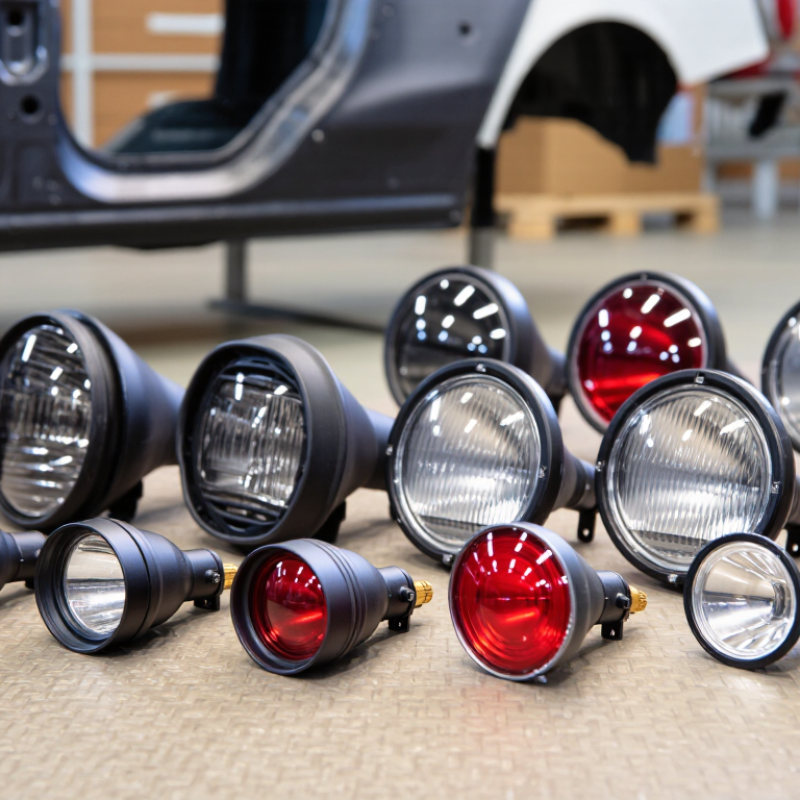
Fog Lights remain a practical part of vehicle design, especially where rain, mist, or road spray can reduce visibility. For global buyers, choosing a supplier involves more than comparing unit prices. Beam consistency, housing durability, connector fit, production capacity, and communication during sampling all matter. Small details count: a poorly sealed lens or an incompatible plug can delay a vehicle program.
The scale is substantial. OICA’s 2023 production statistics recorded approximately 93.5 million motor vehicles produced worldwide. The IEA’s Global EV Outlook 2024 also reported nearly 14 million electric car sales in 2023, about 18% of total car sales. These figures do not measure fog-light demand directly. They do show why suppliers must serve varied vehicle platforms and changing design requirements. Still, broad market numbers cannot verify a factory’s quality.
This guide introduces ten China-based manufacturers for buyers comparing product ranges, manufacturing capabilities, customization, and export experience. It is a starting point, not a substitute for checking samples, test records, and supplier references. Ask clear questions. Confirm the details. A polished catalog is useful, but it is not proof of consistent performance.
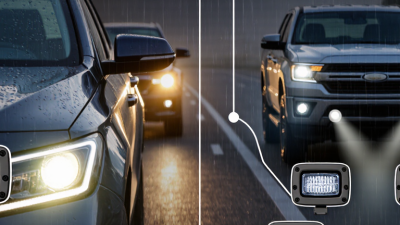
Fog lights are designed to improve near-road visibility when fog, heavy rain, or snow scatters light back toward the driver. Their beams sit low and spread broadly across the road. This can help reveal lane edges, road markings, and nearby obstacles without shining as directly into suspended water droplets. Visibility can change fast.
They are not a substitute for careful driving. In thick fog, a driver may still see only a short stretch of road, even with the lamps on. Reduce speed, leave more space, and avoid relying on the light to reveal distant hazards. On a wet road, glare from reflective signs or standing water can remain distracting. That part is easy to underestimate.
Good performance also depends on condition and alignment. A cloudy lens, loose fitting, or incorrect aim can weaken the beam or send it into other drivers’ eyes. Check that both lamps work, and keep their lenses clean. Fog lights do not make poor visibility safe; sometimes the wiser choice is to delay travel.
China’s fog-light industry is organized around a layered automotive supply chain. At the top, assembly suppliers integrate the lens, housing, reflector, light source, driver, and seals into a finished unit. Component makers provide molded optical parts, electronic modules, and metal or plastic housings. Some factories focus on original-equipment programs; others make replacement products in smaller batches. The lines can look similar. Their engineering responsibilities may not be.
Scale matters. The China Association of Automobile Manufacturers reported 31.282 million vehicles produced in China in 2024, up 3.7% year over year. That large production base supports dense networks of component suppliers, tooling shops, and test laboratories, but it does not prove every fog-light supplier has equal capability.
Not every supplier is equal. Buyers should check who owns the tooling, how optical performance is measured, and whether samples match production parts. Ask for traceable test records, material specifications, and clear change-control procedures. A useful review also checks beam distribution, sealing, vibration resistance, and connector fit. Small details matter.
Export orders add another layer: destination-market requirements can differ, so documentation and validation should be agreed before mass production. Some sourcing decisions still rely too heavily on a sample. That is risky.
Sources: CAAM, 2024 automobile production and sales data.
When comparing Chinese fog light manufacturers, inspect beam performance before judging price. Ask for photometric reports showing intensity, cutoff, color, and results across production samples. A clean laboratory result is useful, but road-facing consistency matters more. Request test conditions, equipment calibration dates, and records for the exact lamp version being quoted. Small differences matter.
Manufacturing capacity should match your forecast, not just a supplier’s headline output. OICA reported 93.5 million motor vehicles produced worldwide in 2023, while the IEA’s Global EV Outlook 2024 estimated nearly 14 million electric-car sales that year. These figures signal a large, changing vehicle market. Check tooling ownership, component sourcing, and change-control procedures. Ask how the factory handles a design revision mid-cycle. The answer can reveal more than a polished brochure.
For target markets, confirm which approval requirements apply. UN Regulations No. 19 and No. 38 address front and rear fog lamps; request relevant, current test documentation. Also review ingress protection, vibration results, thermal cycling, and sample traceability. Ask to inspect a production sample, not only a golden sample. I would still verify claims independently; supplier paperwork can be incomplete. That takes time. But it is worth it.
China’s fog-light supply base benefits from a large automotive ecosystem. The China Association of Automobile Manufacturers reported 30.16 million vehicles produced in 2023, supporting demand for both original-equipment and replacement lighting. The ten manufacturer profiles in this guide reflect distinct buyer needs: high-volume molded assemblies, commercial-vehicle lamps, compact aftermarket units, projector-style designs, LED modules, halogen-compatible housings, sealed units, customized tooling, export-focused production, and suppliers serving smaller order volumes. These are selection profiles, not an independently audited ranking.
For global buyers, compare more than catalogue photos. Ask each supplier for beam-pattern test records, material specifications, sample lead times, and documented quality checks. A close look at a lens edge, connector seal, and mounting tab can reveal issues that a polished product image hides. Check whether drawings match the sample and whether production changes are recorded. Capacity claims alone prove little. CAAM’s production figures describe the wider market, not any individual factory’s capability, so verify factory-specific evidence before placing an order.
Tips: Request a sample from the intended production line, then check fitment and light output against your vehicle requirements. Confirm packaging, spare-part availability, and response times in writing. One limitation: supplier documents may use different test conditions, so compare like with like.
Buyer guide: The entries below are anonymized sourcing profiles, not a verified ranking or claims about specific companies. Product specifications, certifications, and production capabilities vary by supplier and model; verify them directly before placing an order.
| Profile | Typical Product Focus | Common Light Source | Vehicle Voltage to Confirm | Key Construction Details to Specify | Relevant Requirements to Check | Best-Fit Buyer | Documents to Request |
|---|---|---|---|---|---|---|---|
| Profile 01 Passenger-Car Front Fog Lamps |
Front fog lamp assemblies for passenger vehicles; confirm whether supplied as complete assemblies or replacement units. | LED or halogen, depending on the vehicle application. | Typically 12 V applications; confirm operating-voltage range and vehicle compatibility. | Lens material, housing material, mounting points, connector pinout, beam pattern, and left-/right-hand side. | Applicable destination-market lighting rules; request test evidence for the exact lamp and vehicle application. | Importers and replacement-parts distributors serving passenger-car markets. | Product drawings, fitment list, photometric test report, wiring diagram, and packaging details. |
| Profile 02 Rear Fog Lamp Assemblies |
Rear fog lamps integrated into rear lamp units or supplied as separate assemblies. | LED or incandescent, subject to the original vehicle design and market requirements. | Confirm 12 V or 24 V application, polarity, and connector specification. | Lens color, rear mounting arrangement, sealing method, cable or connector type, and visibility angle. | Check the applicable rear-fog-lamp regulations in the destination market and the permitted installation position. | Vehicle-parts wholesalers and manufacturers of replacement rear-lamp assemblies. | Installation instructions, wiring details, photometric evidence, and market-specific approval documents where applicable. |
| Profile 03 LED Fog Lamp Modules |
LED modules or complete LED fog lamps for new vehicle programs and aftermarket upgrades. | LED; request the LED configuration and rated electrical characteristics for each part number. | Confirm nominal voltage, input range, current draw, and transient protection requirements. | Heat-sink design, thermal management, driver location, lens material, and serviceability. | Check photometric performance and applicable vehicle-lighting regulations; do not assume an LED source alone establishes approval. | Buyers seeking LED-specific products or custom vehicle applications. | LED and driver specifications, thermal test results, photometric report, and EMC test evidence if required. |
| Profile 04 Halogen Replacement Fog Lamps |
Replacement assemblies designed around a specified halogen bulb type and vehicle fitment. | Halogen bulb; confirm bulb designation, wattage, and whether the bulb is included. | Commonly 12 V for passenger vehicles; commercial-vehicle applications may differ. | Bulb access, reflector finish, lens clarity, bulb-retention method, and replacement-part fit. | Check bulb and complete-lamp requirements for the intended market and vehicle. | Aftermarket distributors serving vehicles with replaceable-bulb fog lamps. | Bulb specification, fitment references, dimensional drawing, and inspection criteria. |
| Profile 05 Commercial-Vehicle Fog Lamps |
Fog-lamp products intended for trucks, buses, vans, or other commercial vehicles. | LED or halogen, selected for the vehicle platform and operating conditions. | Confirm 12 V or 24 V system compatibility and the vehicle’s electrical environment. | Vibration resistance, bracket strength, connector sealing, service access, and mounting orientation. | Check vehicle-class requirements and any applicable market-specific lighting and environmental tests. | Commercial-vehicle parts suppliers and fleet-maintenance distributors. | Vibration and environmental test reports, mounting drawings, voltage data, and service instructions. |
| Profile 06 Automotive-Lighting OEM Supplier |
Fog lamps developed to an automaker’s or Tier supplier’s drawings and validation requirements. | LED or halogen according to the approved vehicle design. | Defined by the vehicle electrical architecture; confirm the full voltage and transient specification. | Tooling ownership, change control, traceability, production validation, and interface control. | Ask whether the supplier holds a current IATF 16949 certificate for the relevant manufacturing site; verify scope and validity. | Vehicle manufacturers, Tier suppliers, and buyers with formal qualification processes. | Quality-system certificate, process flow, control plan, PPAP or equivalent submission, and change-management procedure. |
| Profile 07 Aftermarket Replacement Specialist |
Replacement fog lamps catalogued by vehicle make, model, year, and side of installation. | LED or halogen, depending on the corresponding replacement part. | Confirm fitment-specific voltage, connector, and bulb configuration. | OE-reference cross-check, mounting-point accuracy, lens finish, and packaging protection. | Verify that any claimed equivalence or approval applies to the exact product and target market. | Online sellers, regional wholesalers, and independent repair-parts channels. | Fitment database, cross-reference list, product photos, dimensional data, and warranty terms. |
| Profile 08 Custom-Design Fog Lamp Supplier |
Customized housing, lens, bracket, connector, or appearance for a defined vehicle project. | LED or halogen; selection depends on the agreed design and regulatory target. | Set in the project specification; confirm voltage range and electrical interface before tooling. | Prototype process, tooling cost and ownership, design-freeze procedure, and production change control. | Agree on destination-market standards and validation tests before design approval. | Brands and vehicle programs requiring non-catalogue designs. | 3D data, prototype test plan, tooling agreement, validation schedule, and approved sample records. |
| Profile 09 Rugged-Use Fog Lamp Supplier |
Fog lamps intended for demanding road, work-vehicle, or off-road environments. | Often LED in current product designs; confirm the actual source and beam performance. | Confirm 12 V or 24 V support and protection against vehicle electrical transients. | Housing strength, sealing, corrosion protection, lens impact resistance, and mounting durability. | Request evidence for the required ingress-protection level under IEC 60529 and for any stated environmental claims. | Specialty-vehicle distributors, fleet operators, and equipment integrators. | Ingress-protection report, corrosion and vibration test results, installation limits, and warranty conditions. |
| Profile 10 Export-Oriented Fog Lamp Supplier |
Fog lamps prepared for export orders with market-specific packaging, labeling, and documentation. | LED or halogen; confirm each SKU’s intended market and configuration. | Specify the target vehicle voltage and region for every purchase order. | Label language, barcode requirements, carton strength, spare-parts policy, and shipment traceability. | For applicable products, check destination-market requirements such as UNECE Regulation No. 149 or U.S. FMVSS No. 108; applicability depends on product and market. | International importers and distributors buying multiple product configurations. | Market-specific approvals, commercial packing list data, country-of-origin documentation, inspection records, and warranty policy. |

For importers comparing China’s top fog light manufacturers, sourcing should start with measurable evidence, not catalogue claims. OICA reported 93.5 million motor vehicles produced worldwide in 2023, underscoring the scale and pressure of automotive supply chains. Ask each factory for production capacity, batch traceability, defect records, and documented change control. Request photometric test reports for the exact lamp configuration, not a similar model. Confirm that testing comes from a competent laboratory and matches the destination market’s applicable rules, such as UNECE Regulation No. 149 or U.S. FMVSS 108. Requirements differ by market. Check lens markings, beam patterns, wiring, and mounting dimensions against approved samples. Small differences matter.
Compliance is more than a certificate. Test water ingress, vibration, thermal cycling, and corrosion using agreed methods; then inspect production samples against those results. A neatly sealed housing can still fog internally after a cold-to-warm transition. Ask how the supplier controls LED bins, sealing materials, and final inspection records. Include audit access, warranty remedies, spare-part availability, lead times, and tooling ownership in the contract. Independent pre-shipment checks help, but they cannot replace ongoing process reviews. Build a pilot order into the schedule. It may expose weak packaging or inconsistent beam alignment before volume shipments begin. Some buyers overlook this. They should not.