The Light Bar market is moving beyond simple brightness. Buyers now compare beam control, thermal management, durability, wiring quality, and road-legal performance. A powerful lamp can still disappoint when its optics scatter light across rain, dust, or nearby traffic.
Recent industry research supports this shift. MarketsandMarkets’ Automotive Lighting Market report identifies LED adoption, vehicle electrification, and advanced driver-assistance systems as major growth drivers. Grand View Research also highlights rising demand for energy-efficient and high-performance vehicle lighting. The U.S. Department of Energy reports that LEDs generally consume at least 75% less energy and last much longer than incandescent technologies. These findings do not measure every Light Bar application directly. Still, they explain the technology’s strong momentum.
Lighting expert James R. Benya has stated, “LEDs are not lamps; they are light sources.” That distinction matters. A reliable Light Bar depends on more than its LED chips. Housing design, heat dissipation, lens quality, ingress protection, and manufacturing consistency shape real-world performance. We examined these details when developing this list of the Top 10 LED Light Bar Manufacturers Worldwide.
The ranking considers product range, optical engineering, testing practices, warranty support, global distribution, and industry reputation. No ranking is flawless. Some manufacturers publish limited testing data, while others serve specialized markets that are difficult to compare fairly. Therefore, this guide combines available evidence with practical observations from commercial vehicles, off-road equipment, emergency fleets, and industrial applications. The best choice is not always the brightest one. It is the Light Bar that delivers controlled illumination, dependable construction, and measurable value in its intended environment.
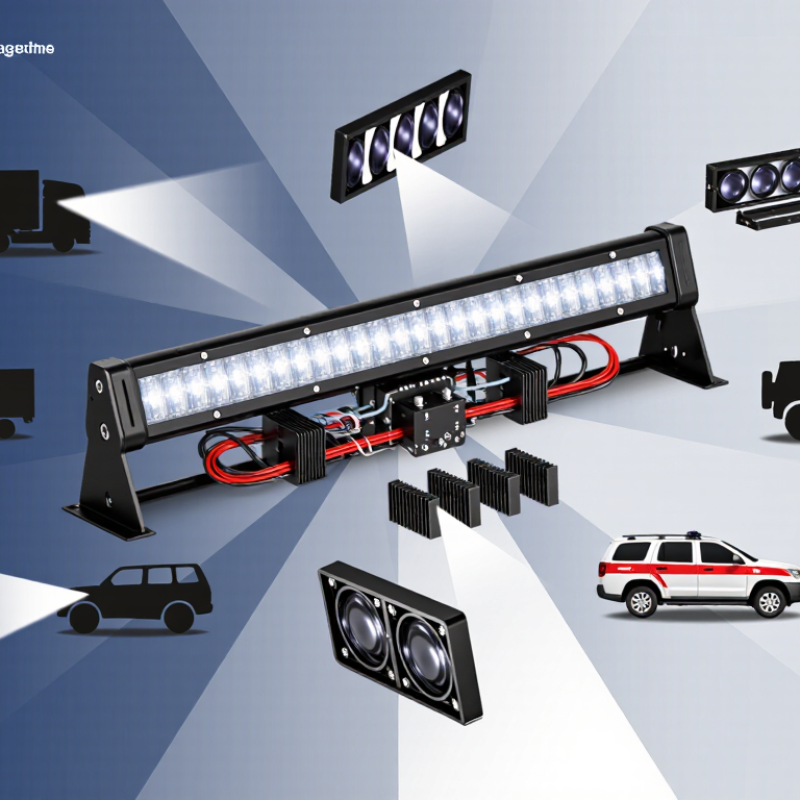
A leading LED light bar manufacturer is not defined by brightness alone. It combines optical design, thermal control, electrical safety, and dependable production. Engineers should explain beam patterns, power draw, operating temperatures, and expected service life with measurable data. Claims without test conditions deserve caution.
Real experience appears in practical details. A well-designed light bar should resist vibration, dust, moisture, and sudden temperature changes. Look for sealed connectors, corrosion-resistant housings, stable mounting points, and clear installation guidance. Reliable manufacturers test products under repeated stress, not only in clean laboratory conditions. Field feedback also matters. A beam that looks impressive may create glare or poor visibility on uneven roads.
Quality control must continue beyond the prototype stage. Leading producers document component traceability, inspect each production batch, and provide consistent photometric results. They should also support reasonable warranty terms and responsive technical service. Independent testing and recognized safety compliance strengthen credibility. Still, no manufacturer gets every design right. Some published ratings may reflect ideal conditions rather than daily use. That gap matters. Buyers should compare measured performance, repair support, and long-term durability instead of trusting marketing language. A transparent manufacturer admits limitations, updates specifications when evidence changes, and treats customer complaints as engineering information.
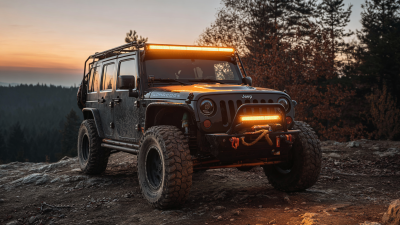
Modern LED light bars depend on more than diode brightness. Their core system combines high-efficacy emitters, constant-current drivers, optics, thermal paths, and control software. The U.S. Department of Energy’s 2023 Solid-State Lighting R&D Opportunities report identifies efficacy, color quality, reliability, and thermal management as continuing priorities. In practical testing, a narrow beam can illuminate road edges sharply, while a wide beam reduces dark gaps near the vehicle. Small optical errors matter.
Thermal design often separates durable products from impressive specifications. Aluminum housings, internal heat spreaders, and sealed connectors move heat away from the junction. DOE research has reported laboratory LED efficacies above 200 lumens per watt, but complete light bars usually deliver less after optics, drivers, and housing losses. That gap deserves attention. The International Energy Agency reports that lighting uses about 15% of global electricity. Pulse-width dimming, adaptive sensors, and regulated drivers can reduce output when full power is unnecessary. Poorly tuned dimming may create visible flicker.
Ingress protection, vibration resistance, and surge protection require measurement, not marketing language. Engineers should inspect beam uniformity, current stability, junction temperature, and output after repeated thermal cycles. Photometric files help, but they cannot replace road-level observation in rain, dust, or snow. I have found that claimed lifetime figures can feel too optimistic under ideal test temperatures. Independent laboratory data remains valuable.
Sources: U.S. DOE, Solid-State Lighting R&D Opportunities, 2023; IEA, Energy Efficiency 2024.
Choosing among the top LED light bar manufacturers worldwide requires more than comparing brightness claims. Experienced buyers examine beam pattern, heat control, sealing, and warranty terms. A reliable manufacturer should publish test data, operating temperatures, and ingress protection ratings. Factory audits, traceable components, and consistent quality checks also matter. In field use, a bar may face dust, vibration, rain, and sudden temperature changes. Marketing photos rarely show these conditions.
Tips: Ask for measured lumens, not only advertised lumens. Check whether the housing uses corrosion-resistant material and whether the lens resists yellowing. Request sample units before a large order. Compare wiring diagrams, mounting hardware, replacement access, and technical support response times. A useful test runs the light for several hours, then checks surface temperature and beam stability. Small details reveal manufacturing discipline.
Leading LED light bar manufacturers worldwide often serve different markets, so design should match local vehicle standards and working environments. Some factories excel at compact work lights; others handle long-range illumination or heavy-duty fleet projects. Certifications can support credibility, but they do not replace independent inspection. I would also review failure reports, not just success stories. No supplier is perfect. A transparent manufacturer admits limits, documents corrective actions, and improves its process after a returned unit.
Top 10 LED Light Bar Manufacturers Worldwide
The top ten LED light bar manufacturers differ mainly by product design and application focus. Some develop compact bars for utility vehicles, while others build high-output systems for mining, agriculture, and emergency fleets. A useful comparison should examine beam patterns, operating voltage, thermal control, ingress protection, and service support. Marketing claims alone are not enough. That difference matters.
For off-road use, manufacturers usually offer spot, flood, and combination beams. A narrow spot beam reaches distant trails, while a flood beam improves visibility near the vehicle. Construction equipment needs stronger housings, vibration resistance, and reliable connectors. Marine applications demand better corrosion protection. Industrial lighting often requires documented photometric data and consistent color output. In practical testing, a bar with slightly lower brightness may perform better when its heat management is stronger.
Procurement teams should also review warranty terms, replacement parts, installation guides, and independent laboratory reports. Products tested for electrical safety and electromagnetic compatibility provide greater confidence. Still, published specifications can be incomplete. I have seen impressive lumen figures paired with weak mounting brackets or unclear duty-cycle limits. Small details fail first. Manufacturers serving professional users usually provide clearer test methods, application charts, and technical assistance. Buyers should compare real operating conditions, not only maximum brightness. A careful field trial, even for one week, can reveal glare, water entry, connector heating, and vibration noise before large-scale deployment.
Common product categories and application coverage across the global LED light bar manufacturing market
Off-road and commercial vehicle lighting represent the broadest application coverage, while single-row and dual-row light bars remain the most widely offered product formats. Work-light integrations are commonly used in utility, construction, agricultural, and emergency-service equipment.
Top 10 LED Light Bar Manufacturers Worldwide: Factors to Consider When Choosing a Manufacturer
Choosing an LED light bar manufacturer requires more than comparing lumen claims. The U.S. Department of Energy reports that LED products can use at least 75% less energy and last up to 25 times longer than incandescent lighting. However, these figures depend on thermal design, driving current, and installation conditions. Ask for LM-79 photometric test results, LM-80 LED maintenance data, and measured beam patterns. A bright showroom sample proves little.
Reliability begins with construction details. Check the aluminum housing, sealing method, connector quality, and heat-sink surface. An IP67 rating means protection against dust and temporary water immersion, but only when tested correctly. Request independent test records, not recycled brochures. The International Energy Agency’s Energy Efficiency 2023 report identifies efficient lighting as a major electricity-saving opportunity, increasing pressure on manufacturers to verify real-world performance. That pressure is useful.
Review warranty terms, replacement procedures, batch consistency, and spare-part availability. A five-year warranty sounds strong, yet it may exclude moisture, vibration, or installation errors. Ask how optical output is measured after thermal aging. Also examine factory capacity, audit history, and traceable component sourcing. One overlooked detail can matter: a poorly crimped cable may fail before the LEDs. I have seen impressive prototypes perform differently in production. That is why a small pilot order, field testing, and documented corrective actions deserve more attention than the lowest quotation.
| Rank | Anonymous Manufacturer Profile | Primary Production Region | Typical Product Focus | Common Beam Options | Typical IP Rating | Common Compliance Documentation | Typical Warranty | Typical OEM/ODM Lead Time | Key Selection Advantage | Recommended Verification |
|---|---|---|---|---|---|---|---|---|---|---|
| 1 | Large-Scale OEM Profile | East Asia | Automotive, off-road, agricultural and industrial LED light bars | Spot, flood, combo and driving beam | IP67–IP69K | CE, RoHS, EMC test reports; market-specific documents on request | 2–5 years | 30–60 days | High production capacity and broad model selection | Audit factory capacity, component traceability and test records |
| 2 | Automotive-Grade Specialist Profile | North America | Heavy-duty vehicle, fleet and utility vehicle lighting | Long-range spot, SAE-style driving and wide flood | IP67–IP68 | EMC, vibration, thermal and photometric test documentation | 3–5 years | 45–75 days | Strong focus on durability and vehicle integration | Request vibration, corrosion, thermal-cycle and ingress test results |
| 3 | European Compliance-Oriented Profile | Western Europe | Commercial vehicles, marine, emergency and industrial applications | Asymmetric, driving, flood and combination beam | IP67–IP69K | CE, RoHS, REACH and EMC documentation where applicable | 2–5 years | 40–80 days | Detailed technical documentation and regulatory support | Check declaration of conformity, optical data and responsible-party details |
| 4 | Rugged Off-Road Specialist Profile | Oceania | 4x4, mining, construction, forestry and recreational vehicles | Spot, combo, wide flood and scene lighting | IP68–IP69K | Ingress, dust, salt-spray, impact and vibration test reports | 3–5 years | 30–60 days | Good performance in dust, water, vibration and temperature changes | Confirm operating temperature, mounting strength and salt-spray duration |
| 5 | Marine-Environment Profile | Northern Europe | Marine, port, coastal transport and emergency-service lighting | Wide flood, low-glare, search and combination beam | IP67–IP69K | Corrosion, EMC, ingress and electrical safety documentation | 2–5 years | 45–90 days | Enhanced corrosion resistance and sealed housing designs | Review housing material, coating specification and salt-spray test data |
| 6 | Custom Engineering Profile | East Asia | Private-label, vehicle-specific and application-specific light bars | Custom optics, spot, flood and combo beam | IP67–IP69K | CE, RoHS, EMC and customer-specific validation reports | 2–3 years | 45–90 days | Flexible tooling, branding, optics and wiring customization | Approve engineering drawings, samples, inspection standards and change-control terms |
| 7 | Fleet-Integration Profile | North America | Truck fleets, municipal vehicles, service vehicles and trailers | Driving, flood, warning-compatible and combo beam | IP67–IP68 | EMC, electrical load, thermal and photometric documentation | 3–5 years | 30–75 days | Reliable harnessing, mounting systems and replacement support | Verify current draw, connector quality, spare-part availability and fleet testing |
| 8 | Industrial Lighting Profile | Central Europe | Mining, logistics, material handling and heavy equipment | Wide flood, area lighting, spot and asymmetric beam | IP66–IP69K | CE, EMC, RoHS, thermal and mechanical test documentation | 2–5 years | 45–90 days | Stable thermal management and long operating-life design | Compare measured lumen output, thermal derating and service-life assumptions |
| 9 | Value-Focused Volume Profile | South Asia | General-purpose automotive and commercial vehicle light bars | Spot, flood and combo beam | IP65–IP67 | Basic CE, RoHS and electrical safety documentation | 1–3 years | 25–60 days | Competitive unit pricing and scalable standard products | Use independent pre-shipment inspection and verify actual IP performance |
| 10 | Small-Batch Premium Profile | Japan and South Korea | Specialized automotive, motorsport and precision outdoor lighting | High-intensity spot, controlled flood and custom combination beam | IP67–IP68 | EMC, photometric, thermal and environmental test documentation | 2–5 years | 60–100 days | Consistent optical control and premium quality management | Request independent lumen, beam-pattern, thermal and reliability measurements |
Important: IP ratings, warranty periods, compliance documents and lead times are common market-reference ranges for comparable LED light bar manufacturers. Always verify current specifications, certifications, test reports, production capacity and warranty terms directly before placing an order.