Who Are the Top LED Light Bar Manufacturers in China?
China is a major source of LED lighting products, including work lights, driving lamps, and industrial light bars. Yet choosing a supplier involves more than comparing product photos or factory claims. A dependable Led Light Bar manufacturer should explain its design choices, production capabilities, and quality checks in clear terms. Details matter: aluminum housing thickness, lens material, wiring connections, heat management, and protection against dust and moisture can affect performance over time. Ask how products are tested, what documentation is available, and whether specifications match the samples supplied. Small differences count.
This guide explores manufacturers in China through practical criteria rather than a ranking based on unsupported claims. It considers product range, customization, manufacturing experience, quality-control processes, communication, and after-sales support. Buyers can also look for traceable test records and relevant certifications, while confirming their scope and validity independently. A polished catalog is useful, but it does not prove consistent production. Neither does one successful sample. Supplier assessment takes time, and even careful research cannot remove every risk. That is worth remembering. The goal is to help readers ask better questions, compare evidence fairly, and identify manufacturers whose capabilities fit their application, order volume, and service expectations.
How China’s LED Light Bar Industry Is Classified by Product and Vehicle Type
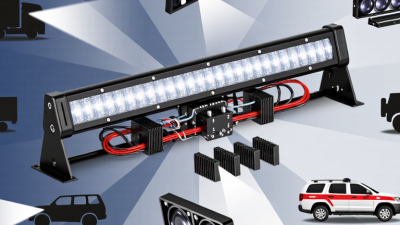
China’s LED light bar industry is best classified by beam pattern, construction, and installation purpose. Common product groups include spot-beam bars for longer-range illumination, flood-beam bars for wider near-field coverage, and combo bars that mix both patterns. Buyers also compare single- and double-row housings, straight or curved profiles, operating voltage, and ingress-protection ratings. These specifications matter in real use: a wide bar can illuminate roadside shoulders, while a narrow beam may better suit a long, open worksite.
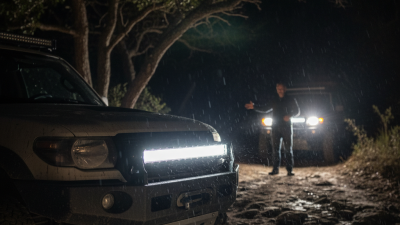
Vehicle type creates another useful division. Pickup trucks and SUVs often need compact bars that fit grilles or roof racks. Heavy trucks, agricultural machines, and construction equipment may require longer housings, stronger mounts, and lighting suited to extended work shifts. China produced 30.16 million vehicles in 2023, according to the China Association of Automobile Manufacturers; OICA reported global vehicle production of about 93.5 million that year. These figures indicate a broad vehicle base, not LED light bar sales. The distinction is important. This classification helps buyers compare applications, but it cannot replace testing on the actual vehicle.
Tips: Measure the mounting space before choosing a bar. Check beam pattern, wiring load, and vibration resistance against the vehicle’s intended use. A specification sheet alone may not reveal poor fit. That is easy to overlook.
Which Chinese Manufacturers Stand Out in OEM Supply, Exports, and Certifications
China’s LED light bar manufacturers can differ sharply in OEM readiness. A capable supplier should explain chip options, beam patterns, housing materials, and wiring before quoting. Ask for a sample built to your target vehicle and operating conditions. Check the beam cutoff, connector fit, and heat around the rear housing after extended use. Small details matter.
Export experience shows in the paperwork and the packing, not just in a sales presentation. Request recent examples of carton labels, product specifications, and shipping documents with sensitive information removed. Confirm who handles inspection, replacement parts, and communication across time zones. A quick reply helps, but a clear answer helps more. Delays can still happen.
Certifications deserve careful checking. Ask for the certificate number, issuing body, covered model, and test report, then verify that these match the product being offered. A document for a similar model may not cover your configuration. That distinction is easy to miss. OEM buyers should also agree on change-control procedures, sample approval, and written tolerances before production. No factory is flawless; transparent records and a willingness to investigate failures are stronger signs of reliability than broad claims.
Who Are the Top LED Light Bar Manufacturers in China?
Standards and certification frameworks to consider when assessing OEM suppliers, export readiness, and compliance.
The chart shows the year each referenced framework was first issued or adopted: IEC 60529 (1989), the EU RoHS Directive 2011/65/EU (2011), ISO 9001:2015 (2015), and UN Regulation No. 149 (2019). These dates are not manufacturer rankings or proof that a particular product or supplier is certified; request current, applicable documentation when evaluating a supplier.
How to Compare Light Bars by Lumens, Watts, Beam Angle, and 12/24 V Input
When comparing LED light bars, start with delivered lumens, not the largest number on a box. Ask whether the figure describes bare LEDs or the complete fixture. That distinction matters. Watts show electrical demand, not brightness by themselves. Divide lumens by watts for a rough efficacy check, but compare only similar test methods. A 120-watt bar may use more power yet provide less useful illumination than a well-designed 90-watt bar. Look for test data and note how it was measured. Comparisons are not perfectly clean; test setups can differ.
Beam angle changes how light reaches the work area. A narrow spot projects farther down a dark track, while a wide flood lights nearby edges and equipment. Combo optics may offer both, though labels rarely show the exact distribution. Check beam diagrams and consider the distance you need to illuminate. Match the bar’s stated 12- or 24-volt input to the vehicle or equipment system. Some drivers accept both; others do not. Long cables can cause voltage drop, so check wiring length, polarity, and current capacity. Dust, heat, mounting height, and lens condition also affect real output. Beam uniformity is easy to overlook on paper.
What IEC 60529’s IP67 Rating Means: Immersion at 1 m for 30 Minutes
An IP67 label describes a specific enclosure test, not a promise of unlimited underwater operation. IEC 60529 defines the first digit, 6, as dust-tight protection. The second digit, 7, covers temporary immersion in water. In the standard test, the enclosure is immersed at a depth of 1 metre for 30 minutes. That is a measured condition, not a diving specification.
For an LED light bar, sealing details matter. Look closely at end caps, cable entries, connector seals, and the lens joint. A correctly rated housing can still be vulnerable if a connector is left open or a seal is damaged during installation. IEC 60529 sets the test conditions; it does not prove that every fitted wiring setup will stay watertight after years of vibration, heat, and service. That distinction is easy to miss.
Tips: Check that the rating applies to the complete light bar and its installed connectors. Inspect seals before fitting, and avoid treating IP67 as protection against high-pressure water jets. Keep the test report or supplier documentation for the exact model. Real use is messier than a laboratory test.
How LM-80 and TM-21 Data Distinguish LED Testing from Lifetime Projections
When comparing Chinese LED light-bar manufacturers, request LM-80 test reports for the LED packages or modules used—not just a lifetime figure on a product sheet. IES LM-80-21 specifies methods for measuring lumen maintenance and color shift. Testing lasts at least 6,000 hours, with measurements at intervals no longer than 1,000 hours. Check the reported temperatures, drive current, sample details, and measured output. Small details matter. A component report alone does not establish the lifetime of a complete light bar; its optics, driver, seals, and heat sink also affect performance.
TM-21-21 uses LM-80 data to calculate lumen-maintenance projections. It is not a longer physical test. Under IES guidance, projections for qualifying sample sets of at least 20 units are limited to six times the measured duration. A 6,000-hour test therefore cannot, by itself, prove 100,000 hours. That distinction is easy to blur. Compare the L70 projection with both the test duration and the applicable projection limit. A neat chart can still conceal assumptions about temperature and operating current. Ask for the full reports and check whether test conditions resemble the light bar’s intended use. Even then, a projection is not a guarantee of field life.