Why Choose LED Headlights for Global Procurement?
Global vehicle production is becoming more complex, making lighting selection a strategic procurement decision. OICA reported approximately 93.5 million motor vehicles were produced worldwide in 2023. That scale increases demand for reliable, standardized, and serviceable lighting components. Led Headlights can support this demand through lower energy consumption, longer operating life, and compact optical designs. These features matter in export vehicles, where replacement access may be limited and operating conditions can vary sharply.
The U.S. Department of Energy’s Solid-State Lighting research reports that LED technology can achieve very high luminous efficacy under controlled conditions. Real-world performance depends on thermal management, driver quality, lens design, and installation. That distinction is important. A bright lamp is not automatically a good lamp. Procurement teams should review beam patterns, color temperature, ingress protection, EMC performance, warranty terms, and production traceability. The UNECE vehicle lighting regulations and applicable national standards should also guide product approval before shipment.
Experience from international sourcing shows that small details often create the largest costs. A poorly sealed housing may fog after repeated rain. An unstable driver may flicker during voltage changes. These issues can damage customer trust, even when the product looks impressive in a sample review. IEA’s Global EV Outlook 2024 recorded more than 14 million electric car sales in 2023, reinforcing the need for efficient vehicle systems. Still, LED adoption alone does not guarantee success. Buyers must balance optical performance, durability, compliance, and total ownership cost. That balance is sometimes overlooked. Reliable Led Headlights come from disciplined testing, transparent documentation, and suppliers willing to discuss limitations.
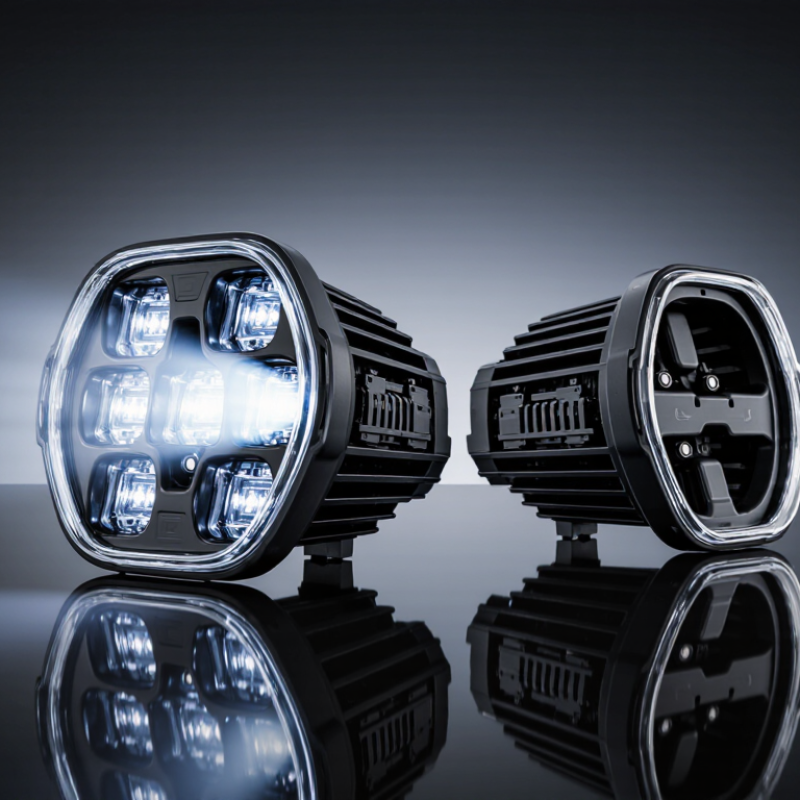
For global procurement teams, LED headlights deserve attention because measured efficacy often reaches 100–150 lumens per watt. That figure means more useful light from each watt, reducing electrical load and heat around the lamp. Yet laboratory numbers can mislead. Real output changes with lens design, temperature, driver quality, and voltage stability. A serious supplier should provide test reports, photometric data, operating limits, and samples for independent inspection.
Service life commonly ranges from 25,000 to 50,000 hours, but this is not a promise of identical performance forever. Light output gradually declines, especially when poor heat dissipation keeps the housing hot. During sourcing, ask whether the rating refers to complete headlights or only LED chips. Check lumen maintenance, waterproofing, vibration resistance, and connector compatibility before approving a shipment. Small details matter.
Procurement experience also shows that beam accuracy can matter more than headline brightness. A well-focused beam improves road visibility without creating distracting glare for other drivers. Regional voltage requirements, installation space, warranty terms, and replacement availability should be documented clearly. No specification is perfect. A sample may pass inspection, then reveal fit or thermal issues after extended testing. Allowing time for field trials is cautious, not wasteful.
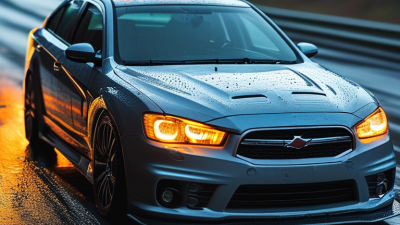
LED headlights are attractive for global procurement because they can deliver stable illumination, lower energy use, and longer service life. However, safety performance must guide every purchasing decision. Brightness alone is not compliance.
For markets using UNECE requirements, procurement teams should verify approval under Regulation No. 112 when applicable. Testing should confirm the passing beam, driving beam, light distribution, color, and glare limits. A precise cutoff matters. On a dark road, even a small upward shift can disturb approaching drivers. Suppliers should provide approval documents, photometric reports, production consistency records, and installation instructions. Documents must match the exact headlamp configuration, not a similar housing.
In the United States, FMVSS 108 defines requirements for lamps, reflective devices, and associated equipment. The responsible manufacturer must demonstrate conformity through appropriate testing and controlled production. LED modules, aiming systems, wiring, and replacement parts can affect the final result. A technically strong sample may still fail after vibration, thermal cycling, or voltage variation. That is easy to underestimate. I have seen procurement reviews focus on lumen figures while overlooking beam alignment and service procedures. This is a weakness worth correcting. Independent laboratory testing, traceable measurements, and regional engineering review create stronger evidence before volume orders begin. A practical checklist should also include real-vehicle installation, roadside visibility checks, and ongoing quality audits.
Safety Performance: Understanding UNECE R112 and FMVSS 108 Photometric Test Setups
Global procurement makes LED headlight compatibility a testing issue, not a packaging detail. Beam patterns must match local traffic rules and driving sides. UNECE Regulation No. 112 specifies passing-beam photometric zones, glare limits, and test points. Procurement teams should request measured lux tables, not only lumen claims.
Color temperature also affects real driving conditions. Around 5,000–6,500 K can look bright, yet excessive blue content may create more glare in rain, fog, or dusty roads. The U.S. Department of Energy’s 2023 solid-state lighting report records laboratory LED efficacy above 200 lumens per watt, but laboratory output does not equal useful road visibility. That distinction matters. A 6,500 K lamp may appear impressive on a warehouse wall, then perform poorly on a wet road.
Voltage compatibility needs equal attention. Commercial fleets commonly use 12V systems, while trucks, buses, and construction equipment often use 24V systems. A proper product should accept the stated voltage range, protect against load variation, and pass thermal testing. SAE J1455 identifies electrical and environmental stresses relevant to heavy-duty vehicles. Still, I would not rely on a standard name alone. Ask for input-voltage curves, EMC test records, connector drawings, and beam photos from both systems. Small fitting errors remain easy to overlook.
Why Choose LED Headlights for Global Procurement?
Procurement Economics: Comparing LED Lifecycles with Halogen Replacement Costs
LED headlights usually require a higher purchase budget than halogen units. The lifecycle calculation can change that decision. A typical LED system may operate for 2,000 hours or more. Halogen lamps often need replacement after roughly 500 to 1,000 hours. Actual performance depends on heat control, wiring quality, and driving conditions.
Numbers matter. Consider a fleet using 1,000 headlights. If each halogen lamp costs 8 dollars and needs three replacements, lamp purchases may reach 24,000 dollars. An LED unit costing 35 dollars could require fewer replacements during the same service period. Labor also matters. A technician may spend 20 minutes replacing one lamp, excluding vehicle downtime. LED savings can grow when vehicles operate across remote routes or busy depots.
Energy use creates another cost difference. A 40-watt LED may consume less power than a 55-watt halogen lamp. Over thousands of operating hours, that reduction can ease alternator demand and fuel-related expenses. However, not every LED retrofit delivers a quick return. Poor thermal design can shorten service life. Incorrect installation can create glare, wiring faults, or inspection problems. Procurement teams should compare tested beam patterns, warranty terms, replacement availability, and regional compliance requirements. We sometimes overestimate savings by ignoring installation quality. That deserves a second review.
| Procurement Metric | Halogen Headlight | LED Headlight | Global Procurement Impact |
|---|---|---|---|
| Technical and Lifecycle Comparison | |||
| Typical rated service life | Approximately 1,000 operating hours | Approximately 25,000 operating hours for a representative LED module | LED can substantially reduce replacement frequency, subject to product design and thermal management. |
| Representative electrical load | 55 W per headlight | 20 W per headlight | Lower wattage can reduce vehicle electrical demand and energy-related operating costs. |
| Light-source replacement events over 40,000 hours | 39 replacement events after initial installation | 1 replacement event after initial installation | Approximately 97% fewer replacement events in this representative lifecycle model. |
| Performance consistency over time | Light output and filament condition can deteriorate as the filament ages. | Light output gradually depreciates and depends on heat dissipation, driver quality, and module design. | LED specifications should include thermal, optical, and driver-performance requirements. |
| Illustrative Total Cost of Ownership Model | |||
| Analysis period | 40,000 operating hours | 40,000 operating hours | Equivalent operating time is used for a fair lifecycle comparison. |
| Assumed electricity price | USD 0.15 per kWh | USD 0.15 per kWh | Actual energy prices vary by country, tariff, and fleet operating location. |
| Initial unit purchase cost | USD 15 per light source | USD 80 per light source or module | LED has a higher initial purchase price in this model. |
| Replacement labor allowance | USD 20 per replacement event | USD 20 per replacement event | Labor cost depends on vehicle access, workshop rates, and regional wage levels. |
| Energy consumption over 40,000 hours | 2,200 kWh | 800 kWh | 1,400 kWh lower consumption for LED, equivalent to a 63.6% reduction. |
| Energy cost over 40,000 hours | USD 330 | USD 120 | LED saves approximately USD 210 in energy under the stated electricity-price assumption. |
| Light-source purchase cost over lifecycle | 40 units × USD 15 = USD 600 | 2 units × USD 80 = USD 160 | LED requires fewer replacement units despite its higher unit purchase price. |
| Replacement labor cost over lifecycle | 39 events × USD 20 = USD 780 | 1 event × USD 20 = USD 20 | USD 760 lower replacement labor cost for LED in this model. |
| Estimated total cost of ownership | USD 330 energy + USD 600 parts + USD 780 labor = USD 1,710 | USD 120 energy + USD 160 parts + USD 20 labor = USD 300 | Estimated LED lifecycle saving: USD 1,410, or 82.5%. |
| Estimated payback position | Lower initial purchase price, but higher recurring replacement and energy costs. | Higher initial purchase price, with an estimated additional upfront cost of USD 65. | The additional LED purchase cost is recovered through reduced energy, parts, and labor expenses. |
| Procurement Considerations for Global Sourcing | |||
| Maintenance and downtime | Frequent replacement can increase service scheduling and vehicle downtime. | Longer service intervals can simplify maintenance planning. | LED is generally better suited to fleets where labor access or vehicle downtime is costly. |
| Specification requirements | Focus on wattage, socket compatibility, beam pattern, and regulatory compliance. | Also specify lumen maintenance, color temperature, thermal management, driver protection, and EMC performance. | A detailed technical specification helps prevent low-quality substitutions in multi-country procurement. |
| Supply-chain risk | Simple replaceable bulbs are widely available and easier to stock. | Some systems may require a complete module or dedicated driver. | Procurement teams should confirm spare-module availability, warranty terms, and regional service support. |
| Best-fit purchasing strategy | Suitable where acquisition cost is the primary concern and operating hours are low. | Suitable where operating hours, maintenance labor, downtime, and energy consumption are significant. | Use total cost of ownership rather than unit price alone when evaluating LED for global programs. |
Why Choose LED Headlights for Global Procurement?
Supply Chain Evaluation: IP67 Protection, LM-80 Testing, and Automotive Certifications
Global LED headlight procurement needs more than brightness claims. The IEA’s Global EV Outlook 2024 reported nearly 14 million electric cars sold worldwide in 2023. This growth increases demand for durable, traceable lighting systems. IP67 protection, defined by IEC 60529, means a sealed unit resists dust and temporary immersion up to one metre for 30 minutes. However, IP67 does not prove resistance to vibration, salt spray, or thermal cycling.
LM-80 testing measures lumen maintenance for LED packages or modules. It does not automatically validate the complete headlight. Procurement teams should request test duration, temperature points, current settings, and measured lumen values. A longer test is useful. Still, thermal design remains critical. Poor heat dissipation can reduce output despite strong laboratory results. UNECE requirements, such as R10 for electromagnetic compatibility and R112 for headlamp performance, should match the destination market. IATF 16949 certification can also indicate stronger automotive quality controls, but it cannot replace product testing.
Tips: Ask for the original test report, not a summary sheet. Verify laboratory accreditation and report dates. Check whether samples came from mass production. A certificate is not a magic shield. Supply audits should include sealing records, connector checks, vibration data, and batch traceability. One uncomfortable point remains: some suppliers provide excellent paperwork but inconsistent production. Regular sampling is slower, yet often wiser.