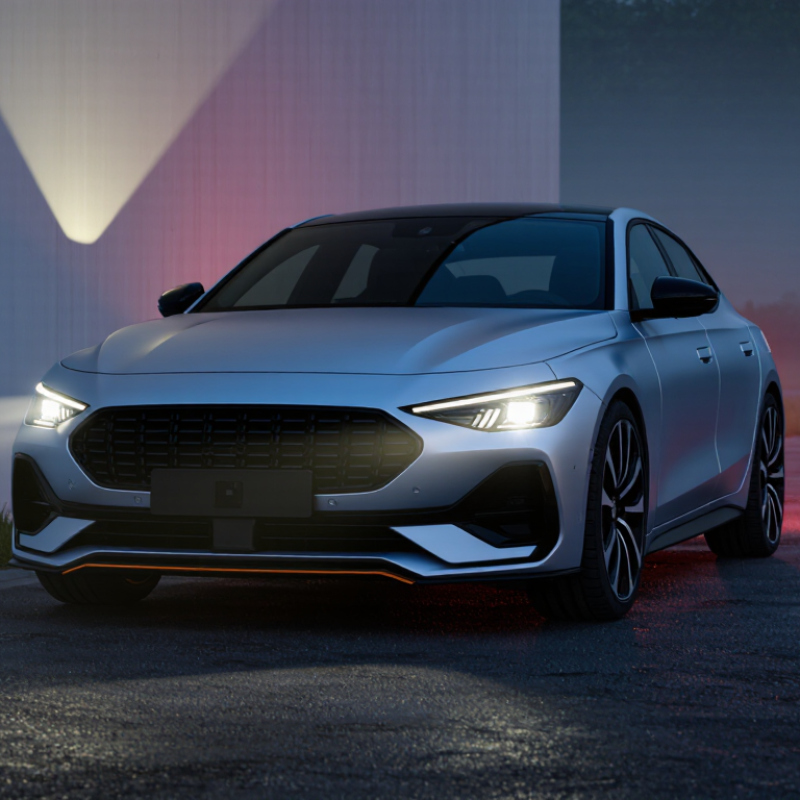
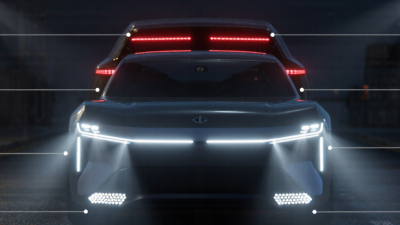
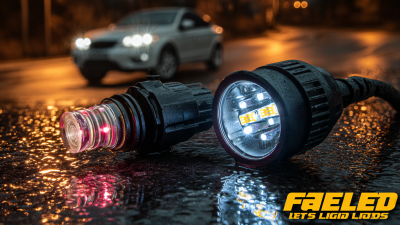
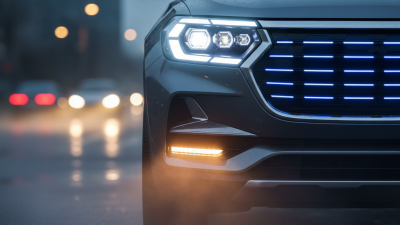
| Factory-installed LED headlamp assembly |
Installed as a complete original-equipment lamp unit. Replacement normally requires matching the vehicle connector, mounting points, control module, and aiming procedure. |
Designed for the vehicle's original voltage, wiring, thermal management, and electronic control system. |
Often longer-lasting than replaceable filament bulbs, but the complete lamp assembly can be expensive to replace. |
Usually provides the most consistent beam pattern because the reflector or projector is designed around the LED light source. |
Generally compliant when the complete assembly is approved for the vehicle and remains correctly aimed. Local inspection rules still apply. |
Best long-term performance and integration; higher replacement cost after collision or electronic failure. |
| LED replacement bulb in a halogen reflector |
Remove the original bulb, install the LED bulb, connect the driver, and secure any heat sink or cooling fan. Some vehicles need an adapter or dust-cap modification. |
Usually designed for 12-volt passenger-vehicle systems, but bulb-out monitoring, polarity, pulse-width modulation, or limited space may cause compatibility problems. |
Commonly marketed for several thousand hours, but actual life depends heavily on heat control, vibration, sealing, and driver quality. |
A bulb that fits the socket may not reproduce the original filament position. Poor alignment can create glare, dark zones, or reduced reach. |
Legality depends on the country, lamp approval, vehicle type, and whether the conversion is specifically permitted. A road-legal bulb in one market may not be legal in another. |
Good potential value when the bulb is approved and correctly aimed; poor value if glare, warning lights, or inspection failure results. |
| LED bulb in a projector headlamp |
Replace the compatible bulb, connect the external driver if required, check clearance, reinstall the dust cover, and perform a beam test. |
Requires correct base type, polarity, driver load behavior, and enough room for the cooling system behind the projector. |
Typically several thousand operating hours under suitable thermal conditions; enclosed spaces can shorten life. |
Projectors can control stray light better than open reflectors, but the LED emitter must still match the original focal position. |
A projector housing does not automatically make an LED conversion legal. Approval markings and local replacement rules must be checked. |
Often a better optical match than a reflector conversion, provided the light source position and approval requirements are satisfied. |
| Complete aftermarket LED headlamp assembly |
Remove the original housing, install the replacement assembly, connect the wiring, seal the housing, and adjust the beam with a calibrated aiming method. |
May require vehicle-specific connectors, load resistors, adapters, or software coding. Extra components can increase heat and electrical demand. |
Usually designed for long service, but repairability and replacement of individual drivers or modules vary. |
Can offer a properly engineered beam when the assembly is vehicle-specific and tested as a complete unit. |
Check required approval markings, installation documentation, daytime-running-light rules, automatic leveling requirements, and inspection regulations. |
Strong performance-to-cost ratio when certification and fitment are documented; installation quality is critical. |
| LED fog-light replacement |
Replace the original fog-light bulb or housing, connect the driver, confirm sealing, and aim the lamp lower than the main headlamp beam. |
Must match the socket, vehicle voltage, connector polarity, and bulb-monitoring system where applicable. |
Often several thousand hours, subject to road spray, stone impact, vibration, and heat management. |
Fog lamps should produce a controlled, low, wide beam. Excessively bright or poorly shielded lamps can cause glare in rain, fog, or snow. |
Use only lamps and configurations permitted for fog-light use in the relevant jurisdiction. Auxiliary-light limits may also apply. |
Useful for improved durability and color consistency, but brightness alone does not improve fog visibility. |
| LED daytime running light or auxiliary light |
Install in approved mounting locations, connect through the correct control circuit, and ensure automatic operation with the vehicle's lighting system. |
Requires correct switching logic and protection against voltage spikes, moisture, and reverse polarity. |
Generally long-lasting because daytime-running lights operate at lower duty cycles than headlamps. |
Designed mainly to improve daytime conspicuity, not to illuminate the road at night. |
Position, spacing, operating behavior, intensity, and automatic dimming or shutoff requirements vary by jurisdiction. Do not substitute them for required headlamps. |
Good value for visibility when installed in an approved location and wired to the required operating logic. |
| Plug-and-play LED conversion with external driver |
Fit the bulb, mount the driver away from heat and moving parts, connect the harness, secure the wiring, and verify weather sealing. |
May trigger dashboard warnings or flicker in vehicles with bulb monitoring or electronically controlled lighting circuits. |
Highly dependent on driver cooling, heat-sink airflow, fan reliability, and moisture protection. |
Simple installation does not guarantee a correct beam. Confirm cutoff, hotspot position, glare, and illumination on both sides of the road. |
“Plug-and-play” is not a legal category. Approval must be verified for the exact lamp, vehicle, and intended road use. |
Convenient and inexpensive initially, but adapters, warning-cancellation devices, and premature failures can reduce savings. |
| Professional installation and beam adjustment |
A technician checks fitment, wiring, cooling clearance, sealing, electronic compatibility, and vertical and horizontal beam aim using approved equipment. |
Can identify load, polarity, communication, and warning-light issues before the vehicle is returned to service. |
Does not change the lamp's rated life, but correct installation can reduce heat, vibration, moisture, and alignment-related failures. |
Provides the best chance of achieving correct cutoff, symmetry, road illumination, and glare control. |
Documentation and professional adjustment can support compliance, but cannot make a non-approved lamp legal. |
Highest installation cost, often the best safety value for complex conversions or vehicles with electronic lighting controls. |
| Home installation followed by manual checking |
Install according to the vehicle and lamp instructions, verify connector security and dust-cap sealing, then check beam height on level ground. |
Suitable only when the lamp is genuinely compatible and no coding, special harness, or control-module programming is required. |
Depends on product construction and installation quality; incorrect heat-sink placement or loose wiring can shorten service life. |
A wall check can reveal major aim errors, but it does not fully replace a calibrated beam-pattern inspection. |
The owner remains responsible for checking local road-use and inspection requirements before installation. |
Lowest labor cost, but the risk of misalignment, water ingress, electrical faults, or non-compliance is higher. |
| Color temperature around 3,000–4,300 K |
Selected by choosing a compatible bulb or complete lamp with the desired light color; installation method depends on the lamp design. |
Color temperature does not determine electrical compatibility; base type, voltage, driver, and vehicle electronics remain decisive. |
Comparable to other LED products when thermal design and current control are equivalent. |
Warmer light can maintain useful contrast in rain, mist, dust, or snow and may produce less visual scatter than very blue light. |
Color limits and permitted lamp functions vary by jurisdiction. White is commonly required for forward-facing headlamps, but local rules must be confirmed. |
Balanced choice for practical visibility and reduced glare when paired with a correct beam pattern. |
| Color temperature around 5,000–6,000 K |
Selected through a compatible LED bulb or complete lamp; no special wiring is required solely because of color temperature. |
Electrical compatibility remains dependent on the bulb design and vehicle lighting circuit. |
Not inherently longer-lasting than warmer or cooler LEDs; thermal management is the dominant factor. |
Produces a neutral-to-cool white appearance, but a blue tint can increase reflections and visual discomfort in wet conditions. |
The lamp must still meet the applicable white-light and approval requirements. Appearance alone is not proof of compliance. |
Good aesthetic and general-purpose option when the lamp has a controlled beam and documented approval. |
| Very cool light above approximately 6,500 K |
Usually selected as a cosmetic color option rather than for a specific installation advantage. |
Color does not solve incompatibility, flicker, warning messages, or cooling limitations. |
Determined primarily by component quality and operating temperature, not by the cooler appearance. |
Strong blue content can increase glare and scatter in poor weather and may reduce practical contrast despite appearing brighter. |
May fall outside permitted color specifications or fail inspection depending on the jurisdiction and lamp function. |
Usually weaker safety and legal value than a neutral white lamp with a controlled beam. |
| Best-value selection criteria for 2026 |
Confirm the bulb base and vehicle fitment, read the installation instructions, verify cooling clearance, and plan for final beam adjustment. |
Check voltage range, polarity, driver type, bulb monitoring, flicker behavior, and whether adapters or coding are required. |
Prioritize thermal design, sealed construction, replaceable components where available, and a clear warranty policy. |
Judge performance by beam shape, cutoff, road coverage, glare control, and measured or documented output—not marketing lumens alone. |
Verify the applicable national or regional rules, approval markings, inspection requirements, lamp color, mounting position, and use on public roads. |
The best purchase is the least expensive option that is compatible, approved, properly aimed, durable, and safe for other road users. |