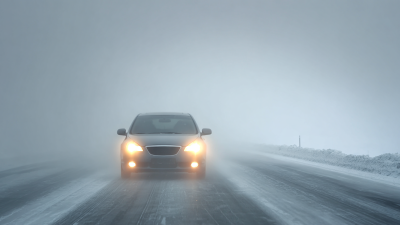
Choosing the right Fog Lights can make difficult drives clearer, calmer, and safer. Heavy rain, coastal mist, and dusty roads can scatter ordinary headlights, creating a bright wall in front of the vehicle. A suitable fog lamp produces a wide, controlled beam that helps reveal lane edges, road markings, and nearby hazards without creating unnecessary glare.
Start by checking your vehicle’s manual, mounting points, wiring capacity, and available switch controls. LED Fog Lights often provide strong illumination with lower power consumption, while halogen units may offer simpler replacement and familiar performance. Beam pattern matters more than impressive brightness. A lamp aimed too high can blind approaching drivers and reduce your own visibility. That is a common mistake. It is easy to make.
Consider color temperature, weather resistance, lens quality, and heat management. A warmer beam may remain more comfortable in dense fog, but real-world results depend on road conditions and personal vision. Look for documented water-resistance testing, stable housing materials, and clear warranty terms. Independent reviews can help, yet manufacturer claims should be compared with technical specifications and trusted automotive guidance.
Installation quality deserves equal attention. Loose brackets can vibrate on uneven roads, while poorly sealed connections may fail after one wet journey. A qualified technician can confirm alignment, electrical safety, and compatibility with your vehicle. Local equipment rules also differ, so verify permitted colors, mounting positions, and operating conditions before purchasing. I have learned that the brightest option is rarely the best option. Reliable visibility comes from balanced design, correct adjustment, and sensible driving habits.
Choosing the best fog lights begins with an honest visibility assessment. Do you need help within 30 metres, or a wider view across an unlit bend? Fog lights are not designed to replace high beams. Their value appears in dense fog, rain, snow, and dust, where reflected glare can quickly hide the road.
SAE J583 provides a useful technical reference for beam performance. Look for a low, broad pattern that spreads light across the lane without sending intense light into oncoming drivers’ eyes. A controlled cutoff matters. So does even illumination near the road edge. Do not judge a lamp by brightness alone. Excessive output can create a white wall in thick fog.
Test the beam on a dark, safe road after installation. The brightest area should sit low, with no sharp hotspot aimed toward traffic. Check both sides for matching height and spread. A small tape marker on a garage wall can reveal uneven alignment. It is easy to overlook this step. I would also compare the real beam with the SAE J583 specifications, not only a seller’s range claim. Weather changes everything, and a claimed long range may feel useless in heavy moisture. Choose the lamp that improves near-field contrast without adding glare.
How to Choose the Best Fog Lights for Your Vehicle?
Color temperature matters when fog turns the road into a white curtain. A range of 2,000–3,000 K produces warm yellow light with less blue content. Blue-rich light can scatter strongly through suspended water droplets, increasing veiling glare near the driver’s eyes. The effect is practical, not magical. Visibility still depends on beam height, lens quality, weather, and correct aiming.
The Commission Internationale de l’Éclairage emphasizes controlled glare and suitable light distribution in road-lighting guidance, including CIE 115:2010. SAE J583 also focuses on front fog-lamp photometry and beam placement. These references support a key buying rule: choose a low, wide beam instead of chasing brightness. A U.S. Department of Energy CALiPER report found substantial variation in LED lighting performance between products, even when advertised specifications looked similar. Kelvin alone cannot reveal that difference.
A common mistake is assuming the warmest lamp always performs best. It does not. A 2,000 K lamp may appear too dim or overly yellow on dry pavement, while a 3,000 K lamp can offer a more balanced road view. AAA’s 2019 headlamp study tested 165 systems and found nearly 60% produced inadequate low-beam performance, showing why optical design matters. Check the beam cutoff against a wall, then test it in mist or fog. Recheck the aim after installation. Small alignment errors can undo good color selection.
| Selection Dimension | Recommended Specification | Typical Range or Standard | Why It Matters in Fog | Practical Buying Check |
|---|---|---|---|---|
| Color temperature | 2,000–3,000 K | Amber to warm white | Warmer light generally produces less distracting reflected glare from suspended water droplets than very cool, bluish-white light. | Choose a lamp with a verified Kelvin rating and avoid selecting color based only on the appearance of product photographs. |
| Very dense fog performance | 2,000–2,500 K | Deep amber to amber-yellow | The warmer color can improve visual comfort and object contrast for some drivers in dense fog, although it cannot eliminate scattering. | Use with a low-mounted, wide beam and keep the windshield, lenses, and vehicle lamps clean. |
| Mixed weather use | 2,700–3,000 K | Warm yellow to warm white | Provides a practical balance between reduced glare in fog and usable visibility in rain, dust, and ordinary night driving. | This range is a versatile choice when the vehicle is used in several weather conditions. |
| Cool-white color temperatures | Use with caution in fog | 4,300–6,500 K | Cooler light may appear brighter and whiter, but short-wavelength blue content can create more noticeable back-scatter in fog for many drivers. | Do not assume a higher Kelvin value means better visibility; evaluate beam control and real-world glare as well. |
| Beam pattern | Wide, low, sharply controlled beam | Illumination concentrated close to the road surface | A properly aimed fog beam helps illuminate lane edges and nearby road features without sending excessive light into the fog directly ahead. | Prefer a dedicated fog-light optical pattern rather than a high-mounted driving-light pattern. |
| Vertical mounting position | Low on the front of the vehicle | Below the headlamp level where vehicle design permits | Lower placement can reduce the amount of light projected into the densest portion of the fog and can improve foreground illumination. | Follow the vehicle manufacturer’s mounting location and local regulations. |
| Beam cutoff and aiming | Clearly defined upper cutoff | Beam aimed downward and symmetrically | Good cutoff control reduces glare for oncoming traffic and helps prevent the driver from lighting up airborne moisture unnecessarily. | Check the aim on level ground after installation and recheck it if the vehicle load or suspension changes. |
| Light output | Moderate output with controlled distribution | Prioritize beam shape over maximum lumen claims | Excessive output does not automatically improve visibility; uncontrolled light can increase reflected glare and reduce visual comfort. | Compare optical design, usable road illumination, and glare control instead of relying on advertised lumens alone. |
| Weather resistance | Sealed housing and connectors | Look for an ingress-protection rating such as IP65 or higher | Protection against dust and water helps maintain reliable operation during rain, spray, snow, and road washing. | Confirm that the rating applies to the complete lamp assembly and that connectors are properly sealed. |
| Lens material | Impact- and UV-resistant lens | Automotive-grade polycarbonate or glass, depending on design | A clear, durable lens preserves the intended beam pattern and reduces scattering caused by haze, scratches, or yellowing. | Check replacement-lens availability and inspect the lens periodically for clouding or damage. |
| Electrical compatibility | Correct voltage and vehicle-specific wiring | Usually compatible with a 12 V passenger-vehicle system | Correct electrical matching prevents flicker, overheating, fuse problems, and unreliable switching. | Verify current draw, fuse capacity, relay requirements, and compatibility with the vehicle’s lighting controls. |
| Legal compliance | Approved for road use in the intended region | Requirements vary by country or jurisdiction | Lighting color, mounting height, switching behavior, intensity, and aiming may be regulated differently in different locations. | Check the applicable vehicle-lighting regulations before installation or use on public roads. |
| Maintenance | Clean lenses and correct aim regularly | Inspect after heavy rain, off-road driving, or minor impacts | Dirt, snow, condensation, and misalignment can reduce useful illumination and increase glare even when the lamp itself is functioning correctly. | Clean with a soft cloth and suitable automotive cleaner; replace damaged or persistently fogged units. |
Before comparing beam brightness, verify whether the fog light follows SAE J583 or UNECE R19. These standards address important performance details, including beam shape, color, intensity, and glare control. Requirements can differ by market, so check the rules where the vehicle is driven. A lamp designed for one region may not satisfy another region’s approval process.
Look for clear markings on the lens or housing. For UNECE applications, check for an appropriate approval mark and regulation reference. For SAE J583 products, review the manufacturer’s technical documents and test information. Avoid relying on vague claims such as “street legal” or “high output.” Reliable documentation should identify the tested lamp type, operating voltage, and installation conditions.
Beam output still matters, but it comes later. A bright beam can still be wrong. Inspect how evenly the light spreads across a wall at night, preferably in light rain or mist. The cutoff should remain controlled and low, without shining into oncoming drivers’ eyes. Check the mounting height and alignment after installation. I once focused too much on brightness and overlooked poor aiming. That mistake made visibility worse, not better. A careful inspection may feel slower, but it reveals whether the lamp works properly on the vehicle, not just in a product photograph.
Choosing the best fog lights starts with electrical compatibility, not appearance. Most vehicles use a 12-volt system, but running voltage may rise to about 13.5–14.7 volts. Check the vehicle manual and the light’s specifications before buying. A light designed for another voltage can overheat, flicker, or fail early. Inspect the connector, fuse rating, and wire condition too. Small details matter.
Wattage directly affects current demand. For example, a pair of 55-watt lights uses 110 watts. At 12 volts, that requires roughly 9.2 amps. The calculation looks simple. It is not the whole answer. Your vehicle’s alternator already supports headlights, heating fans, engine controls, and battery charging. Compare the fog-light demand with the alternator’s rated output, then leave a sensible reserve. A weak battery may hide the problem until nighttime driving.
A practical installation should include the correct fuse, suitable wiring, and a secure ground connection. Never assume the original circuit can handle extra load. That is a common mistake. Measure voltage at the battery and light terminals with the engine running. A noticeable drop suggests resistance in the circuit. I would also recheck the system after several minutes, because warm connectors can reveal faults that a cold inspection misses. When the numbers seem uncertain, have a qualified technician verify them. The brightest option is not always the most reliable choice.
How to Choose the Best Fog Lights for Your Vehicle?
Good fog lights begin with reliable sealing. Look for an IP67 rating, which protects against dust and temporary water immersion. However, the housing rating is not enough. Inspect the cable entry, connector, and rear cap carefully. A poor connection can fail after one wet drive. I have seen moisture collect behind a lamp, even when its outer lens looked perfect. That detail is easy to miss.
Beam angle matters on dark, misty roads. Choose a broad, low beam that spreads light across the lane without shining into oncoming drivers’ eyes. A sharp cutoff helps reduce glare. Check the light on a flat wall before driving at night. The beam should sit below normal eye level. I once adjusted a lamp too high. Visibility improved nearby, but glare became unacceptable. That was not a real improvement.
Tips: Confirm IP67 protection for the complete assembly, not just the lens. Use sealed connectors and route wires away from heat. Select stainless steel or coated mounting hardware with strong brackets. Tighten bolts firmly, but avoid crushing plastic housings. Recheck them after several drives, because vibration slowly loosens weak fittings. A wide beam is not always better. Your road, bumper height, and weather should guide the final choice.
Select fog lights with IP67 sealing, a beam angle suited to your driving conditions, and durable mounting hardware designed to resist vibration and corrosion.