Leave Your Message

How to Choose the Best LED Headlights for Your Car?

Choosing the best LED headlights for your car involves more than selecting the brightest bulbs. Good lighting should improve visibility without creating dangerous glare for oncoming drivers. The right choice depends on your vehicle’s headlight housing, electrical system, beam pattern, color temperature, and road conditions.

Daniel Stern, an independent automotive-lighting consultant, offers a useful principle: “The best headlamp is the one that puts light where it is needed, not simply the one that looks brightest.” This idea matters when comparing Led Lights Headlights. A 6,000-lumen package may sound impressive, yet poor optical control can scatter light into other drivers’ eyes. A well-designed bulb should produce a controlled beam with a clear cutoff and balanced foreground illumination.

Look closely at the details. Check whether the bulb fits the original socket without forcing the connector. Inspect the heat sink, cooling fan, waterproof rating, and warranty. Confirm that the light pattern remains correct after installation. Park the car facing a wall, then compare the beam height on both sides. Small changes can reveal major alignment problems.

Brightness is only one part.

Personal experience also deserves caution. Some drivers report excellent results with plug-and-play Led Lights Headlights, while others notice flickering, radio interference, or uneven illumination. Vehicle design differs. Marketing claims can be incomplete. Even expert recommendations may not suit every headlight housing. A careful choice combines verified specifications, independent testing, proper installation, and a willingness to reconsider the first attractive option.
How to Choose the Best LED Headlights for Your Car?

Define Headlight Needs by Beam Pattern, Lumens, and Driving Conditions

Choosing LED headlights starts with your driving needs, not the highest lumen number. A focused beam pattern puts light on the road without shining directly into other drivers’ eyes. Look for a sharp cutoff, even foreground lighting, and enough reach beyond the car. A scattered beam may look bright in the driveway but perform poorly on dark roads.

Lumens describe total light output, but they do not guarantee useful visibility. A headlight with excessive lumens can create glare, especially in rain, fog, or dusty air. For city driving, moderate output with a controlled beam usually works well. Rural roads may need greater distance lighting, while winding roads benefit from broad side coverage. Check the headlight housing and vehicle design together. LED performance depends on both.

Driving conditions should shape the final choice. Wet pavement reflects light, so a balanced beam often beats extreme brightness. In fog, lower intensity and careful aiming can reduce the bright wall of reflected light. Park on level ground and compare the cutoff against a wall before driving. I once judged a lamp by brightness alone and missed its uneven roadside coverage. That mistake was obvious after sunset. Specifications can also vary between tests, so treat advertised figures as guidance, not proof. A professional installation check can reveal poor alignment, heat issues, or flickering that a quick garage test misses.
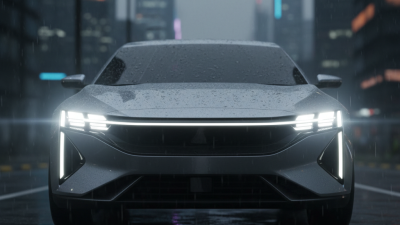
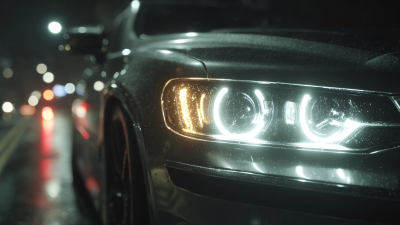
Compare LED Output Using SAE J578 Color Standards and Measured Lumens

Choosing the best LED headlights starts with trustworthy measurements, not a bright-looking package. SAE J578 color standards help assess whether the emitted light falls within an acceptable white range. Color temperature alone is not enough. A lamp may appear cool and sharp, yet produce distracting blue tones or uneven visibility.

Check measured lumens from a controlled test, preferably with an integrating sphere. This figure describes total light output, not the amount reaching the road. Beam pattern matters more during a night drive. A headlight with fewer lumens can perform better if it sends light evenly toward the lane, shoulder, and road signs. Ask how the test was performed. Was the lamp tested after warming up? Were both headlights measured? Small details change results.

I once compared two lamps that looked similar on a garage wall. One created a bright central spot but left dark gaps near the edges. The other seemed less dramatic and gave steadier roadside detail. That result was not perfect, because road shape and camera exposure influenced my judgment. Still, it exposed a common mistake: trusting visual brightness alone. Look for SAE J578 color information, measured lumens, beam photographs, and real installation notes. Confirm that the housing supports the lamp correctly. A strong LED source cannot repair a poor reflector or misplaced focal point. Measure carefully. Think beyond brightness.

How to Choose the Best LED Headlights for Your Car?

Compare measured luminous output while checking that the emitted white light meets the applicable SAE J578 color requirements. Higher lumens do not automatically guarantee better road visibility; beam pattern, glare control, and optical alignment are also important.

Illustrative independent test values for common headlight technologies measured at the lamp output: halogen 1,500 lm, LED 2,500 lm, and HID 3,000 lm. SAE J578 addresses lighting color characteristics; lumen output is measured separately.

Check Fitment, CAN Bus Compatibility, and DOT or ECE Compliance

How to Choose the Best LED Headlights for Your Car?

Fitment is the first checkpoint, not brightness. Verify the bulb code, socket depth, dust-cap clearance, and beam orientation. A correct-looking bulb can still leave a dark patch at 30 metres. The U.S. Department of Transportation’s FMVSS 108 governs lighting performance, while UNECE Regulations No. 112 and No. 149 apply different approval frameworks. Do not treat “DOT” or “ECE” as decorative packaging claims. Check the approval marking and the installation requirements. IIHS headlight evaluations repeatedly show that beam quality varies widely, even among modern systems. That finding matters more than raw lumen numbers.

CAN Bus compatibility is another practical issue. Some vehicles monitor bulb resistance and may trigger a warning after an LED conversion. Others may create flicker, delayed shutoff, or reduced-power operation. Confirm whether the vehicle needs a decoder, and check that it does not overheat inside a sealed lamp housing. A 2023 U.S. Department of Energy analysis noted that LED lighting can deliver substantial efficiency gains, but thermal management remains essential for performance and service life. More light is not automatically better.

Inspect the beam pattern against a wall after installation. Keep the cutoff level. ECE-approved lamps generally require controlled optical performance, while U.S. compliance depends on applicable FMVSS requirements. Installation guides are often too optimistic. I have seen “plug-and-play” kits require extra clearance. That is easy to miss. Verify alignment professionally when possible, especially after replacing both lamps.

Evaluate Color Temperature, Heat Control, IP67 Rating, and Lifespan

Choosing the best LED headlights starts with color temperature, not marketing claims. A 5,000–6,000K lamp usually produces a clean white appearance without excessive blue content. Higher temperatures can look bright, yet they may increase glare on wet roads. The U.S. Department of Energy reports that LED lighting can use at least 75% less energy and last up to 25 times longer than incandescent lighting. However, automotive performance also depends on beam alignment, reflector design, and legal photometric testing. Brightness alone is misleading.

Heat control deserves equal attention. An LED chip may run efficiently, but poor heat removal can accelerate lumen loss and shorten driver life. Look for an aluminum heat sink, a stable cooling fan, or tested thermal data. Fan noise is not automatically a defect, but an untested design is a warning. IP67 means dust-tight protection and temporary immersion up to one meter for 30 minutes under IEC 60529. It does not guarantee resistance to condensation inside the housing. That distinction is easy to miss.

For lifespan, check LM-80 and TM-21 data when available. These methods evaluate lumen maintenance, not the complete headlight assembly. A claimed 50,000 hours may describe the LED package, not the electronics or cooling system. The DOE recognizes thermal management as a major factor in solid-state lighting reliability. I would still inspect the beam pattern after installation. A perfect specification sheet cannot correct a badly focused lamp.

Select Reliable LEDs Using Warranty Terms and LM-80 Performance Data

Choosing LED headlights requires more than comparing brightness claims. Start with the warranty terms. A reliable warranty should state its coverage period, replacement process, and exclusions clearly. Three years of written coverage is more meaningful than “lifetime” language with hidden conditions. Check whether moisture damage, driver failure, and premature dimming are included. Keep the receipt and installation records.

LM-80 testing provides useful evidence about LED package durability. The IES LM-80 standard evaluates lumen maintenance, color shift, and electrical conditions over time. Qualified reports commonly include 6,000 hours or more of testing, with measurements taken at regular intervals. The U.S. Department of Energy’s solid-state lighting reports also explain that LED lifetime depends heavily on temperature and operating conditions. A package may retain 70% of its initial light after tens of thousands of hours in controlled testing. That result does not guarantee identical performance inside a hot headlamp housing.

Look for test data at temperatures resembling your vehicle’s environment. A headlight operating near an engine bay may face vibration, humidity, and poor heat removal. These details matter. Ask whether the report covers the complete lamp or only the LED package. That distinction is easy to miss. I would also compare the claimed lumen output with measured road illumination, beam pattern, and glare control. A brighter bench result can still produce unsafe glare. Some specifications remain vague, even on professional product sheets. Treat missing thermal data as a warning, not proof of failure. Verify the warranty before installation.

How to Choose the Best LED Headlights for Your Car? - Select Reliable LEDs Using Warranty Terms and LM-80 Performance Data

Evaluation Dimension Data to Check Recommended Selection Reference Why It Matters
Warranty Duration Written warranty period Prefer at least 3 years for normal passenger-car use; a longer term provides stronger risk protection. A longer, clearly stated warranty can indicate greater confidence in product reliability.
Warranty Coverage Parts, labor, replacement, shipping, and failure conditions Choose terms covering LED chips, driver electronics, cooling components, and premature flickering or complete failure. A long warranty has limited value if important components or replacement costs are excluded.
Warranty Conditions Installation requirements, proof of purchase, modification exclusions, and claim procedure Select a warranty with clear claim instructions and no unnecessarily restrictive conditions for standard installation. Transparent terms make it easier to obtain support if a failure occurs.
LM-80 Test Duration Measured operating time, such as 6,000 or 10,000 hours Prefer reports containing at least 6,000 hours of measured data; 10,000 hours provides a longer aging record. Longer testing supplies more evidence about lumen and color stability over time.
LM-80 Lumen Maintenance Lumen-maintenance percentage at each reported time point Compare products tested under the same conditions; higher retained output is preferable. LM-80 itself does not establish a universal pass/fail limit. It shows how much LED light output remains during the test, but it does not measure the complete headlamp assembly.
LM-80 Test Temperature Case or test-point temperatures, commonly including 55°C and 85°C plus another selected temperature Give greater weight to data tested at temperatures representative of the intended operating environment. Higher temperature generally increases thermal stress and can accelerate lumen depreciation.
LM-80 Color Stability Chromaticity shift or color-coordinate change over time Prefer reports that include both lumen maintenance and chromaticity data, not lumen output alone. A lamp may remain bright while its color changes noticeably during service.
TM-21 Projection Projected lumen-maintenance life based on LM-80 data Use projections only when the underlying LM-80 report, sample size, test temperature, and calculation method are disclosed. A projection is a calculated estimate, not the same as directly measured operating life.
Thermal Management Fan, heat sink, thermal interface, and operating-temperature information Choose a design with documented heat dissipation and protection against overheating or thermal throttling. Excessive heat can reduce light output, accelerate aging, and shorten electronic-component life.
Beam Pattern Cutoff position, hotspot location, glare control, and left/right beam conformity Select a lamp that produces a controlled beam pattern in the original headlamp housing, not merely a high lumen claim. Correct beam distribution improves usable road illumination and helps reduce glare for other drivers.
Vehicle Compatibility Bulb base, available clearance, connector type, CAN-bus behavior, and polarity Verify the vehicle manual and physical fit before purchase; use an error-free solution only when the vehicle requires it. Electrical or dimensional incompatibility can cause warning lights, flicker, installation damage, or poor sealing.
Environmental Protection Ingress-protection rating, sealing method, vibration resistance, and operating-temperature range Prefer documented resistance to moisture, dust, vibration, and the temperature range expected in the vehicle. Headlights operate in environments exposed to water spray, road dust, engine-bay heat, and vibration.
Regulatory and Installation Check Local lighting regulations, housing approval, aiming procedure, and post-installation inspection Confirm that the complete headlamp conversion is legal for the intended road use and recheck beam aim after installation. A technically reliable LED can still be unsuitable if it violates local requirements or creates excessive glare.
Important: LM-80 evaluates LED packages, arrays, or modules under controlled conditions. It does not by itself certify the durability, beam pattern, thermal performance, or legal compliance of a complete automotive headlight assembly.