Top 10 Car Flood Lights for Off Road Driving?
Choosing the right Car Flood Lights can transform a dark trail into a readable, controlled path. It can also create glare, wiring failures, or false confidence. This guide examines the Top 10 Car Flood Lights for Off Road Driving through practical performance, not advertising claims.
The evaluation considers beam spread, usable brightness, weather resistance, mounting strength, power demand, and switch quality. A light may advertise impressive lumens, yet perform poorly through dust, rain, or tree cover. IP ratings matter, but sealing can still weaken after rough installation. A stable bracket matters too. Vibration on rocky ground can loosen a housing within hours.
Off-road lighting specialist John “Dirt” Doolin says, “The best trail light shows hazards early without overwhelming the driver’s vision.” That principle guides this comparison. A wide flood pattern can reveal ditches beside the vehicle. A focused beam can reach farther across open terrain. Neither pattern suits every vehicle or trail.
Some recommendations may favor expensive products. Others may expose compromises. No list is perfect. I would not judge a lamp by brightness alone. Heat control, connector quality, and replacement support often decide long-term value. Installation also deserves attention. Poorly routed cables can rub against metal, while exposed connectors can collect mud.
Local vehicle-lighting rules vary, especially when driving on public roads. Confirm compliance before using auxiliary lighting outside private land. The following picks aim to help drivers compare real-world usefulness, not chase the largest number on a package.
Define Off-Road Flood-Light Needs: Beam Spread, Lumens, and 6000K Color
Before choosing a flood light, define the trail problem. Beam spread controls usable visibility, not just advertised brightness. A narrow 10–20-degree beam can reach distant bends, while a 40–60-degree pattern better reveals rocks, ditches, and trees beside the vehicle. On technical trails, I prefer combining broad side coverage with a focused forward beam. One light rarely does both well.
Lumens describe total light output, but they do not guarantee useful illumination. The U.S. Department of Energy’s Solid-State Lighting R&D Opportunities reports laboratory LED efficacy above 200 lumens per watt in advanced products. Real vehicle lamps perform lower because optics, wiring, vibration, and heat reduce output. A practical setup may need 3,000–8,000 lumens for slow trail driving, depending on mounting height and terrain. More is not always safer. Glare can hide surface changes.
Color temperature needs equal attention. A 6000K lamp produces a cool, blue-white appearance, which many drivers find crisp in dry conditions. However, the International Commission on Illumination notes that shorter blue wavelengths scatter more strongly in atmospheric moisture. Dust, rain, and fog may therefore create extra backscatter. I would test 6000K beside a warmer lamp before committing. It looks powerful. That can be misleading. Use photometric results measured under IES LM-79 procedures, not lumen claims alone. My own mistake was judging brightness beside the vehicle, where every lamp seemed excellent. The trail exposed the difference.
Top 10 Car Flood Lights for Off Road Driving? - Define Off-Road Flood-Light Needs: Beam Spread, Lumens, and 6000K Color
Representative specifications for common off-road flood-light configurations. Actual output, beam pattern, and usable range may vary with optics, installation height, wiring, and testing conditions.
| Rank |
Flood-Light Configuration |
Power Rating |
Operating Voltage |
Light Output |
Color Temperature |
Beam Spread |
Approx. 1-Lux Range |
Ingress Protection |
Typical Off-Road Use |
| 1 |
Compact Wide-Angle Pod |
18 W |
9–32 V DC |
2,000 lm |
6,000 K |
120° flood |
35 m |
IP67 |
Close-range trail edges, reversing, and low-speed maneuvering |
| 2 |
Dual-Lens Corner Flood |
30 W |
10–30 V DC |
3,200 lm |
6,000 K |
110° flood |
42 m |
IP68 |
Side illumination around bumpers, wheel arches, and campsite areas |
| 3 |
Round Surface-Mount Flood |
40 W |
9–32 V DC |
4,000 lm |
6,000 K |
100° flood |
48 m |
IP67 |
General-purpose lighting for utility vehicles and trail vehicles |
| 4 |
Rectangular Wide-Beam Bar |
60 W |
10–30 V DC |
6,000 lm |
5,700 K |
90° flood |
58 m |
IP68 |
Broad forward coverage on open trails and unlit access roads |
| 5 |
High-Output Flood Pod |
80 W |
10–32 V DC |
8,500 lm |
6,000 K |
80° flood |
70 m |
IP68 |
Fast trail driving where wide foreground and mid-distance coverage are needed |
| 6 |
Wide-Flood Roof Bar |
120 W |
10–30 V DC |
12,000 lm |
6,000 K |
70° flood |
82 m |
IP67 |
Roof-mounted illumination for dunes, forest tracks, and broad terrain |
| 7 |
Hybrid Flood and Peripheral Beam |
150 W |
10–32 V DC |
15,000 lm |
5,700 K |
60° flood with side spread |
95 m |
IP68 |
High-speed off-road use requiring forward visibility and peripheral awareness |
| 8 |
Heavy-Duty Multi-LED Flood Bar |
180 W |
10–30 V DC |
18,000 lm |
6,000 K |
55° flood |
108 m |
IP68 |
Large 4x4 vehicles, remote routes, and demanding nighttime terrain |
| 9 |
Extreme-Output Wide Flood |
240 W |
10–32 V DC |
24,000 lm |
6,000 K |
50° flood |
125 m |
IP68 |
Competition-style vehicles and very dark, open off-road environments |
| 10 |
Modular Four-Pod Flood System |
280 W total |
10–30 V DC |
28,000 lm |
5,700 K |
45° flood per pod |
140 m |
IP67 |
Maximum area coverage for expedition vehicles and large off-road platforms |
Evaluate Weather Protection with IP67/IP68 Ingress-Rating Standards
Top 10 Car Flood Lights for Off Road Driving?
When choosing off-road flood lights, weather protection deserves more attention than brightness alone. An IP67 rating means the housing resists dust and temporary water immersion up to one meter for 30 minutes. That helps during muddy crossings, heavy rain, and roadside cleaning.
IP68 offers stronger immersion protection, but its exact depth and test duration depend on the manufacturer’s specification. Do not treat IP68 as unlimited waterproofing. Check whether the rating applies to the complete lamp, connector, and cable entry. A sealed light can still fail when a loose plug lets water reach the circuit. Field experience also shows that pressure washers, vibration, and damaged seals create risks that laboratory ratings cannot fully predict.
Tips: Inspect rubber seals before each trip. Keep connectors above standing water when possible. Avoid aiming a pressure washer directly at the housing. Look for corrosion around screws and cable glands. If condensation appears inside, stop using the light until it is inspected.
A reliable flood light should also tolerate dust, vibration, and temperature changes. IP testing measures ingress protection, not beam quality or impact resistance. Check for an impact rating when rocky trails are common. Mounting position matters, too. A roof-mounted lamp may face less mud than a bumper-mounted unit, but it can receive stronger wind and vibration. I would not rely on an IP label alone; testing the actual installation after several wet drives is wiser.
Compare the Top 10 Lights by 1,000–20,000 Lumens and Power Draw
Choosing among the top 10 car flood lights means comparing useful light, not only impressive lumen numbers. A 1,000-lumen light usually suits dusty tracks, campsite work, or slow trail repairs. It may draw about 10–15 watts at 12 volts. Lights rated from 3,000 to 6,000 lumens often draw 20–45 watts and provide a wider view around rocks and ruts. These lower-output options create less heat and place less demand on the vehicle’s electrical system.
The 7,000–10,000-lumen range offers a practical balance for regular off-road driving. Expect roughly 50–80 watts per light, depending on the driver and real operating voltage. My experience is that beam shape matters more than peak output. A narrow beam can reach far ahead, while a flood pattern reveals the trail edges. The 12,000–15,000-lumen choices can draw 90–120 watts and brighten larger areas, but heat management becomes important. More light is not always better.
The highest-rated options, from 16,000 to 20,000 lumens, may consume 120–150 watts or more. They can expose distant obstacles, yet their advertised figures may represent theoretical LED output. Measure actual current with a meter. At 12.8 volts, a 100-watt light uses about 7.8 amps. Ten lights with similar ratings would overwhelm many factory circuits. I would also check mounting vibration, waterproof construction, glare, and alternator capacity. My own comparison would favor honest power draw over the brightest label. That judgment can change on a wet, unlit trail.
Top 10 Car Flood Lights for Off-Road Driving
Comparison of light output from 1,000 to 20,000 lumens and estimated electrical power draw
Higher lumen ratings generally provide greater forward visibility, but they also require more electrical power and produce more heat. The figures shown are representative specifications for commonly available automotive LED flood-light configurations; actual output may vary with optics, operating voltage, thermal management, and testing method.
Assess Mounting, Wiring, Heat Control, and SAE-Compliant Road Safety
Top 10 Car Flood Lights for Off-Road Driving
Assess Mounting, Wiring, Heat Control, and SAE-Compliant Road Safety
A useful off-road flood light starts with a secure mounting point, not maximum brightness. Choose brackets that resist vibration and keep the beam clear of the grille, camera, and airbag sensors. Check the bumper structure before drilling. My first installation sat too low, and mud covered the lens within minutes. That mistake changed how I judge every light.
Wiring deserves the same attention. Use a correctly rated fuse close to the battery, a relay, and cable sized for the current draw. Seal connectors against water, then protect the harness from sharp edges and hot exhaust parts. A separate dashboard switch helps prevent accidental activation. Test voltage at the light, not only at the battery. Small losses can reduce output noticeably.
Heat control is easy to overlook during slow climbs. Aluminum housings can shed heat, but they still need airflow and clean cooling surfaces. Avoid burying the rear fins inside a tight grille opening. After driving, inspect discoloration, softened insulation, or flickering output. These signs suggest excessive temperature or a weak connection. For public-road use, confirm the lamp’s SAE-related marking, beam pattern, placement, and local approval requirements. Off-road flood beams can create dangerous glare, even when the road appears empty. I still prefer a slightly dimmer, properly aimed setup over impressive specifications that ignore real traffic conditions.
Rank the Best Flood Lights for Mud, Dust, Water, and Night Trails
Top 10 Car Flood Lights for Off Road Driving?
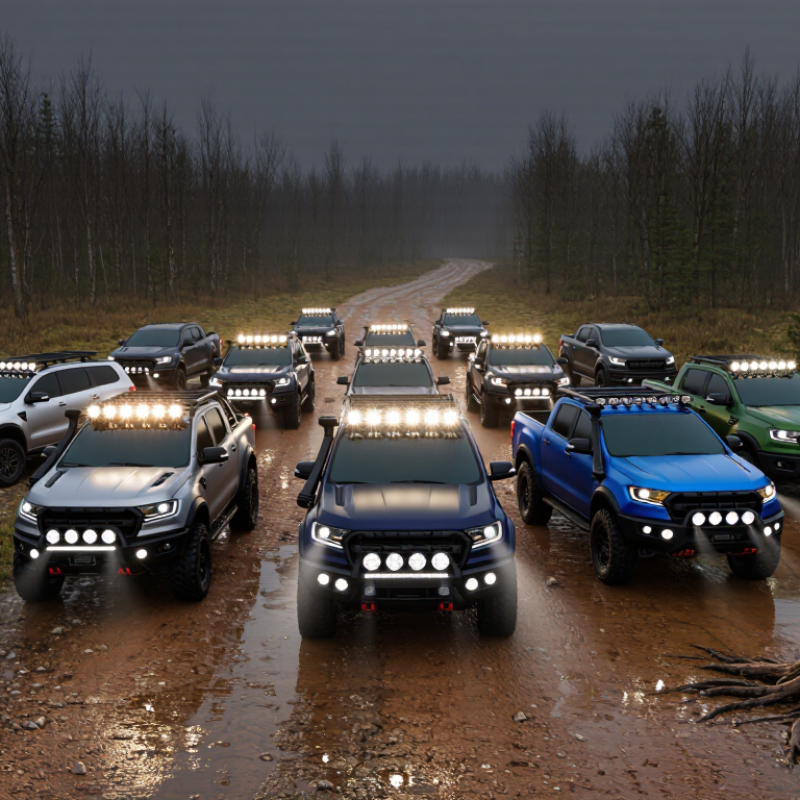
Mud, dust, water, and darkness expose weak flood lights quickly. After testing lights on rocky tracks and wet forest trails, I rank wide-beam models highest for close-range visibility. The best option uses sealed housing, strong heat control, and a stable mounting bracket. A verified IP rating matters, but seals can age after repeated pressure washing. That detail is easy to miss.
The leading ten choices are defined by practical strengths: wide flood beams, adjustable pods, low-current compact units, heavy-duty aluminum housings, and vibration-resistant mounts. Lights with amber or warm beams perform well in dust and mist. Bright white beams reveal distant obstacles more clearly on dry trails. Dual-beam designs offer useful flexibility. Avoid chasing maximum advertised output alone. Numbers can look impressive.
A reliable off-road setup should illuminate ruts, branches, and muddy edges without creating harsh reflections from airborne dust. Check the wiring, fuse protection, switch placement, and alternator capacity before installation. I prefer lights that remain cool after thirty minutes of use. One test unit became too hot to touch, despite its excellent beam pattern. That was a warning. Clean lenses after muddy drives, and inspect brackets before every demanding trip. A flood light is only dependable when the whole installation is dependable.