Leave Your Message
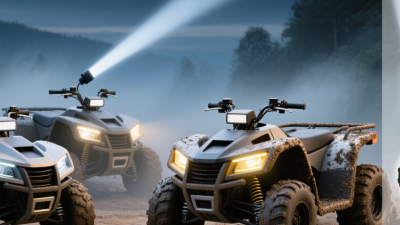
Choosing the right Atv Led Headlights can transform a dark trail into a clearer, more controlled riding experience. Global buyers need more than impressive brightness claims. They should examine beam pattern, voltage compatibility, weather resistance, heat management, and mounting quality. A narrow spotlight may reach distant terrain, while a flood beam can reveal stones, branches, and ruts near the front wheels. The best option depends on riding conditions.
Practical details matter.
Riders should check whether the lamp supports common 12-volt ATV systems. An IP67 rating can help protect against dust and temporary water exposure. However, certification labels should be verified, not blindly trusted. Off-road lighting specialist Marcus Hale explains, “A useful headlight balances brightness with control, durability, and rider comfort.” That principle deserves attention. Excessive glare can reduce visibility through reflection, especially in rain or dusty air.
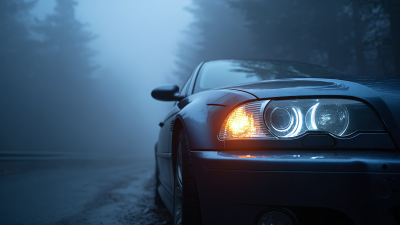
Reliable Atv Led Headlights usually include sealed connectors, aluminum heat sinks, and adjustable brackets. Some models advertise extreme lumen numbers, yet their beam may scatter poorly. I have seen bright lights create a white wall in fog. More power was not the answer. Better optics were.
This guide compares leading choices for different global buyers, including farmers, trail riders, utility operators, and recreational users. It considers installation effort, replacement support, energy use, and long-term value. No ranking is perfect. Local climate, vehicle design, and available technical support can change the final decision. Buyers should measure twice before ordering. A compact light that fits securely may outperform a larger unit with weak wiring or unstable brackets.
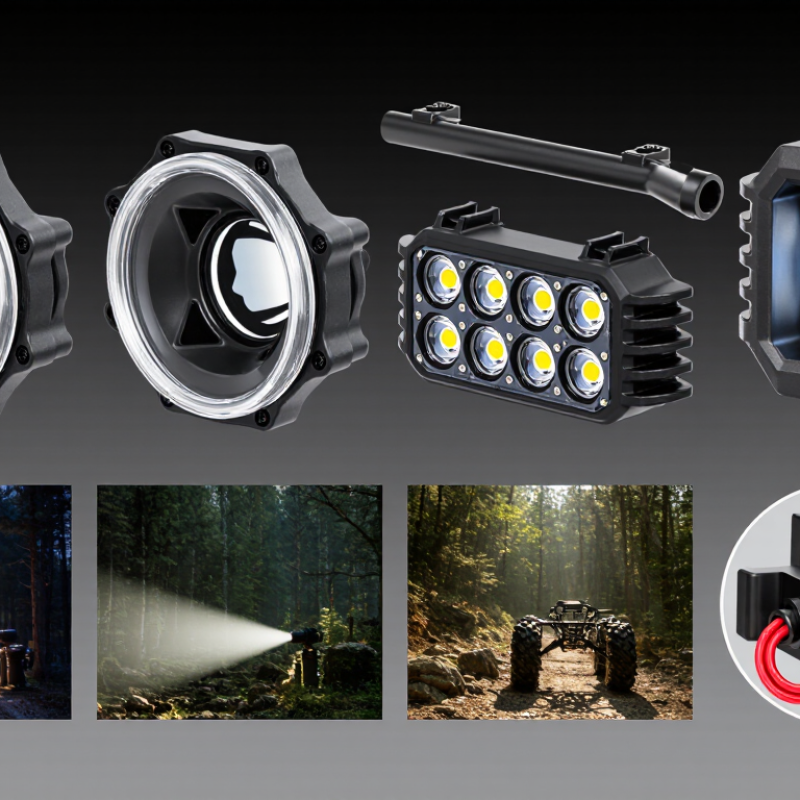
ATV LED headlights come in several practical forms, and each suits a different riding need. Replacement LED bulbs fit existing housings and usually cost less. Complete LED housings offer better sealing and beam control. Auxiliary pods and light bars add wider illumination for trails, fields, or work areas. They are not interchangeable in performance.
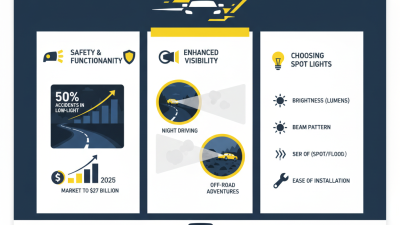
Beam pattern matters more than impressive lumen numbers. A focused spot beam reaches farther along narrow trails. A flood beam spreads light across nearby ground and obstacles. Some combined systems provide both patterns. I have found that excessive brightness can create glare from dust, rain, or loose gravel. That detail is easy to overlook. Color temperature also affects comfort. Neutral white light often reveals terrain clearly without the harshness of very blue light.
Check the ATV’s voltage before installation, especially on older electrical systems. Reliable units should include thermal management, vibration-resistant mounting, and an IP-rated enclosure for water and dust protection. Aluminum heat sinks help control temperature during slow riding. A sealed connector can prevent corrosion near muddy wheel wells. Examine the wiring length and fuse arrangement, because poor routing can damage insulation. Local road-use requirements may restrict beam height, color, or auxiliary lighting. I would verify those rules before riding outside private land. Even experienced buyers can overvalue output and undervalue installation quality.
| ATV LED Headlight Type | Typical Form Factor | Common Operating Voltage | Typical Light Output | Beam Pattern | Main Key Features | Best-Suited Applications | Important Buying Considerations |
|---|---|---|---|---|---|---|---|
| LED Replacement Bulb | Bulb designed to fit an existing headlight housing, commonly replacing a halogen bulb | 12 V DC systems; compatibility should be checked for 12–14.4 V charging ranges | Approximately 2,000–6,000 lumens per pair, depending on design and test method | Uses the original reflector or projector; beam quality depends heavily on bulb-chip position |
Simple retrofit Lower power consumption than many halogen bulbs Often available in common automotive bulb formats May include an external driver or cooling fan |
ATVs with replaceable halogen bulbs and limited space for a complete lamp assembly | Verify bulb-base type, available rear clearance, polarity, heat management, and whether the original housing produces glare after conversion |
| Sealed LED Headlight Assembly | Complete lamp with integrated LED modules, lens, reflector, housing, and wiring | Usually 9–32 V DC, depending on the intended vehicle range | Approximately 1,500–5,000 lumens per lamp for compact ATV applications | Dedicated reflector or lens optics provide a more controlled low or high beam |
Integrated design No replaceable bulb required Better protection against dust and moisture when properly sealed Simplified installation when mounting points match |
Factory replacement, off-road upgrades, and ATVs requiring a durable complete lighting unit | Check mounting dimensions, connector style, beam orientation, ventilation, and compatibility with the ATV’s charging system |
| Projector LED Headlight | Compact projector lens combined with one or more LED light sources | Commonly 12 V DC; some universal units support a wider DC range | Approximately 1,500–4,000 lumens per lamp | More concentrated beam with a sharper cutoff than many open-reflector designs |
Focused beam Good forward reach from a compact package Can reduce uncontrolled upward light when correctly designed Often supports separate high- and low-beam functions |
Trail riding, road-legal configurations where applicable, and applications needing controlled forward illumination | Confirm cutoff behavior, left- or right-hand traffic suitability, lens alignment, and local lighting regulations |
| LED Light Pod | Small standalone round, square, or rectangular auxiliary lamp | Typically 9–32 V DC | Approximately 800–6,000 lumens per lamp, depending on size and optics | Spot, flood, or combination beam |
Flexible mounting Easy to position on a front rack, bumper, or roll cage Available with narrow or wide optics Useful as supplemental lighting rather than a direct headlight replacement |
Work illumination, low-speed trail riding, hunting, utility use, and auxiliary high-beam support | Use a suitable fuse and relay, check mounting vibration, avoid blocking the main beam, and confirm that the beam is appropriate for nearby riders or traffic |
| LED Light Bar | Linear bar containing multiple LED emitters in a single housing | Usually 9–32 V DC | Approximately 2,000–15,000 lumens, depending on bar length and LED configuration | Spot, flood, or mixed beam; wide bars generally provide broad coverage |
Wide coverage High light output for open terrain Multiple optic layouts are available Can illuminate a broad area ahead of the ATV |
Open trails, farms, construction areas, remote utility work, and off-road use away from public traffic | Consider wind load, mounting strength, current draw, heat dissipation, glare, and whether auxiliary-light use is permitted in the destination market |
| Adaptive or Multi-Mode LED Headlight | Integrated headlight with electronic control for high beam, low beam, daytime running light, or auxiliary modes | Typically 12 V DC; control wiring may be required | Approximately 1,500–5,000 lumens per lamp | Selectable or electronically controlled beam patterns |
Multiple functions High- and low-beam switching Optional daytime running light or position-light function Can improve usability across changing terrain and conditions |
Premium ATV upgrades, touring, mixed-use vehicles, and riders who need several lighting modes | Check switch compatibility, control-module requirements, wiring complexity, standby current, and local rules for auxiliary or colored lighting |
| Low-Profile Flush-Mount LED | Thin lamp designed to sit close to a body panel, grille, or custom mounting plate | Commonly 12 V DC; some models accept 9–32 V DC | Approximately 1,000–4,000 lumens per lamp | Usually a forward-facing flood, spot, or combination beam |
Compact installation Reduced protrusion and snag risk Clean appearance on custom builds Often uses a sealed aluminum housing |
Sport ATVs, custom bodywork, narrow front panels, and installations where clearance is limited | Measure cutout size and mounting depth precisely; check rear heat transfer, drainage, service access, and panel strength |
| Color-Selectable or Colored LED Unit | Headlight or auxiliary lamp with selectable white, amber, or other colored output | Usually 12 V DC | Varies widely; colored modes may not provide the same useful roadway illumination as white light | Spot, flood, or combination beam depending on the optical design |
Visibility options Amber can be useful in dust, haze, or snow in some conditions Colored modes may support styling or event use Often controlled by a switch or remote module |
Off-road visibility, dust-prone environments, vehicle identification, and non-road recreational use | Check local laws before use on public roads; avoid assuming that decorative colors are legal or suitable for primary forward lighting |