China’s LED automotive lighting industry includes established factories, specialist exporters, and newer suppliers serving different vehicle markets. For buyers researching China Top LED Headlights Manufacturers and Suppliers, a polished product photo is only a starting point. Real performance depends on beam control, heat management, electrical stability, and consistent assembly. Details matter.
A useful supplier review looks beyond advertised brightness. Ask for clear product specifications, vehicle-fitment information, sample units, and documented quality checks. Inspect the beam pattern on a suitable test setup, and check how the housing handles heat after extended operation. These steps can reveal differences that a catalog may not show. A very bright beam is not automatically a better one.
When comparing Led Lights Headlights, buyers should also discuss production capacity, customization, packaging, warranty terms, and communication after shipment. Request evidence for relevant testing and confirm that product claims match the documents provided. Requirements can vary by destination and vehicle, so confirm applicable standards with qualified local sources before ordering. Do not assume one certificate covers every market.
Price still matters. Yet a lower quotation may leave important questions unanswered, such as replacement-part availability or batch consistency. Ask specific questions, compare written responses, and keep sample results for reference. No supplier is perfect, and even a careful process cannot remove every risk. It can, however, make the trade-offs easier to see. This guide introduces manufacturers and suppliers through practical factors that help buyers make more informed comparisons.
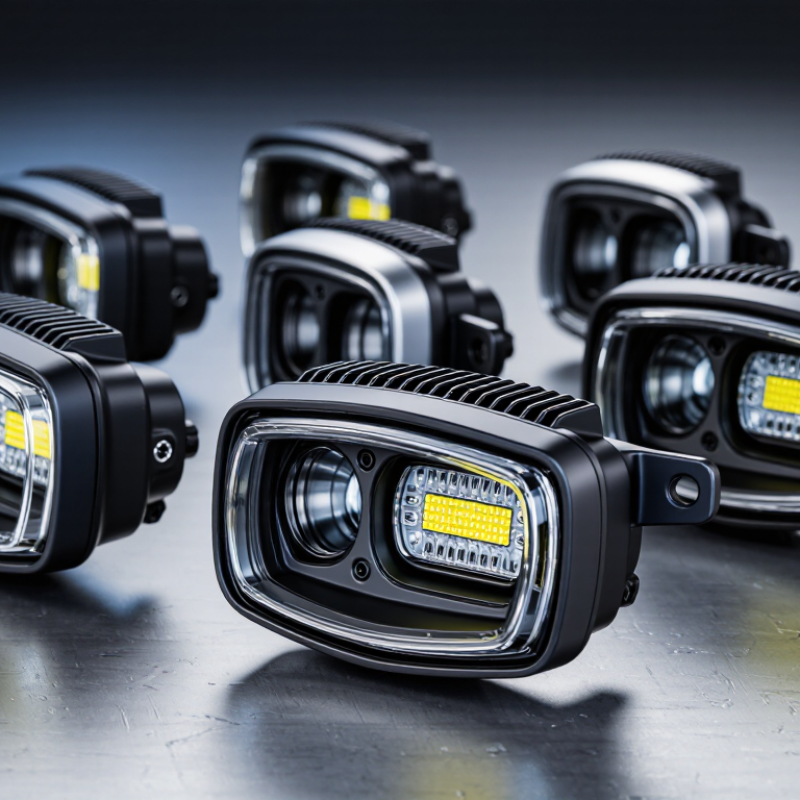
China’s vehicle output reached 30.16 million units in 2023, up 11.6% year over year, according to the China Association of Automobile Manufacturers’ annual industry data. New-energy vehicle production reached 9.59 million. The scale is striking. For LED headlight manufacturers and suppliers, it signals a large vehicle-production base, not guaranteed demand for any particular lighting technology. CAAM’s figures count vehicles, not headlamp types or replacement cycles—a distinction worth keeping clear.
Production volume also puts pressure on consistency. A headlamp must do more than look bright on a test bench. Its beam pattern needs checking, while heat around the LED modules must be managed inside a compact housing. Seals, connectors, and lens surfaces matter too, especially after repeated exposure to rain, dust, and road vibration. Suppliers can support vehicle makers with traceable component records and repeatable photometric tests. Small variations are easy to overlook. They can still affect glare or visibility. The market is growing, but output alone does not prove that every supplier has equal engineering depth; buyers need to examine validation methods and production controls.
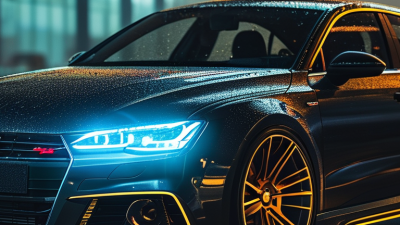
An LED headlight turns electrical power into a controlled beam through four linked parts. The chip emits light; the driver regulates current and helps prevent flicker during voltage changes. Optics—reflectors, lenses, and small shields—shape that light into a clear road pattern. Tiny details matter: a lens shifted by a fraction can move the bright cutoff.
Heat is the quiet stress test. The chip sits on a metal-core board, which transfers heat to a finned housing; trapped heat can reduce output and shorten component life. The U.S. Department of Energy’s 2022 Solid-State Lighting R&D Opportunities report sets a 2035 efficacy target of 250 lumens per watt for LED packages. This is a general package benchmark, not a guaranteed headlight output: drivers, optics, and thermal losses reduce the light reaching the road. A tidy specification sheet can still miss real-world heat buildup.
Tips
China’s LED headlamp supply base spans automaker-linked engineering teams, independent Tier-1 manufacturers, and aftermarket specialists. OEM programs are shaped by vehicle packaging, thermal limits, optical targets, and long validation cycles. Tier-1 suppliers integrate modules, wiring, control electronics, sealing, and production quality for factory installation. Aftermarket firms focus on replacement fit, wider vehicle coverage, and clear installation guidance. A crowded field.
Scale matters. China produced 30.16 million motor vehicles in 2023, out of 93.55 million worldwide, according to OICA’s 2023 production statistics. This manufacturing concentration supports deep component networks, but volume alone does not prove optical performance or durability.
Buyers should compare beam-pattern test results, lumen maintenance, ingress protection, vibration testing, traceability, and warranty terms. These details help distinguish a validated OEM program from a visually similar replacement unit.
The boundary can blur: some suppliers serve both factory programs and the aftermarket, while others mainly package components. Ask who owns the optical design, where final testing occurs, and how revisions are controlled.
Even a polished sample can hide weak batch consistency. That is worth checking.
China’s LED headlight suppliers serving export markets should treat UNECE Regulation No. 149 and U.S. FMVSS No. 108 as separate compliance frameworks, not interchangeable checklists. R149 covers approval requirements for road illumination devices in markets applying the relevant UN rules. FMVSS 108 sets U.S. requirements for lighting equipment, including performance and installation-related conditions. The exact route depends on the product, vehicle application, and destination market. Details matter. A lamp that performs well on a bench may still need reassessment after mounting geometry, wiring, or vehicle voltage changes.
For buyers, useful evidence includes current test reports, approval or certification records where applicable, controlled drawings, and traceable production batches. Ask how photometric results were obtained, which operating conditions were used, and whether the tested configuration matches the shipped unit. Check beam aim, cutoff stability, thermal behavior, connectors, and labeling on a real assembly. Small changes count. UNECE approval and U.S. self-certification processes are not the same, so paperwork should match the intended market. A supplier’s explanation is helpful, but independent review can catch gaps. Even careful teams miss details. That is worth admitting. Confirm requirements with competent compliance specialists before shipment, especially when a headlamp design or vehicle fitment changes.
| Benchmark | UNECE Regulation No. 149 | U.S. FMVSS No. 108 | Supplier Verification Evidence |
|---|---|---|---|
| Regulatory scope | Sets requirements for approval of road-illumination devices and systems, including vehicle headlamps, within the scope of the regulation. | Regulates lamps, reflective devices, and associated equipment on vehicles manufactured for or imported into the U.S. market. | Identify the exact product category, vehicle application, destination market, and applicable regulatory text or national requirements. |
| Compliance approach | Type approval is issued by an approval authority under the applicable UNECE framework. Recognition depends on the destination jurisdiction’s participation and implementation. | Uses manufacturer self-certification. Manufacturers certify that vehicles or regulated equipment comply; NHTSA does not grant pre-sale product approval. | For UNECE markets, request the relevant approval documentation. For the U.S., request the manufacturer’s compliance basis and supporting test records. |
| Photometric performance | Headlamp performance is evaluated against the applicable beam-pattern, light-distribution, and intensity provisions for the approved device category and function. | Headlamp performance must meet the requirements and test procedures applicable to the relevant headlamp type and vehicle configuration under FMVSS No. 108. | Review complete photometric reports, test conditions, measured results, beam function, and the precise lamp configuration tested. |
| LED light source and system design | Approval assessment depends on the device category and applicable provisions for its light source, optical system, and construction. | Requirements depend on the applicable headlamp design and source provisions. A change in light source or optical configuration can affect compliance. | Confirm that the tested LED modules, optics, electronics, and production configuration match the items offered for export. |
| Installation on the vehicle | R149 concerns approval of lighting devices; installation on a vehicle is addressed separately by applicable installation rules, including UNECE Regulation No. 48 where applicable. | FMVSS No. 108 includes requirements relevant to lighting equipment on vehicles. The complete vehicle configuration must be considered, not only the lamp component. | Check both component-level evidence and vehicle-level installation requirements for the destination market and vehicle class. |
| Approval marks and identification | Approved devices are subject to applicable approval-marking and identification requirements. | There is no general NHTSA pre-approval mark. U.S. compliance is based on manufacturer certification and applicable marking requirements. | Verify markings against the relevant approval or certification basis; do not treat an approval mark for one market as proof of compliance in another. |
| Documentation and traceability | Approval documents and technical information should correspond to the approved type and its production specification. | Manufacturers must retain a defensible basis for their certification and support compliance with applicable recordkeeping and enforcement requirements. | Maintain model and revision identifiers, drawings, bills of materials, test reports, production controls, and change records. |
| Export-readiness check | Confirm that the destination accepts the relevant UNECE approval and that the lamp’s approved category and intended use match the order. | Confirm U.S.-specific compliance for the intended vehicle and headlamp configuration; an overseas type approval alone does not establish FMVSS compliance. | Use a market-specific compliance checklist and verify requirements with the importer or qualified regulatory specialist before shipment. |
Note: This table is a general comparison, not a legal determination or a substitute for checking the current regulation, applicable amendments, and destination-market requirements for a specific product and vehicle.
When evaluating LED headlight suppliers in China, request photometric test reports for the exact product configuration. Beam performance depends on the bulb, housing, and installation position. Ask for measured luminous intensity, beam pattern, and cutoff images, not just lumen figures. A bright reading alone proves little. Check whether testing used a suitable dark-room setup and documented voltage, temperature, and sample condition. Compare results with your intended vehicle application; one test cannot represent every headlamp.
Ingress protection ratings help assess resistance to dust and water, but the rating needs context. Ask which test method and product version the report covers. Inspect cable entries, seals, and connectors, since small gaps can undermine a well-designed housing. For a practical check, review test photographs and confirm whether samples were production units. Paperwork can look tidy. Hardware can still disappoint.
ISO 9001 certification indicates a quality-management system, not flawless headlights. Verify the certificate’s scope, issuing body, and validity, then ask how the factory handles inspection records and corrective actions. A useful supplier can explain how failed samples are traced and retested. Requesting these details may feel tedious. It is worth doing. Still, a small sample may not reveal long-term vibration or heat issues, so note what remains untested before making a purchasing decision.
How to assess an LED headlight supplier: Use IP ratings to compare protection against water ingress, and confirm the exact test conditions behind the rating. IPX8 immersion conditions are agreed for the specific product, so the code alone does not define a universal depth or duration. Separately review photometric test reports against the regulations applicable to the headlight and market, and verify that any ISO 9001 certificate is current and covers the relevant manufacturing site. The chart shows ordinal IP code levels, not measured performance.