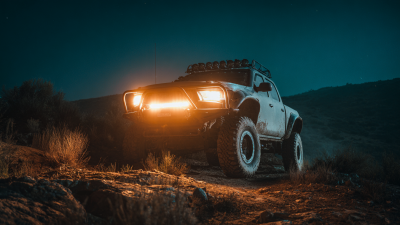
China has become a major sourcing base for automotive lighting, including work lamps, auxiliary beams, and Car Flood Lights. The scale is substantial. OICA reported approximately 93.5 million motor vehicles were produced worldwide in 2023. That volume increases demand for reliable aftermarket lighting and replacement components.
Professional market research also shows continued growth. Grand View Research valued the global automotive lighting market at about USD 30 billion in 2023. Its analysis identifies LED technology, energy efficiency, and improved visibility as important market drivers. However, market growth does not make every supplier dependable. A bright sample can still hide weak thermal management, poor sealing, or unstable electrical performance.
Experienced buyers should examine more than lumen claims. They should review beam distribution, waterproof ratings, operating temperature, vibration resistance, warranty terms, and production consistency. Factory audits matter. So do test reports, traceable components, and clear quality-control records. Suppliers familiar with ISO 9001 systems and relevant UNECE or regional lighting requirements usually provide stronger documentation, although certification claims still require verification.
China offers many capable manufacturers, but quality varies sharply between factories. Some specialize in compact LED pods, while others produce heavy-duty floodlights for trucks, construction equipment, and off-road vehicles. The best supplier depends on application, installation space, climate, and compliance needs. I have found that packaging and polished websites can mislead. Real performance appears during heat, dust, water, and vibration testing. This guide compares China’s leading manufacturers through practical specifications, engineering capability, certifications, customization support, and after-sales reliability. The ranking is useful, but not absolute. A supplier that suits a mining fleet may not suit a family vehicle.
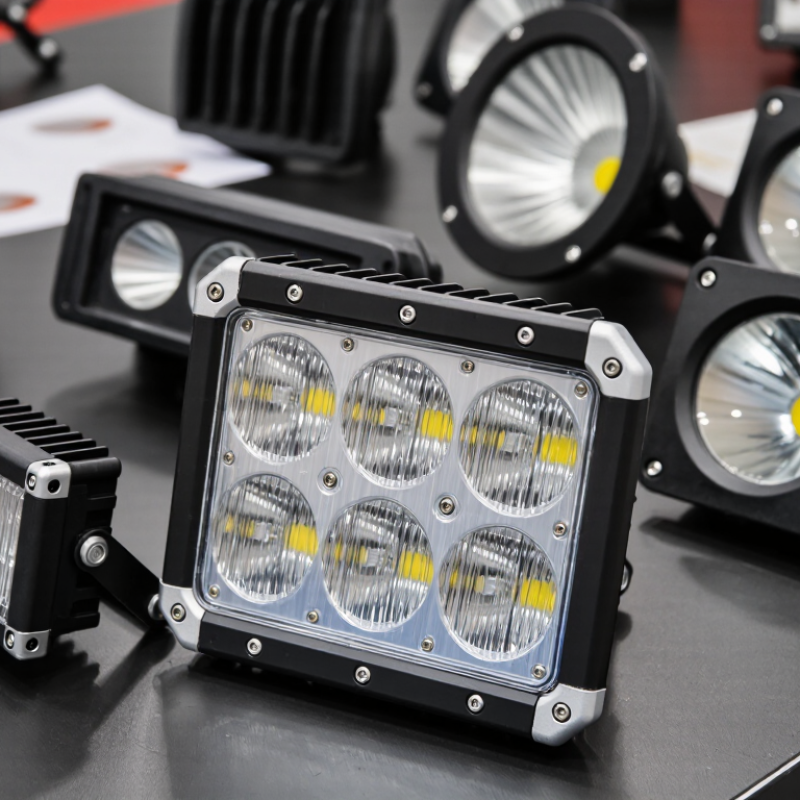
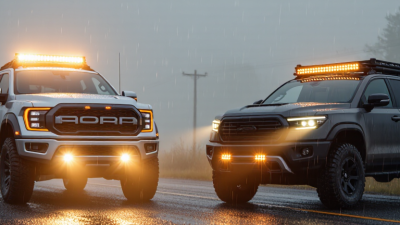
Car flood lights are auxiliary lamps designed to spread powerful illumination across wide or uneven areas. Unlike narrow driving beams, they brighten roadside edges, construction zones, rural tracks, and dark work areas. Their value becomes obvious when standard headlights leave shadows beside the vehicle.
Night driving carries measurable risk. The U.S. Federal Highway Administration reports that about half of traffic fatalities occur at night, although only around one-quarter of travel happens after dark. The Insurance Institute for Highway Safety has also found major differences in headlight performance between vehicles. Poor beam reach can reduce a driver’s reaction time. Glare creates another problem.
More light is not automatically safer. In practical lighting inspections, beam alignment, color temperature, waterproofing, thermal control, and vibration resistance matter as much as brightness. International lighting requirements, including UNECE Regulation No. 149, emphasize controlled beam patterns and safety performance. Buyers comparing manufacturers should request laboratory test results, optical data, ingress-protection ratings, and heat-cycle testing. A claimed lumen figure can mislead without beam distance and usable illumination data. I have seen specifications look impressive on paper, yet perform weakly through dust or rain. That deserves scrutiny. A reliable flood light should produce stable output, avoid excessive glare, and remain secure after repeated road vibration.
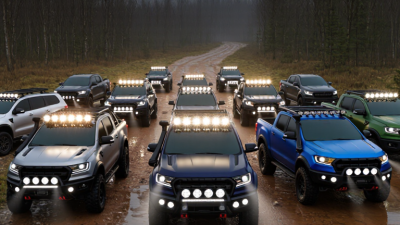
Car flood lights are auxiliary lamps designed to provide broad, powerful illumination in low-visibility conditions such as off-road driving, work areas, rain, fog, and nighttime emergencies. Technology type strongly affects service life, energy efficiency, brightness, and maintenance requirements.
Key takeaway: LED flood lights generally provide the longest service life and lower maintenance demand, making them a practical choice for frequent use. Halogen lights are typically less expensive initially, while HID systems can offer strong output but may require more complex installation and replacement.
Evaluating Chinese car flood light manufacturers requires more than comparing prices. Check their production experience, engineering team, and testing process. Ask how they manage LED bins, aluminum housing, wiring, and lens alignment. A reliable supplier should provide clear technical drawings, current ratings, beam data, and sample records.
Request a sample before placing a large order. Install it on a vehicle and inspect beam reach, glare, vibration resistance, and heat control. After thirty minutes, measure the housing temperature. Good thermal design matters because excessive heat can reduce LED performance. Review water and dust protection claims against recognized test reports, not only factory promises. Confirm that products meet the lighting and vehicle-use requirements of your target market.
Visit the factory when possible, or request a live production video. Observe storage conditions, assembly stations, inspection tools, and final packaging. Ask for traceability from raw materials to finished units. A dependable manufacturer should explain warranty coverage, replacement procedures, and quality-control sampling in writing. Communication is evidence too; vague answers may signal weak processes.
Even experienced suppliers can have inconsistent batches or delayed improvements. Record every concern, including small scratches, uneven seals, or unclear instructions. Compare corrective actions, not just apologies. Independent inspection can add confidence before shipment. My practical preference is a manufacturer that admits limitations and documents fixes, rather than one making flawless claims without measurable proof.
China-based car flood light manufacturers offer broad production capacity, flexible customization, and competitive sourcing options. Choosing well requires more than comparing prices. During supplier evaluations, inspect optical testing equipment, assembly areas, and quality control records. A reliable manufacturer should explain its LED selection, beam design, heat management, and sealing process clearly.
Look for housings made from durable aluminum, secure mounting brackets, and clean wiring connections. Ask whether each production batch receives vibration, water-resistance, temperature, and photometric testing.
Test samples on a vehicle, not only on a factory bench. Road conditions can reveal glare, uneven illumination, or loose hardware. These details matter.
Experienced manufacturers usually provide drawings, sample revisions, inspection reports, and traceable production records. They should also discuss applicable vehicle lighting requirements for the target market without making exaggerated claims.
Communication speed is useful, but technical accuracy matters more. A polished sample does not always represent mass production quality. That is easy to forget.
Review packaging, spare-part support, lead times, and corrective-action procedures before placing an order. Manufacturers that welcome independent inspections often show stronger process confidence. Still, no supplier is perfect. I would leave room for another sample test after design changes, because small bracket or sealing updates can alter real-world performance.
China’s leading car flood light manufacturers compete on brightness, durability, and price. The best choice is rarely the cheapest quotation. A reliable manufacturer should provide measured lumen output, beam-angle data, thermal test records, and consistent production samples. Check the housing material, sealing quality, wiring thickness, and connector fit. These details matter when lights face rain, dust, vibration, and long night drives.
Quality and value must be judged together. A light with extreme brightness may create excess heat and shorten its working life. Look for efficient LEDs, proper heat dissipation, stable color temperature, and a clear warranty. Ask whether each batch receives waterproofing and vibration inspections. Request sample units before placing a larger order. I once focused too heavily on price and overlooked connector quality. That mistake caused unnecessary installation work. It was a useful lesson.
Tips: Compare identical specifications, not attractive marketing numbers. Ask for real test reports and recent production photos. Check replacement policies, packaging strength, and response times. Test the beam pattern on a dark road, if permitted. Brightness is not everything. A balanced beam may improve visibility more than raw output. Also, confirm compatibility with your vehicle’s voltage and mounting space. Small details can change the final value.
The table below provides a manufacturer-selection benchmark for automotive LED flood lights. It focuses on measurable product, compliance, durability, service, and value indicators rather than displaying company or brand-specific data.
| Evaluation Dimension | Recommended Benchmark | How to Verify | Why It Matters | Buyer Priority |
|---|---|---|---|---|
| Photometric performance | Require measured luminous output, beam pattern, color temperature, and candela data; do not rely only on advertised LED wattage. | Review an LM-79-style photometric report, integrating-sphere data, beam-distribution diagram, and sample inspection. | Real optical performance depends on the complete lamp system, including optics, driver efficiency, thermal management, and operating conditions. | High |
| Road-use compliance | For road-legal applications, confirm the specific lighting approval required in the destination market, such as UNECE Regulation No. 112 or Regulation No. 149 where applicable. | Request approval documents that match the exact housing, lens, light source, and production version being purchased. | General laboratory claims or a CE mark do not automatically establish road-legal approval. | High |
| Ingress protection | IP67 is a practical minimum for many exterior vehicle installations; IP68 may be preferred where prolonged water exposure is expected. | Check the test report against IEC 60529 and confirm that seals, connectors, cable entries, and the final assembled lamp were tested. | Water and dust ingress are common causes of corrosion, driver failure, and optical degradation. | High |
| Vibration and shock resistance | The product should have documented vibration and mechanical-shock testing suitable for vehicle installation. | Request test conditions based on ISO 16750-3 or an equivalent automotive environmental test specification. | Off-road vehicles and commercial equipment can expose lamps to repeated vibration, impact, and resonance. | High |
| Temperature capability | The supplier should state an operating-temperature range and provide thermal validation for the complete lamp, not only the LED chip. | Review hot-and-cold chamber results, startup performance, thermal derating behavior, and enclosure temperature data. | LED lifetime, driver reliability, seal performance, and light output are strongly affected by temperature. | High |
| LED and driver consistency | Use controlled LED binning, documented driver specifications, over-voltage protection, reverse-polarity protection, and over-temperature protection. | Compare the bill of materials, incoming inspection records, driver datasheet, and production samples from different batches. | Consistent components reduce brightness variation, flicker, premature failure, and warranty claims. | High |
| Thermal design | The housing should provide an effective heat path from the LED board to the external environment, with no avoidable thermal bottlenecks. | Inspect aluminum housing design, thermal interface materials, heat-sink area, airflow assumptions, and measured case temperature. | Lower operating temperature generally supports more stable output and longer component life. | High |
| Corrosion resistance | For marine, coastal, or winter-road applications, specify suitable coating, fastener material, and salt-spray validation. | Review salt-spray testing such as ISO 9227 where relevant, plus coating-thickness and fastener specifications. | Corrosion can damage mounting points, electrical contacts, heat dissipation surfaces, and enclosure seals. | Medium |
| Electromagnetic compatibility | The complete lamp and driver should meet the electromagnetic-compatibility requirements of the target vehicle and destination market. | Request conducted- and radiated-emission results, immunity testing, and vehicle-level validation where available. | Poor EMC performance can create radio interference, sensor faults, or communication problems in modern vehicles. | High |
| Manufacturing quality control | A reliable supplier should use documented incoming, in-process, and final inspections with traceable batch records. | Audit quality procedures, sampling plans, aging tests, leak tests, electrical tests, and corrective-action records. | Repeatable production quality is more valuable than a strong performance claim based on a single sample. | High |
| Customization capability | The supplier should be able to customize beam optics, mounting hardware, connectors, cable length, control input, and packaging without weakening validation. | Confirm engineering-change procedures, prototype approval, sample retention, and re-testing after design changes. | Correct fitment and vehicle integration can reduce installation time and avoid costly field modifications. | Medium |
| Warranty and replacement support | Look for clearly defined warranty duration, failure-handling procedures, replacement-part availability, and response-time commitments. | Review the written warranty, return process, spare-parts policy, and historical service records. | A low purchase price may not represent good value if replacement handling is slow or unclear. | High |
| Total cost of ownership | Compare unit price, energy use, installation cost, expected service life, failure rate, freight, spare parts, and warranty exposure. | Use matched samples and calculate cost per operating hour or cost per approved installation, rather than comparing price alone. | The best-value manufacturer is normally the one with the lowest verified lifetime cost, not necessarily the lowest quotation. | High |
| Lead time and supply continuity | Evaluate standard lead time, minimum order quantity, production capacity, component availability, and change-notification policy. | Request a written production schedule and confirm whether critical components are single-sourced or qualified from multiple sources. | Reliable supply reduces stockout risk and protects fleet or vehicle-production schedules. | Medium |
Selecting a car lighting supplier requires more than comparing price lists. Start with the light’s real job: rural visibility, worksite illumination, or occasional off-road use. Ask for measured lumen output, beam pattern, current draw, and color temperature. A serious manufacturer should explain testing methods, not repeat vague marketing claims. Request a sample and inspect its wiring, connector seals, mounting brackets, and lens finish. Hold it beside your vehicle at night. Glare can reveal poor design quickly. This step feels basic, but many purchasing mistakes begin with attractive photographs.
Evaluate production experience through evidence. Ask how the supplier controls LED consistency, heat dissipation, waterproof sealing, and vibration resistance. Request test records aligned with relevant vehicle lighting and electrical requirements in your market. Look for batch identification and a clear process for handling failed units. Certificates can help, but they do not prove dependable performance alone. Check whether the supplier provides technical drawings, installation guidance, and replacement parts. A responsive engineer is more useful than a polished sales promise. Excessive claimed output may hide heat problems or an unsuitable beam.
Before placing a larger order, define vehicle models, operating voltage, quantity, packaging, and delivery schedules in writing. Confirm warranty terms and response times for faults. Ask whether every shipment receives the same inspection level as the sample. A small pilot order is sensible. Even careful buyers miss details. A loose rubber cap may signal weak quality control. More importantly, notice how the supplier responds when you raise that concern.